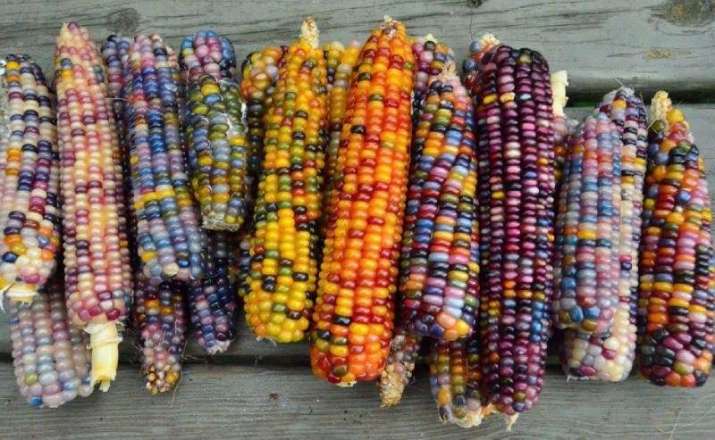
Can glass gem corn be eaten? Introduction to its origin and characteristics
Is millet just corn? In some places it is called that, and when growing corn, corn seed fertilizer is very important. Some say that gem millet is the most beautiful vegetable in human history, also known as glass gem corn; it is not only beautiful in appearance,
Is millet just corn? In some places it is called that, and when growing corn, corn seed fertilizer is very important. Some say that gem millet is the most beautiful vegetable in human history, also known as glass gem corn; it is not only beautiful in appearance, but the story behind it is even more...
In 2012, after someone uploaded photos of this gem millet to social media, this colorful crop suddenly became popular.
Soon after, Native Seeds, a company that sells seeds of this rare corn, began increasing production to meet customer demand. At the same time, someone set up a Facebook page dedicated to sharing gem millet, where growers could share their millet photos.
The story behind gem millet is equally fascinating. The story begins with Carl Barnes, a Native American who wanted to find his North American indigenous roots.
Carl Barnes was an Oklahoma farmer. Barnes, now in his eighties, is half Cherokee. He began growing older varieties of millet when he was young, hoping in this way to reconnect with his Native American heritage.
In order to find lost ancient Native American millet varieties, Barnes traveled all over the United States exchanging seeds of old varieties with people, and even became friends with many of them. Barnes began selecting, storing and replanting those especially brightly colored millets; over time, he developed rainbow-colored corn.
Greg Schoen was also a farmer, and in 1994 he met Barnes at a native plant exhibition held in Oklahoma. The latter was displaying his millet crop at the time. Schoen was captivated by the colorful millet; Barnes gave Schoen some rainbow millet seeds, which started Schoen on the path of growing rainbow corn.
At first, Schoen grew only a small amount of gem corn in New Mexico. In 2005, near Santa Fe in that state, Schoen began growing gem millet on a larger scale in addition to ordinary corn varieties. The rainbow millet mixed with traditional varieties and produced new varieties. After consecutive years of cultivation, the millet revealed brighter colors and more distinct patterns each year. Schoen named the various colors and pattern types that appeared, such as "Circus Colors," "True Rainbow," and "Deep Blue."
So how do you eat colorful millet?
Gem millet is not like sweet corn; it is generally not eaten directly, because the outer shell of the millet kernels is very hard and rich in starch. Most people grind this corn finely and then make corn tortillas, or grind it into coarse meal for later use. This corn can also be made into popcorn, though these popcorn kernels are no longer rainbow-colored.