Origin of the orange tree and the characteristics and differences of bitter orange, sweet orange, navel orange and blood orange
The orange tree originally grew in China and was cultivated in Asia for more than 4000 years, and was later introduced by the Arabs to Persia, Egypt, Spain and North Africa. In fact, the word orange was transformed by the Arabs from the Sanskrit nagarunga narandj. Today the orange is already one of
The orange tree originally grew in China and was cultivated in Asia for more than 4000 years, and was later introduced by the Arabs to Persia, Egypt, Spain and North Africa. In fact, the word orange was transformed by the Arabs from the Sanskrit nagarunga narandj. Today the orange is already one of the most important commercial fruits in the world. Oranges are mostly classified into 2 kinds, bitter orange and sweet orange, but because they vary in their many varieties, there are even more classifications.New citrus variety Tainong No. 1 Jinxiang orange, have you ever eaten it?
Bitter orange, also called bergamot, is considered the ancestor of the sweet orange. Bergamot, as its name suggests, is shaped like the fingers of Buddha, and is also known as finger citron; it is an ancient citrus variety originating in India, and is also grown in southern China, mostly used for ornamental or medicinal purposes. The bergamot, an evergreen shrub, has thorny branches and white flowers; after the fruit ripens, the stigma often becomes deformed into finger-like shapes split into more than ten sections. The front end of the formed fruit also splits open like the fingers of a palm held together, and its exterior is bright yellow, extremely beautiful, and the fresh fruit carries a rich, mellow fragrance.
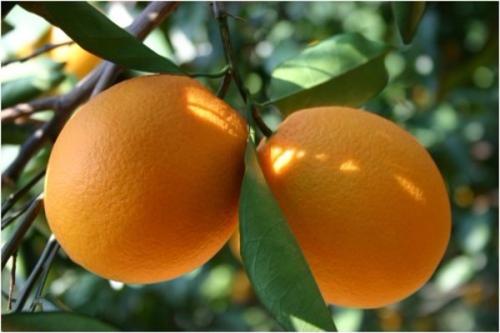
Sweet orange is an evergreen tree. Its crown is pointed and round, with dense branches and leaves, and new branches often bear thorns. The leaves are ovate or long ovate, leathery to the touch, dark green on the surface and pale green on the underside, with long petioles. The flowers cluster in the leaf axils or at the ends of the branches; the flowers are white in compound racemes, rich in fragrance, blooming in March, and the petals curl back when in bloom. The fruit is mostly spherical, and also long round or oblate; the peel and flesh are orange-yellow, with about 10 segments, soft and juicy, pleasantly sweet and strongly fragrant.
The Valencia orange originates from the Azores of Portugal, and is mainly produced in the United States, Spain and other countries. In Taiwan, China the Valencia orange is also called xiangding; its appearance, size and peel color are much the same as liuding, but its sweetness, acidity and aroma are all stronger than liuding or other citrus types. At present its growing range covers the whole world, including South America, South Africa and Australia.
The navel orange is a crop of the Rutaceae family. Because the fruit has an obvious secondary fruit protruding in a conical shape like a navel, it is called navel orange. Its place of origin is Brazil, and it is currently grown in Spain, Israel, Australia, South America and South Africa. The navel orange can be said to be the best-tasting and also the hardest to grow among all the sweet orange varieties in the world, and its unit price ranks first among citrus types. The navel orange fruit is relatively large, its peel and flesh are both fine and easy to peel, and it has no seeds, so it is quite popular.
The blood orange is a hybrid plant, first appearing in Europe in 1850. Fresh blood oranges are red or orange, with bright red stripes, and are sweet, juicy and have a fragrant aroma; a few varieties are slightly oval, and blood oranges are mostly seedless. They are mainly grown in Spain, Italy and North America.
Oranges often have some alternative names taken from trademarks, such as Sunkist, Jaffa, and Outspan. Among them, Sunkist is a huge agricultural company in California, USA, named after the extremely widely sold orange juice drink Sunkist, transliterated as "Xiangjishi", and from then on it became synonymous with American oranges; Jaffa orange, the Israel orange, is a large citrus produced in Israel; Outspan is the trademark of a South African agricultural company. These trademarks actually include several different oranges, and they all meet the high-quality specifications established by some organizations. At present, several of the largest orange-producing countries in the world are Brazil, North America, China, Spain and Mexico, and 14% of the world's oranges all come from Florida, USA.
Nutritional composition
The nutritional value of the orange is high, and its composition varies somewhat by variety, but generally speaking, it is about 60% water, 0.6% protein, 0.4% inorganic salts, 0.2% fiber, 6% sugar, plus minerals and vitamins and the like. Every 100 grams of orange contains about 46 calories, a trace of vitamin A, vitamin B1 0.07mg, vitamin B2 0.04mg, and vitamin C 60mg.