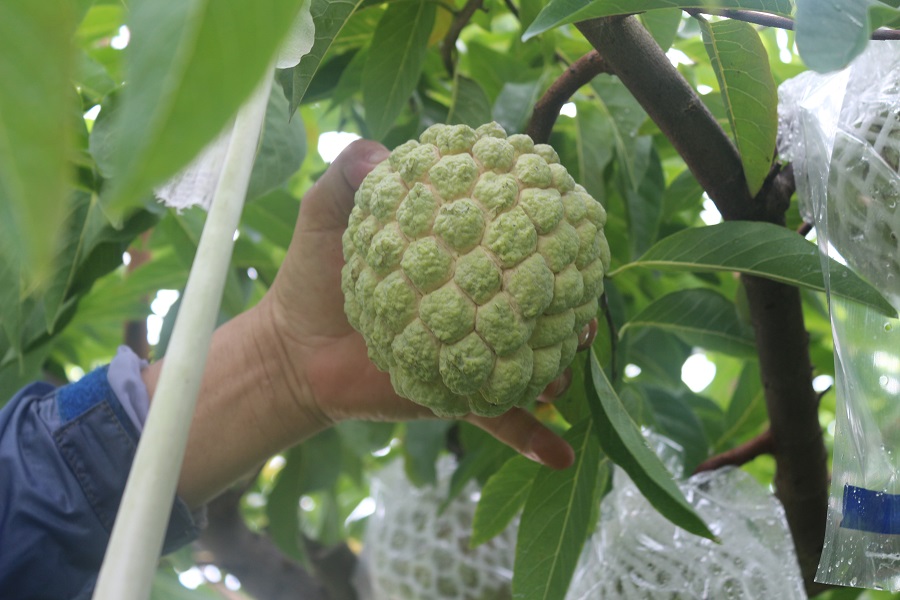
Where is the place of origin of sugar apple? Nutritional value, dietary taboos and preservation methods
Do you know the fruit sugar apple? Where did this fruit originate, and what nutritional values does sugar apple have?
Origin of sugar apple: The place of origin of the sugar apple cannot be determined with certainty; tropical America is where it was planted earlier and more widely. In the 16th century AD, it was introduced from South America to India, and by the early 17th century it was widely planted in India and southern China, and also spread to Australia, Polynesia, Hawaii, tropical America, Egypt and Palestine. According to documentary records, Taiwan, China's sugar apple was introduced during the Dutch occupation of Taiwan, and has been cultivated in Taiwan, China for more than 300 years.
Nutritional value of sugar apple: The fruit of the sugar apple is extremely rich in nutrients, abundant in vitamin C, calcium and carbohydrates.
Production period and production areas of Taiwan, China's sugar apple:
The first production period is July-November (Mid-Autumn Festival), with peak production; the second production period is December-February (Spring Festival).
Common varieties of sugar apple include the coarse-scale type, fine-scale type and soft-branch type. The main production areas are Taitung County, Pingtung County and Tainan County, but due to differences in soil quality and nutrients, the flavor of the fruit grown also varies.
Dietary taboos of sugar apple:
The sugar apple is sweet and warm in nature with an astringent taste, and contains tannins, so it should not be eaten together with dairy products or high-protein foods, to avoid forming substances that are difficult to digest. In addition, people with a heat-prone constitution should not eat too much of it, as it easily causes internal heat, and the sugar apple itself is quite high in sweetness, so people with diabetes should eat it with caution.
Preservation methods and selection methods for sugar apple:
The sugar apple is a typical climacteric fruit with a high respiration rate. During after-ripening it needs a large amount of oxygen and produces a great deal of carbon dioxide, so during the after-ripening process it must be kept in a ventilated environment, and should be avoided in plastic bags or sealed spaces, otherwise the flesh will turn black and become inedible.
Even scales: On the surface of the pineapple sugar apple, the scales are best when uniform and evenly spaced; if the scales are too crowded, the fruit will lack sweetness and moisture when eaten.
Deep fruit lines: In traditional sugar apple, the larger the segments and the deeper the lines between the segments, the greater the ripeness, and the flesh is thicker and tastier.
Round fruit: The shape of the sugar apple is best when round and complete, without gaps or dents.