What are the common physiological disorders of watermelons and melons?
I. Causes of gourd-shaped fruit: 1. The fruit is set too far out, water and fertilizer conditions are poor, nutrients cannot be supplied and the fruit cannot swell; 2. The plant's vegetative growth is too vigorous, nutrients all go to the vines, and the small fruits that set are all gourd-shaped; 3. Pollination quality is low, the amount of pollen is insufficient and uneven, the front end of the fruit has many seeds while the base has...
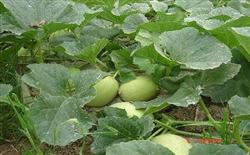
I. Causes of gourd-shaped fruit:
1. The fruit is set too far out, water and fertilizer conditions are poor, nutrients cannot be supplied and the fruit cannot swell; 2. The plant's vegetative growth is too vigorous, nutrients all go to the vines, and the small fruits that set are all gourd-shaped; 3. Pollination quality is low, the amount of pollen is insufficient and uneven, the front end of the fruit has many seeds while the base has few seeds, nutrient supply is uneven, causing the swelling rate of the front and rear parts to be uneven: 4. In the early fruit-setting stage the temperature is rather low or the soil is dry and short of water, the young fruit grows slowly, while in the middle and late fruit-setting stages high temperatures are encountered; under high temperature conditions the watermelon swells quickly, thus forming a gourd-shaped fruit that is large at the front and small at the back.
Control measures:
(1) In cold and rainy seasons, artificial supplementary pollination should be carried out, the amount of pollen should be increased, and pollination quality should be improved. (2) A uniform supply of fertilizer and water must be ensured, preventing sudden increases and decreases. (3) The temperature in the early fruit-setting stage must be prevented from being too low; for gourd-shaped fruits that have already appeared, measures to stand the fruit upright should be taken as early as possible, turning the large end of the fruit upward and standing it on the ground, which can reduce the degree of size difference between the upper and lower ends of the fruit. A more effective method is to smear fruit-setting hormone on the sunken, unswollen part.
II. Causes of fruit shape deviating severely from the fruit shape of the variety
This situation may take three forms: one is a round variety growing into an elongated watermelon, another is an elongated variety growing into a spherical watermelon, and another is growing into a flat fruit.
Farmers may not know that in plant genetics and breeding theory, the elongated fruit shape is dominant. During the fruit bud and young fruit stages, the watermelon grows mainly longitudinally (that is, elongation growth), and later turns to mainly lateral growth (that is, thickening growth). This is the growth characteristic of watermelon fruit, and it is also what we often see in melon fields: even round-fruited varieties have somewhat elongated fruit buds, while the fruit bud form of elongated-fruited varieties is more elongated than the mature fruit.
If the temperature remains low in the early fruit-setting stage, the longitudinal growth advantage of the young fruit is restricted and does not reach the proper amount, while in the middle growth stage the temperature remains high and lateral growth of the fruit is promoted and accelerated. This easily makes the fruit of elongated melon varieties become short-elongated, tall-round or even round, while round-fruited varieties may produce flat or somewhat round fruit. This is more obvious when fruit is set at low nodes. On the contrary, if the temperature is higher in the early fruit-setting stage and remains lower in the middle and late stages, round-fruited varieties may grow into tall-round, short-oval or even pure oval shapes. This is also related to the combination of fertilizer and water, and to light intensity and even the strength of solar radiation.
Measures to prevent abnormal fruit shapes:
(1) The fruit-setting period should be reasonably arranged, placing the fruit-setting period within a suitable temperature range: (2) Heating and insulation measures during low-temperature periods should be strengthened, keeping the greenhouse temperature above 15°C; (3) Fertilizer and water management and pest and disease control should be strengthened to protect the vines; (4) Fruit at middle nodes should be selected for retention, not the fruit of the first female flower.
III. Causes of crooked and deformed fruit
1. Poor pollination: when the amount of pollen is insufficient or pollination is uneven, the seeds inside the fruit tend to be distributed on one side of the fruit. Usually the side of the fruit with more seeds also has more nutrient supply and grows faster, appearing externally as rapid swelling; while the side with fewer seeds swells more slowly due to insufficient nutrient supply, causing the two sides of the fruit to swell unevenly and forming a crooked fruit.
2. Uneven temperature distribution on the fruit surface: generally speaking, the side of the fruit facing the sun has a higher temperature and swells faster, while the side touching the ground swells more slowly due to lower temperature, thus forming a crooked fruit that is large on top and small below.
3. Mechanical damage: during the swelling process of the fruit, when part of the fruit surface suffers mechanical damage, the damaged side mostly grows slowly, thus forming a crooked fruit.
4. Poor nutrition: when the vine's growth vigor is weak or it suffers disease or disaster, or when a small vine sets fruit, the effective area of the vine is small and the nutrient supply to the fruit is insufficient, forming a crooked fruit.
Measures to prevent deformed fruit:
1. Artificial supplementary pollination. Through supplementary pollination, a sufficient amount of pollen is ensured, and the shortcoming of uneven natural pollination can be avoided, preventing the formation of crooked fruit.
2. Turning the fruit. Turning the fruit can make all sides of the fruit receive light evenly, preventing too great a temperature difference on the fruit surface and thus preventing crooked fruit.
3. Do not retain fruit at low nodes, because when fruit is set at low nodes the vine is still small, the effective area of the vine is smaller, and crooked fruit is easily formed. 4. Protect the vine. Fertilizer and water supply and pest and disease control should be strengthened, keeping the stems and leaves of the vine in good condition. At the same time, prevent the plant's vegetative growth from being too vigorous, adopt measures to promote fruit setting, and prevent the fruit-setting node from being too far out, which can also prevent the occurrence of deformed fruit.
IV. Causes of fruit cracking
1. Variety reasons: the rind is thin and brittle.
2. A long dry period followed by sudden heavy watering or heavy rain causes a water supply imbalance, resulting in fruit cracking.
3. Excessive irrigation near the maturity stage can also cause fruit cracking. Practice has proved that cracking most easily occurs at five or six tenths ripe.
4. When a long cloudy period suddenly clears, because the temperature rises too fast and too high, fruit cracking can also be caused.
Measures to prevent fruit cracking:
1. Choose watermelon varieties with high rind toughness.
2. Water reasonably: irrigate frequently with small amounts, do not flood-irrigate, so as to avoid too great a difference in soil water content before and after watering. During high-temperature periods, water in the early morning or evening when the ground temperature is low; do not water at noon when the temperature is higher, so as to avoid the roots absorbing a large amount of water after watering, with the water supply being too fast and too much and causing fruit cracking. After rain, drain promptly. After the watermelon has set its size, stop watering.
3. Harvest the fruit in good time. Harvest at noon or in the afternoon on a sunny day when the fruit's water content is relatively low. When harvesting in the early morning or evening, because the fruit contains more water, fruit cracking easily occurs during harvesting and transport.
V. Causes of thick rind in watermelon
1. The fruit is too close to the root.
2. The temperature is low during the fruit swelling stage.
3. Harvesting too early, insufficient maturity, and too large a nitrogen fertilizer application. Some large-fruited varieties are more susceptible to the above factors.
VI. Causes of hard watermelon flesh
1. The temperature is too low during the maturity stage.
2. Too much phosphorus fertilizer applied or chlorine-containing fertilizer applied.
3. High temperature and drought with poor nutrition.
VII. Causes of hollow fruit in watermelon (there are transverse breaks and longitudinal cavities)
1. The fruit is too close to the root.
2. The temperature is too low and the water supply insufficient in the early fruit swelling stage, and then in the middle stage the temperature rises and water is plentiful.
3. Poor plant growth and fruit harvested too late.
4. Grafted watermelons are also more prone to hollowing.
5. Multi-vine-pruned watermelons are prone to hollowing.
VIII. Why does watermelon develop "inverted flesh" (breakdown of the flesh)?
The main cause is that during the watermelon maturity period, because the nutrients and water in the flesh flow in large amounts into the seeds and back into the vine, the tissue disintegrates. Therefore, when inverted flesh occurs, symptoms first appear at the dense seed area inside the fruit and around the seeds.
IX. The time of occurrence and severity of watermelon inverted flesh are affected by the following factors
1. Variety characteristics.
2. The time of harvesting the fruit.
3. The level of temperature.
4. Too much standing water in the field and high-temperature exposure to the sun.
5. Mechanical operations and virus damage.
6. Watermelons ripened with ethephon.
X. Watermelon fruit with deteriorated flesh (purple flesh)
In affected fruit, the flesh around the seeds inside the fruit is water-soaked and purplish-red; in severe cases the tissue around the seeds rots and the fruit loses its edible value.
Measures to prevent fruit with deteriorated flesh:
During the high-temperature summer period, the fruit should avoid direct exposure to the sun. If the plant grows weakly and there are not enough leaves, weeds and other materials can be used to cover the fruit. Fertilize reasonably to prevent premature aging of the plant. Control watermelon virus disease. In high-temperature and drought weather, irrigate promptly, and do not prune or prune less.
XI. Why do melons abort their fruit? How to prevent fruit abortion?
So-called fruit abortion means that the ovary stops growing, and starting from the upper part of the young fruit it gradually turns orange-yellow, shrivels, and finally dries up. This is a physiological disorder. Fruit abortion is the result of insufficient nutrients or competition for nutrients among organs. When the plant's nutrients cannot guarantee the growth needs of the ovary, those small fruits that cannot normally obtain nutrient supply can only shrink and die midway. Under the following conditions, the plant will produce large numbers of abnormally aborted fruits: First, during low-temperature and low-light periods, if there is a continuous cloudy spell with low temperature and insufficient light, the plant produces few nutrients, and the nutrients the plant has cannot meet the growth and development needs of each fruit. Second, when the temperature is high, especially when the night temperature is high and light is insufficient, the nutrients produced by the plant are largely consumed by respiration. Third, when water, fertilizer and temperature management are out of balance, the plant's stems and leaves grow excessively and take away nutrients, so the nutrients used for young fruit growth are limited.
To fundamentally solve fruit abortion during low-temperature and low-light periods, first of all a winter-type solar greenhouse with good lighting and insulation performance should be used. In addition, before the low-temperature and low-light period arrives, through temperature control and hormone treatment, a plant type (moderately small leaves, deep leaf color, short internodes) with strong stress resistance and high photosynthetic efficiency should be shaped. The temperature should be kept on the low side: on sunny days 23-25°C during the day, not exceeding 28°C, and 10-12°C at night, or lower. Reducing fruit abortion during high-temperature periods is mainly about promptly rejuvenating the plant (including the root system) and controlling the night temperature so it is not too high, generally 16-18°C. For fruit abortion caused by severe excessive growth of stems and leaves, it is necessary to control leaf overgrowth through temperature management, fertilizer and water supply, and hormone treatment.
XII. Causes and control of deformed fruit in melons
Flat fruit: fruit whose transverse diameter is clearly greater than its longitudinal diameter, most prominent in round or near-round varieties. Causes: (1) The young fruit fails to develop fully longitudinally during its growth period. (2) The plant's vegetative growth is weak, leaves are small, leaf area is insufficient, the fruit cannot obtain sufficient nutrition for growth, and growth is hindered. (3) Fruit is set at low nodes, and the fruit development period is under relatively low temperature. Summer cultivation under high temperature also easily forms flat fruit. (4) Water is controlled during flowering to promote fruit setting, and then in the later stage large amounts of water and fertilizer are applied to promote fruit swelling; both easily form flat fruit.
Adjustment measures: (1) Adjust the cultivation season and improve the lighting conditions of protected cultivation so that fruit development is under normal temperature conditions. (2) Control the fruiting position so that fruit is set at suitable nodes, ensuring sufficient nutrition during fruit development. (3) For plants with poor growth vigor, fruiting can be postponed; when necessary, remove young fruit at low nodes to promote vegetative growth and then postpone fruiting. (4) Pay attention to water supply during the flowering and fruit-setting period; water control should not be too severe, and only in the late swelling stage should water control be attended to again.
Elongated fruit: elongated fruit is the opposite of flat fruit; it is fruit whose longitudinal diameter is clearly greater than its transverse diameter, most prominent in round, oval and similar varieties. It has a relatively large impact on appearance, and most are accompanied by quality problems such as thinner flesh and lower sugar content. Causes: high node position, good flower quality, enlarged ovary, plus later flowering; the flowering and fruit-setting period has high temperature, functional leaves are large, initial growth speed is fast, and longitudinal development is full, but in the late fruit swelling stage the plant ages prematurely, or pests and diseases occur on the leaves, the functional leaf area drops sharply, nutrient supply is poor, causing poor transverse development and forming an elongated fruit.
Adjustment measures: (1) Appropriately lower the fruit-setting node. (2) Strengthen fertilizer and water management in the late fruit-setting stage to prevent premature aging of the plant. (3) Strengthen control of leaf pests and diseases to maintain leaf function. (4) Do not prune too strictly; always retain 1-2 growing points on the whole plant so as to continuously form new leaves and prevent the leaves from aging too early.
XIII. Why do melons taste bitter after ripening? How to overcome it?
(1) Excessive nitrogen fertilizer application. (2) Low temperature and low light, especially continuous cloudy days, when the melon's root system is damaged or its activity is hindered, it absorbs less water and nutrients, the melon grows extremely slowly, and more bitter compounds accumulate in the root system and the fruit. Bitter fruit mostly occurs on the root fruit. (3) Bitter fruit caused by high temperature and drought. When spring-crop melons enter the late-spring high-temperature period, or because soil moisture is high, the root system's absorption function weakens and assimilation decreases, while the night temperature is too high, the melon grows slowly and also accumulates more bitter compounds, forming bitter fruit. (4) Improper use of fruit-setting hormone can also produce bitter melons.
Solving bitter fruit should start from the following aspects:
First, use a greenhouse with good lighting and insulation performance; second, reduce the number of plants and plant appropriately sparsely to comprehensively improve the light conditions between plants. Third, apply fertilizer scientifically, especially do not apply excessive nitrogen fertilizer; fourth, when the plant begins to age, rejuvenate it as early as possible by lowering the temperature, controlling water, and watering in hormones that promote root development; fifth, when entering the high-temperature period, management temperatures should not be high, especially preventing excessively high night temperatures, and watering should not be too heavy. Plant at the proper time to reduce root damage.
XIV. Why is the coloration of mature melons poor (green-skinned melons)?
Melon varieties whose fruit should be yellow-white when mature still remain green like young fruit after maturity, seriously affecting the fruit's marketability. The reason is that, in order to bring the fruit to market early, farmers leave fruit at low nodes, prune too heavily, have too small a proportion of mature leaves, and have insufficient nutrient supply; the plant ages prematurely, and combined with dry air, the fruit cannot color normally. The specific reasons are as follows: 1. Pruning is too heavy, the proportion of mature leaves is too small, and from fruit maturity to the sugar accumulation stage the nutrient supply is insufficient; the plant shows severe premature aging, the leaves have basically lost the ability to produce nutrients due to aging, and the chlorophyll in the 5-6 layers of cells of the fruit epidermis is forced to strengthen photosynthesis, replacing the leaves in maintaining the plant's nutrients for its own development. Near maturity, the amount of chlorophyll synthesized on the fruit surface is greater than the amount decomposed, and the 5-6 cell layers of the rind still contain large amounts of chlorophyll, so the mature fruit shows the green color of chlorophyll.
2. High temperature and drought, too few leaves retained on the whole plant, the fruit basically exposed, most of the fruit surface directly receiving direct light, easily causing the fruit temperature to rise and inhibiting the synthesis of yellow carotene. Direct light favors the synthesis of green chlorophyll, while scattered light favors the synthesis of yellow carotene. Shaded orchards receive more scattered light and first show the yellow color of carotene, so fruit covered by leaves colors well.
3. Improper use of fertilizer and hormones in the late fruit-setting stage leads to poor coloration. For prematurely aging plants about 20 days after fruit setting, under normal conditions a quick-acting liquid fertilizer needs to be supplemented. When choosing fertilizer, ammonium nitrogen fertilizer or foliar fertilizer with relatively low nitrogen content (such as Sunshine No. 1, monopotassium phosphate) should be chosen, so as to avoid both fruit and leaves showing dark green due to excessively high nitrogen content when the fruit is near maturity.
XIV. Why are melons not sweet?
The melon varieties farmers choose to plant are all excellent varieties with high sugar content and good palatability, so why are the melons often not very sweet when grown?
The main reasons are as follows:
1. Insufficient light: melons require 10-12 hours of sunshine per day to develop normally. With 14-15 hours of light per day, the plant grows robustly, female flowers develop well, fruit is uniform, and sugar content is high. If there is less than 8 hours of light per day, growth and development are affected, showing slender and weak stems and vines, thin leaves, pale leaf color, easy excessive growth, poor fruit coloration, and weak sweetness. This situation often occurs among growers with poor greenhouse cultivation management and in regions with many cloudy days in some years.
2. Improper watering: this is also an important reason for unsweet melons. Melon seedlings need little water, so irrigation can be omitted or reduced. From vine extension to flowering and from flowering to fruit setting the plant needs a large amount of water, so irrigation and water supply should be carried out promptly. After the fruit development stage, the water requirement gradually decreases; irrigation should be stopped 5 days before harvest for early-maturing varieties and 7 days before harvest for mid-maturing varieties, so that the melon's sugar content can be high and the taste sweet. When melons are grown under overly wet soil conditions, even if irrigation is controlled, the sugar content will not be high. When growing melons under irrigation conditions, to avoid reducing sugar content due to irrigation, phosphorus and potassium fertilizers are often applied together with irrigation to maintain the sweetness of the melon.
3. Imbalance in the ratio of nitrogen, phosphorus and potassium fertilizers: this is also a main reason for unsweet melons. The ratio of nitrogen, phosphorus and potassium absorbed by melons is 30:15:55. Under conditions of excess nitrogen fertilizer, melons often have high yield but reduced sugar content. Therefore, while melons need nitrogen, phosphorus and other elements, they especially need potassium fertilizer. Do not apply urea and ammonium nitrate alone; instead apply nitrogen, phosphorus and potassium compound fertilizer.
With a suitable application ratio of potassium fertilizer, melon crops can not only increase yield but also increase sugar content. Another reason for unsweet melons: as we know, high daytime temperature is very favorable for melon photosynthesis, so more dry matter is produced; low nighttime temperature means slow respiration and less nutrient consumption, which is very favorable for sugar accumulation, so the melon tastes sweet. According to research, a temperature difference of more than 10°C is relatively ideal for melons. Another issue that cannot be ignored is that melons are a warm-loving crop, with the most suitable temperature being 25-35°C. In particular, the temperature during flowering and fruit setting has an extremely large impact on the sugar content of melons. At an air temperature of 40°C, each square meter of leaf area produces 6.914 grams/hour of nutrients; at 20°C, each square meter of leaf area produces 2.586 grams/hour of nutrients. It can be seen that melons are sweet in years with higher temperatures, and not sweet in years with lower temperatures.
XV. Causes and prevention of melon flesh rot
Some melons have normal surface maturity, but the flesh has gone bad and lost its edible value. Some farmers use ethephon ripening agent at improper concentration, causing physiological changes that can also cause flesh rot. In melon cultivation and management, it is best not to use ripening agents. In addition, in plants with uneven nitrogen fertilizer application resulting in excessive nitrogen, too much nitrogen affects calcium absorption and causes imbalance, which can also cause flesh rot. In the early fruit swelling stage, soil drought also affects calcium absorption. In summary of the above reasons, when cultivating melons, calcium fertilizer must be applied sufficiently, and the soil should not be too dry, otherwise calcium absorption will be affected.
XVI. Why do melons develop navel fruit?
Melon fruit with a large flower scar that swells and becomes concave-convex is called navel fruit. Navel fruit is related to variety characteristics; varieties with thin flesh and large flower scars are more prone to navel fruit. Female flowers that open later have relatively large flower scars and are prone to navel fruit; when the plant grows vigorously, with more fertilizer and high temperature, navel fruit occurs more. Melon navel fruit is related to flower bud differentiation and the structure of the floral organs. Therefore, it is recommended to choose melon varieties with slightly thicker flesh, small flower scars, early flowering and fast differentiation to avoid the occurrence of navel fruit. If fruit-setting hormone is sprayed onto the stigma, navel fruit is also easily produced.
XVII. Why do young and mature melon fruits crack?
In some thin-skinned melon varieties, in the late fruit development stage, concentric or radial cracks form near the fruit stalk, and some fruit ribs become concave and form cracks. The above crack formation is related to the variety and does not affect the fruit's marketability. Fruit cracking, however, forms large and deep cracks on the fruit surface, and the wounds are difficult to heal; it seriously affects commercial quality. Cracking first starts from the navel part where the flesh is thinner; the occurrence of leaf blight or exposure of the fruit aggravates cracking.
Causes: 1. In the early fruit-setting stage, improper concentration of pesticide or hormone use causes the fruit epidermis to age, and the young fruit swells to form cracks. 2. It easily occurs when the young fruit swelling stage continues at low temperature, or after the fruit surface hardens in the late growth stage while the interior develops rapidly. Its occurrence is affected by the degree of rind hardening and water content. When the weather is clear and light is strong, the epidermis hardens; on cloudy and rainy days it hardens more slowly. If too much water is applied at this time, the plant absorbs water and causes fruit cracking. In greenhouses using exhaust fans for ventilation, the fruit surface is also easily hardened after being exposed to cold air, causing fruit cracking. 3. For melons grown on seedbed land, roots penetrating too deep easily cause excessive water absorption and produce fruit cracking, so great attention must be paid when irrigating.
Prevention methods: 1. Irrigate reasonably, paying attention to the irrigation period and irrigation amount. For muskmelons, 7-20 days after fruit set is the period of fastest fruit swelling, when water is urgently needed and the irrigation amount should be larger to promote fruit growth. After that, the fruit enters the hardening stage, when it is ideal to restrict water and maintain appropriate dryness. If water is excessive during this period, maturity is delayed, sugar content is reduced, and fruit cracking is caused. 2. Protect the health of leaves near the fruit and prevent the fruit from being directly exposed to sunlight, so as to avoid rind hardening. 3. When the fruit is exposed to the sun, newspaper bags can be used to shade it and prevent direct sunlight. Shading can also prevent green spots from appearing on the fruit surface, making the fruit more attractive, and is especially important in summer cultivation.
XVIII. Why do dirty spots appear on the surface of mature melons?
This is a common physiological disease of melon fruit. Its symptom is the appearance of small halo-like spots on the fruit surface, with the number and size of the spots varying. In severe cases commercial value declines, but the impact on melon quality is not great. The occurrence period of dirty-spot fruit is about 25 days after the female flower opens. The main causes of dirty-spot fruit are insufficient light, low temperature, or excessive soil moisture.