High-Efficiency Multiple Cropping Technology for Greenhouse Lettuce, Thick-Skinned Melon, and Green Garlic
In the multiple cropping model of greenhouse lettuce, thick-skinned melon, and green garlic, lettuce is sown and raised as seedlings in mid-to-late September, transplanted in late October, and harvested in mid-March; thick-skinned melon is sown and raised as seedlings in late February, planted out in late March, and harvested at the end of June and the beginning of July; green garlic is sown in late July and harvested in mid-to-late October. Per mu, the yield can reach 4500-500...
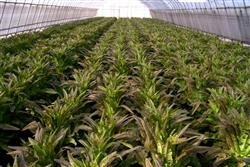
In the multiple cropping model of greenhouse lettuce, thick-skinned melon, and green garlic, lettuce is sown and raised as seedlings in mid-to-late September, transplanted in late October, and harvested in mid-March; thick-skinned melon is sown and raised as seedlings in late February, planted out in late March, and harvested at the end of June and the beginning of July; green garlic is sown in late July and harvested in mid-to-late October. Per mu, the yield can reach 4500-5000 kg of lettuce, 2500-3000 kg of thick-skinned melon, and 2000-2500 kg of green garlic, and the net income per mu can reach more than 17,000 yuan.
Lettuce: Choose early-maturing, cold-tolerant varieties such as Ziye Xiang, Naihan Erbaipi, and Naihan Erqingpi. Raise seedlings in the open field, thin during the 2-3 leaf stage, and transplant with soil during the 5-6 leaf stage. The greenhouse is 8 m wide, 2.8 m high, and 80-100 m long. Make 2 beds inside the greenhouse, with a bed width of 3-3.5 m, leave a 50 cm wide walkway in the middle, and dig ditches on both sides of the greenhouse. Set planting rows 30 cm apart and plants 25 cm apart, planting 8500-9000 plants per mu. During the growing period, ventilate in good time to reduce humidity and prevent downy mildew, gray mold, sclerotinia rot, and soft rot. Before harvest, take care to prevent pests such as aphids and tobacco whiteflies from entering the greenhouse.
Thick-skinned melon: Choose early-maturing, disease-resistant varieties tolerant to low temperature and weak light and tolerant of moisture, such as Mi Tianxia. Use plug tray substrate seedling raising, and transplant when the seedlings have 4-5 true leaves. Inside the greenhouse, make small high beds running north-south for planting, with a bed height of 20 cm, a bed surface width of 2.5 m, and a ditch width of 60-70 cm. Lay drip irrigation pipes, cover with plastic film, punch holes, and plant the melon seedlings. Plant 1 row per bed, with a plant spacing of 40-45 cm, planting about 600 plants per mu. Use ground crawling cultivation or trellis cultivation, and single-vine pruning or double-vine pruning. The planting density for double-vine pruning is half that of single-vine pruning. In protected cultivation, thick-skinned melons have few insects, so artificial supplementary pollination must be carried out to promote fruit set. When the young fruits are as large as eggs, thin the fruits and keep 4 melons per plant. When the main vine or secondary vine has 24-26 true leaves, pinch the growing tip. For weak plants, 1-2 secondary vines may be retained at the top and allowed to grow freely to maintain a certain growth vigor. During the growing period, take all favorable measures to ensure the temperature conditions required by the melon. For melons grown by ground crawling cultivation, the fruit touches the ground and is prone to damage by diseases and pests, and the flesh may become hard or rot. Therefore, when pruning and guiding the vines, spread straw under the vines to avoid the fruit touching the ground. When the melon is half-grown, turn the fruit to improve its color and flavor. Common diseases include powdery mildew, gummy stem blight, bacterial brown spot, and leaf blight, while pests include aphids, red spiders, tea yellow mites, and leafminers. Pay attention to timely control in the early stage.
Green garlic: Choose disease-resistant, storage- and transport-tolerant varieties such as Ershui Zao and Sanyue Huang. Before sowing, rake level the small high beds used for planting thick-skinned melon, and open a ditch every 2 m. Soak the garlic seed, then spread it out to air under 5-7°C. After 10-15 days, sow when the buds begin to sprout, with a row spacing of 10 cm and a plant spacing of 5 cm, planting about 130,000 plants per mu. After sowing, spread 3-4 cm thick wheat straw in the field, spreading 2500-3000 kg of wheat straw per mu, to increase the length of the green garlic pseudostem.