-
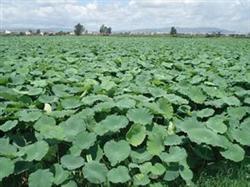
How is integrated control of lotus root diseases carried out?
I. Lotus root brown spot disease A common disease of lotus leaves, producing light brown lesions on the leaves, causing localized drying of the affected leaves. Control: Reasonable close planting to ensure ventilation and light penetration in the lotus field; appropriately increase the application of phosphorus and potassium fertilizers to improve plant resistance, and promptly remove diseased plant residues. At the early stage of the disease, use 25% carbendazim 600x solution, or 75% chlorothalonil...
-
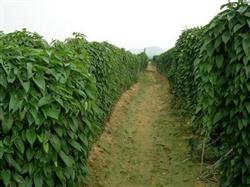
Key Technical Points for Integrated Pest and Disease Control in Chinese Yam
I. Agricultural Control 1. Selecting disease-resistant varieties is an effective method for controlling Chinese yam pests and diseases. When cultivating disease-resistant varieties, rational layout is necessary, rotating varieties every 2 to 3 years, and attention should be paid to variety purification and rejuvenation. 2. Crop rotation can reduce or avoid damage from Chinese yam stem rot and root-knot nematodes. Rotate at least once every 3 years with crops that are not infected, such as corn (2343, -3.00, -0.13%), wheat, radish, and watermelon; in old areas where Chinese yam is cultivated year-round, rotate once every year; where conditions permit, paddy-upland rotation can be implemented for better control results.
-
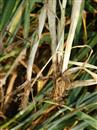
What are the integrated control methods for wheat take-all disease?
Wheat take-all is a typical root disease, capable of infecting wheat from sowing through to harvest. The main sites of infection are the wheat roots and the 1st to 2nd nodes of the stem base. After infection by the pathogen, the roots turn black and rot, losing their ability to absorb water and nutrients, which causes the above-ground parts to dry up and die, resulting in white heads. 1. ...
-
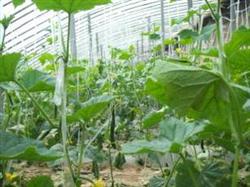
Integrated Pest and Disease Control Methods for Greenhouse Cucumbers in Spring
I. Common Diseases in Spring 1. Downy mildew (1) Occurrence characteristics: persistent (long-term companion), devastating (rapid spread, outbreaks). (2) Occurrence conditions: High humidity: relative humidity above 83% favors disease development, (water droplets or water film on leaf surface), spore germination and invasion. Optimum temperature: 15-20°C. Nutritional status...
-
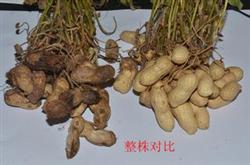
Integrated control of peanut pod rot to achieve both higher yield and better quality
Peanut pod rot, also known as "peanut rotten pod disease," has become fairly common in recent years in the major peanut-producing areas of our province, including Daming, Xinle, Dingzhou, Xingtang and Luanxian, and it becomes even more severe in fields planted continuously to peanuts for many years when the pod-setting stage coincides with a rainy year. According to surveys, affected fields suffer at least a 20% yield loss, ...
-
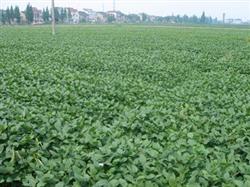
Integrated control methods for three pests of spring soybean
I. Cutworms. The main pest damaging local crops is the yellow cutworm (Agrotis segetum). 1. Damage characteristics: The larvae mostly bite off seedlings at ground level, causing missing plants and broken rows. After the main stem becomes lignified, they feed on the epidermis of the roots near the ground surface, causing root damage that affects the root's ability to absorb water, causing the plant to gradually wilt and die. ...
-
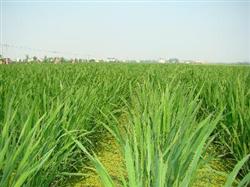
Occurrence Characteristics of Pests and Diseases in High-Mountain Water Bamboo and Integrated Control Techniques
The key points of off-season cultivation techniques for double-cropping water bamboo at low altitudes are introduced as follows: 1. Selection of improved varieties. The Zhejiang Yidianhong water bamboo (a single-cropping type) is selected. 2. Land preparation and seedling raising. Select a field sheltered from wind and facing the sun, with convenient irrigation and drainage and loose, fertile soil, as the seedling bed. In early November, sun-dry the seedlings until they are 60-70% dry, 1...
-
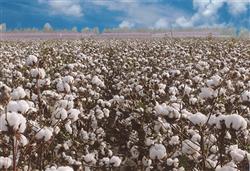
What are the integrated control techniques for cotton pests and diseases?
Topdressing is an important measure for cotton to set more bolls, set large bolls, reduce shedding, and increase yield. However, if topdressing is not done scientifically, it will not achieve the desired effect and sometimes may even produce side effects. In production, cotton topdressing has the following four key points. First, topdress according to the fertilizer requirement pattern. At different growth stages, cotton has different requirements for fertilizer...
-
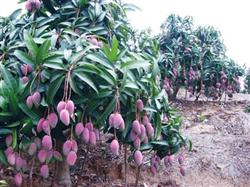
Integrated management with new techniques makes mangoes retain flowers and fruits, with more fruit set
Mango jujube sets fruit easily but retaining it is difficult; from the young fruit stage to the white-ripe stage it keeps dropping fruit, and puzzlingly, it always drops the large ones and keeps the small ones, which distresses jujube growers greatly. In recent years, various flower- and fruit-retention measures were tested on mango, and the following integrated management new techniques were developed to solve this problem: 1...
-
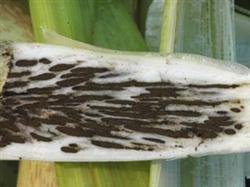
Occurrence and Integrated Control Methods of Water Bamboo Smut
Water bamboo smut is a major disease of water bamboo (Zizania latifolia), mainly affecting the leaf sheaths and the edible swollen stems, leading to reduced yield and quality of water bamboo. The main symptoms and integrated control methods of this disease are briefly described below: 1. Main symptoms: In the early stage of leaf sheath infection, the lesions appear as small dark green round spots, which later develop into oval tumor-like protrusions; in the later stage, the leaf sheaths are filled with black spore masses, causing the leaf sheaths to turn black. When the edible swollen stem is infected, the smut fungus fills the water bamboo tissue, causing the middle to swell and protrude, the edible stem strips to become shorter, and the outer surface to have many longitudinal grooves. It becomes rough, and in severe cases the edible stem is unfit for consumption.
条件筛选