-

Introduction to Common Pests and Diseases of Garden Flowers and Their Integrated Control Methods
Beautiful flowers are certainly dazzling, but charming garden flowers also suffer from various diseases both big and small. Today, what the editor of Huinong Network brings to you is an introduction to common pests and diseases of garden flowers and their integrated control methods. If you love garden flowers, you definitely should not miss it.
-

Key Points for Integrated Disease Control Techniques for Azaleas in Summer
Besides the "large-flowered azalea," there are other varieties of azalea, such as the Japanese azalea and the Belgian azalea. The former belongs to the East Asian azalea group, while the latter belongs to the Western azalea group, and both are suitable for pot cultivation; however, if daily cultivation is improper and care is neglected
-

Common Wood-Boring Pests of Landscape Plants and Integrated Control Methods
Landscape plants are easily harmed by wood-boring pests in daily life. These pests live hidden, cause serious damage and are difficult to control, which brings certain difficulties to landscape plant protection. Below, the editor will introduce the common wood-boring pests and control methods
-

Too many kitchen appliances taking up too much space? After buying an integrated stove, things feel much more spacious
These home products nowadays, Huahua has really noticed, are getting more and more convenient and more and more practical! These designers seem to know exactly what we are thinking, and the products they design all seem to wave at us and say: come buy...
-
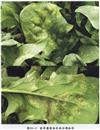
How to prevent and control downy mildew in spinach? Detailed explanation of prevention and integrated treatment methods
The disease is caused by a fungus called spinach downy mildew. It mainly affects the upper surface of the leaves; the lesions are pale yellow, irregular in shape and varied in size, with a diameter of 3-17 mm and indistinct edges. After the lesions expand, they join together into patches, and in the later stage they turn brown and the leaves die; on the underside of the leaves, a grayish-purple mold layer forms on the lesions. The disease spreads from the outer leaves...
-
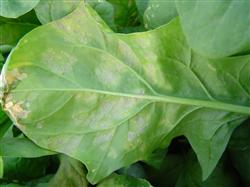
A Detailed Guide to the Prevention and Integrated Treatment of Spinach Downy Mildew
The disease is caused by a fungus called spinach downy mildew (Peronospora farinosa f. sp. spinaciae). It mainly affects the upper surface of the leaves; the lesions are pale yellow, irregular in shape, vary in size, measure 3-17 mm in diameter, and have indistinct edges. After the lesions expand, they join together into patches, and in the later stage turn brown and die, while a grayish-purple mold layer forms on the lesions on the underside of the leaves. The disease spreads from the outer leaves...
-
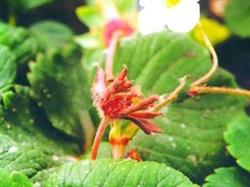
Symptom Identification and Integrated Control Methods for Strawberry Bud Blight
Strawberry bud blight is a soilborne fungal disease with a worldwide distribution. It is strongly saprophytic in soil and is an important root disease of many crops. In addition to strawberry, it also affects more than 160 species of cultivated and wild plants, including cotton, soybean and vegetables. On strawberry, it mainly damages buds, new shoots, stipules and the bases of leaf petioles, causing seedling-stage damping-off...
-
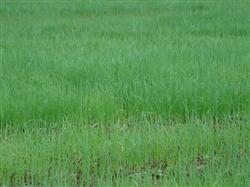
Key Integrated Pest and Disease Control Techniques for Onion Seedlings
I. Selecting Superior Varieties In production, purple-skinned varieties such as Ziyu No. 1, Ziyu No. 2, Zixing, and Shuanghuanhong can be selected. These varieties have the characteristics of strong pungency, high yield, excellent quality, and suitability for export. These varieties generally yield about 5000 kg per mu, and high-yielding plots can reach 7500 kg per mu. II...
-
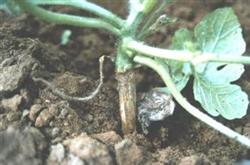
How to prevent and control watermelon seedling diseases? A detailed guide to integrated control techniques
I. Symptoms of the main diseases 1. Damping-off. In the early stage, the root collar of the seedling (the junction of root and stem) develops lesions that look as if scalded by boiling water and become rotten, after which the diseased part turns yellowish-brown, dries out and shrinks; the cotyledons have not yet wilted, but the seedling topples over. Damping-off mostly occurs from the emergence of the cotyledons to the stage when 2 true leaves have flattened out. The disease spreads very quickly; a few days after the appearance of the first diseased plants, seedlings topple over in patches. Under conditions of high temperature and high humidity, the diseased parts of the seedlings and the ground nearby,
-
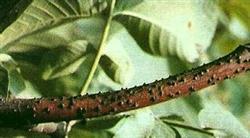
Integrated Control Methods and Technical Key Points for Walnut Branch Blight
Walnut branch blight is caused by fungal infection and mainly damages branches and trunks. It occurs in all regions, with a general diseased plant rate of 20-30%, and in severe cases the diseased plant rate reaches over 80%, causing massive branch dieback and directly affecting tree growth as well as walnut yield and quality. Therefore, timely control is necessary to curb the disease and promote tree...
条件筛选