Integrated control of peanut pod rot to achieve both higher yield and better quality
Peanut pod rot, also known as "peanut rotten pod disease," has become fairly common in recent years in the major peanut-producing areas of our province, including Daming, Xinle, Dingzhou, Xingtang and Luanxian, and it becomes even more severe in fields planted continuously to peanuts for many years when the pod-setting stage coincides with a rainy year. According to surveys, affected fields suffer at least a 20% yield loss, ...
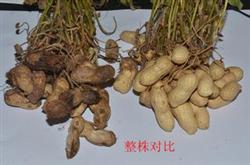
Peanut pod rot, also known as "peanut rotten pod disease," has become fairly common in recent years in the major peanut-producing areas of our province, including Daming, Xinle, Dingzhou, Xingtang and Luanxian, and it becomes even more severe in fields planted continuously to peanuts for many years when the pod-setting stage coincides with a rainy year. According to surveys, affected fields suffer at least a 20% yield loss, and in severe cases more than 50%. This disease has become a major disease in peanut production, posing an extremely serious threat to both yield and peanut quality. In production, this disease occurs fairly commonly and is also difficult to control, so integrated control combining multiple methods should be adopted to raise yield and quality and thereby increase returns from cultivation.
I. Analysis of causes
Peanut pod rot mainly shows up as rotting of the peanut pods. In mild cases half of the pod turns brown or black, the kernel inside is small and hard, poorly developed, and the pod skin turns yellow; in severe cases the entire pod is deep black, with both the pod skin and the kernel completely rotted, and it generally occurs on whole plants or in patches. From the time peanuts enter the pod-setting stage in July until harvest, the disease can occur at any point. There are many causes of peanut pod rot, chiefly soil-borne fungi such as Fusarium, followed by calcium deficiency in the soil, and then by damage from chewing by underground pests such as white grubs or by infection through the wounds they cause.
II. Control methods
1. Crop rotation. According to surveys, the spring peanuts grown in the main peanut-producing areas of our province are mostly planted on sandy beach land along the banks of rivers, and this kind of land is most suitable for growing peanuts, so continuous peanut cropping is extremely serious. Because of continuous cropping year after year, harmful pathogens accumulate and increase in the soil year by year; at the same time, peanut roots also secrete certain toxic substances, and farmers' growing dependence on chemical fertilizers has led to a relatively high degree of soil salinization. The soil environment for peanut growth deteriorates markedly, so the peanut seedlings are of poor quality and pod rot is very easily triggered. To reduce the occurrence of this disease, scientific crop rotation should be practiced, replanting peanuts only after an interval of two to three years.
2. Seed exchange between different locations. Peanuts themselves are a crop for which conventional saved seed is used, and some farmers have no awareness of using improved seed or of exchanging seed, sticking with one old variety for three or five years, or even eight or ten years, and paying no attention to purifying and rejuvenating the variety during production. This leads to serious degeneration of the variety, poorer quality, lower yield and greater susceptibility to disease, and it is especially sensitive to soil-borne diseases such as pod rot. For this reason, using the method of exchanging seed between different locations can both reduce the occurrence of disease and maximize peanut yield. For example, growers in Hebei should buy peanut seed bred in Shandong, Henan and other places. According to production trial surveys, peanut seed exchanged between different locations can increase yield by 15%-30%.
3. Balanced fertilization. Peanuts are a cash crop that needs a relatively large amount of fertilizer, especially phosphate and potassium fertilizer. In addition, increasing the application of medium and trace element fertilizers such as calcium, sulfur, zinc, manganese, molybdenum and boron can markedly improve peanut yield and quality and reduce the incidence of disease. For sandy beach land with poor soil fertility, farmyard manure, stable manure and poultry and livestock manure such as chicken manure must be applied in greater amounts; for chemical fertilizers, following the principle of being economical and affordable, a combination of urea + phosphate fertilizer + potassium fertilizer can be chosen. After peanuts enter the pod-setting stage, apply nitrogen and potassium fertilizer, or compound fertilizer, twice as a top dressing, and later foliar feeding can markedly reduce the occurrence of disease and raise peanut yield. In addition, mixing an appropriate amount of biological bacterial fertilizer into the base fertilizer can greatly increase the content of beneficial bacteria in the soil and reduce the content of harmful bacteria, and it also has a clear effect on preventing pod rot.
4. Seed treatment with chemicals. Trials show that using a two-in-one seed treatment agent combining a fungicide and an insecticide to treat seed before peanut sowing can effectively reduce the probability of disease and pest outbreaks, and it has a notable effect on preventing pod rot. Options include Shileshi, Gaqiao, carbendazim and others.
5. Prevent disease and control pests early. Once peanuts are infected by fatal diseases such as root rot and stem rot, pod rot can also occur. Underground pests such as white grubs, wireworms and cutworms chew on the pods and leave wounds on them, and the wounds are easily infected by pathogens; in particular, the Fusarium that is abundantly present in the soil can easily spread and cause pod rot. For this reason, scientific prevention should be carried out, with diseases and pests controlled early, to prevent trouble before it happens.