-
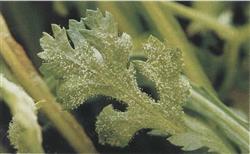
Integrated control methods for downy mildew in autumn garland chrysanthemum
Downy mildew in garland chrysanthemum mainly damages the leaves. In the early stage of the disease, pale yellow nearly round or polygonal lesions appear on the old leaves in the lower part of the plant, gradually spreading to the middle and upper parts of the plant; in the later stage the lesions become yellowish brown, and when the disease is severe the lesions merge into one patch and the leaves turn yellow and die. When humidity is high, white mold develops on the underside of the lesions. The pathogen infects...
-
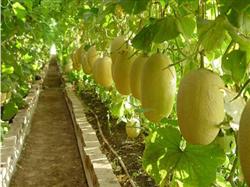
Integrated Control Measures for Gummy Stem Blight of Hami Melon in Rainy Regions
I. Bacterial Leaf Spot Symptoms: In the early stage, water-soaked lesions appear near the veins on the underside of leaves; the lesions expand rapidly and merge into one another, with a yellow halo at the edges. Control method: In the early stage of the disease, spray the foliage 2-3 times with 77% Duoning at 500 times dilution or 3% zhongshengmycin at 800 times dilution, once every 4-5 days. II. Gummy Stem Blight Symptoms...
-
Key Technical Points for Integrated Pest and Disease Control in Bitter Gourd
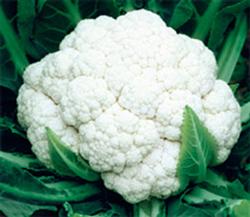
Cauliflower has poor waterlogging tolerance. When growing cauliflower in rainy areas and in environments with a high water table, deep furrows and high beds should be used to facilitate drainage. This is the key to successful cauliflower cultivation. Cauliflower also should not be grown in continuous cropping. The previous crop is best as cucurbits, solanaceous fruits, or legume vegetables, and fertile...
-
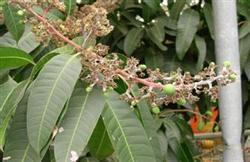
What to do if a mango tree gets sooty mold? Key points of integrated control techniques
I. Causes of mango flower and fruit drop 1. If the mango flowering period and young fruit period encounter low-temperature rainy weather (temperature below l1.5°C) and it lasts a long time, flower and fruit drop will be severe. The flower spikes are damaged and die, a large number of deformed fruits and abortive fruits appear, and they easily fall off naturally. 2. Pests and diseases damage Pests that harm mango...
-
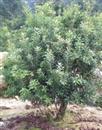
What are the main pests of bayberry (Chinese bayberry)? A detailed guide to integrated control methods
I. Bayberry crown gall disease 1. Symptoms: Bayberry crown gall disease is a bacterial disease. It mainly affects the branches and trunks of 2-3 year old fruiting trees, mostly forming tumors on the branches and trunks. The tumors are nearly spherical, varying in size, very hard and suberized, and brown to dark brown. Generally, the tumors on the branches and trunks begin to enlarge in early April, and in July-August...
-
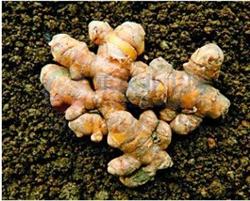
How to prevent and control ginger rot? A detailed explanation of integrated control techniques
1. Select disease-free ginger seed and disinfect seed ginger. Keep seed from disease-free land or select disease-free ginger as seed; before sowing, soak the cut seed ginger in a 800-fold dilution of 50% carbendazim wettable powder for 6 hours, or soak it in a 2000-fold dilution of xinzhiromycin for 24 hours. 2. Ginger field selection and disinfection. The pathogen can survive in soil for more than 2 years, so...
-
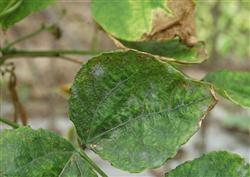
How to carry out integrated control of cowpea rust and powdery mildew in greenhouses?
At the early stage of the disease, spray 70% thiophanate-methyl wettable powder at 500 times dilution, or 40% copper oxychloride wettable powder at 600 times dilution, 50% sulfur suspension concentrate at 300 times dilution, or Fenbiqing at 150 times dilution. Spray 2 to 3 times consecutively, at 5 to 7 day intervals.
-
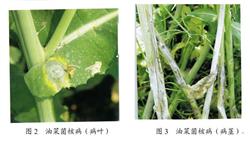
Key Technical Points for Integrated Control of Rapeseed Sclerotinia Stem Rot
Rapeseed sclerotinia stem rot is a major disease of rapeseed, widely distributed in China, especially common in the Yangtze River basin and the south. In ordinary years, incidence ranges from 10% to 30%, and in severe cases reaches 80%, causing very serious losses. Rapeseed sclerotinia stem rot is caused by a fungus, and it can occur at all stages of rapeseed growth, but it is most severe after flowering...
-
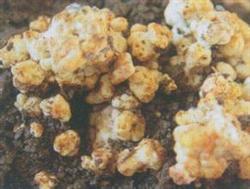
What to Do When Oyster Mushrooms Get Walnut Meat Fungus Disease? Occurrence Patterns and Integrated Control
Recently, many readers have reported that the oyster mushrooms they cultivate have been affected by walnut meat fungus (Diehliomyces microsporus). We are therefore reposting an article titled "Occurrence Patterns and Control Techniques of Walnut Meat Fungus in Oyster Mushrooms" published by Yang Yongheng, An Xiurong and others of the Tai'an City Institute of Agricultural Sciences, Shandong, for growers' reference: In recent years, Tai'an City and its surrounding...
-
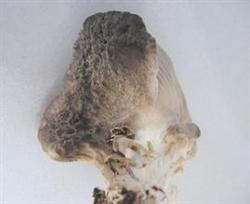
How to prevent and control green mold in oyster mushrooms? A detailed guide to integrated control techniques
1. The tall-stemmed mushroom has a small cap and poor differentiation, with a relatively long stem. The cause is that during the primordium formation and differentiation stage, the mushroom house is short of oxygen and light, while the temperature is on the high side, which affects the normal differentiation and development of the cap. Control method: increase ventilation and adjust light and temperature. 2. The tumor-capped mushroom's cap appearance is mainly at the edge...
条件筛选