-
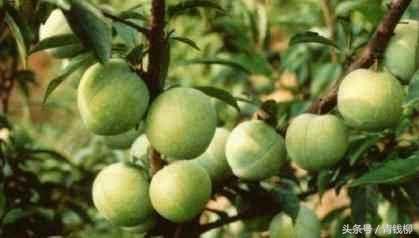
How to cultivate Youmunai (Prunus salicina × Prunus persica) with high quality and efficiency? Key supporting technologies for Ningde City
Key supporting technologies for high-quality and efficient cultivation of Youmunai in Ningde City. You (munai) is a famous and premium fruit of Fujian Province with a long cultivation history, mainly distributed in Gutian, Fu'an and surrounding counties and cities in the eastern Fujian region. The fruit resembles a peach in shape and a plum in flesh...
-
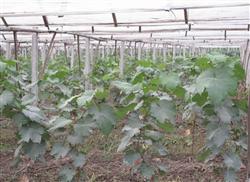
How to manage young grapevines for high quality and efficiency
1. From after the grapes bud until late August, apply a topdressing once a month, using 5 kg of farmyard manure and 50 g of nitrogen fertilizer per plant each time, applied in holes, so as to apply fertilizer frequently and lightly; 2. For newly planted grapevines, set up small supports in the same year to tie and guide the new shoots. When the new shoots grow to about 20 cm, select and keep one thick, strong new shoot and remove the other tender shoots....
-
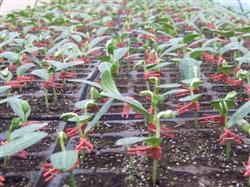
Key Technical Points for Pollution-Free High-Efficiency Cultivation of Bitter Melon in Greenhouses
I. Grafting Seedling Cultivation 1. Seedling Raising Methods The rootstock is raised in nutrient pots, and the scion is raised in sterile soil to strictly prevent soil-borne disease infection. Soak bitter melon seeds in a 75% thiophanate-methyl 800-fold solution for 12 hours, then soak in clean water for 16 hours, remove and air-dry, bury in sand for 2 days of warm germination; disinfect the nutrient soil with quintozene...
-
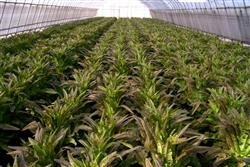
High-Efficiency Multiple Cropping Technology for Greenhouse Lettuce, Thick-Skinned Melon, and Green Garlic
In the multiple cropping model of greenhouse lettuce, thick-skinned melon, and green garlic, lettuce is sown and raised as seedlings in mid-to-late September, transplanted in late October, and harvested in mid-March; thick-skinned melon is sown and raised as seedlings in late February, planted out in late March, and harvested at the end of June and the beginning of July; green garlic is sown in late July and harvested in mid-to-late October. Per mu, the yield can reach 4500-500...
-
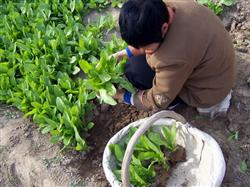
High-Efficiency Multiple Cropping Technique for Winter Lettuce and Early Spring Peppers in Greenhouses
1. Select good varieties: For greenhouse cultivation of early spring lettuce, it is advisable to choose early-maturing pointed-leaf varieties with strong cold resistance, such as Hefei pointed-leaf duck-egg lettuce and Beijing crucian carp lettuce. 2. Grow strong seedlings: Sow and raise seedlings in a greenhouse in mid-to-late January. Before sowing, first soak the seeds in clean water at 20°C for 3-4 hours, rub and wash them, then remove and drain the water, and put them into...
-
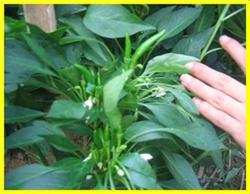
High-Efficiency Cultivation Technique for Multiple Cropping of Winter Lettuce Followed by Early Spring Peppers in Greenhouses
For lettuce, choose the disease-resistant, high-yielding, cold-tolerant lettuce variety Shuiguasi. Sow and raise seedlings in a small arch shed from late August to late September. After sowing, lower the temperature during the day by ventilating the shed film from the bottom and covering with a shade net; on rainy nights, cover the shed film properly. From pricking out to the seedling recovery stage, shade during the day to create an ambient temperature suitable for lettuce growth...
-
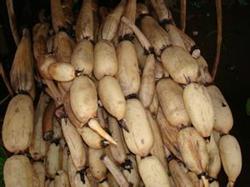
Key Techniques for Early-Maturing, High-Efficiency Lotus Root Cultivation under Plastic Tunnels
1. Select good varieties: choose medium-maturing large purple-red lotus root varieties whose main rhizome has 4-5 nodes. 2. Treat seed rhizomes: select main rhizomes with robust buds, 2-3 nodes and a weight above 0.5 kg as seed rhizomes, or use large secondary rhizomes as seed rhizomes. After the seed rhizomes are dug up, plant them as early as possible, with a seeding rate of 300-400 kg per mu. Before planting, use...
-
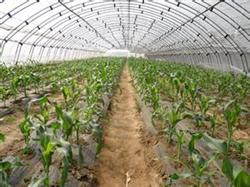
Detailed Explanation of High-Efficiency Cultivation Techniques for Fresh-Eating Corn in Greenhouses
In winter-warm greenhouses, during the late stage of spring production, the vegetable plants inside the greenhouse age, yield and quality decline, market prices are low, and planting benefits decrease. At this time, transplanting fresh-eating corn in the winter-warm greenhouse can rationally utilize greenhouse resources and achieve relatively high economic benefits. 1. Select excellent varieties: according to local conditions, select high-quality fresh...
-
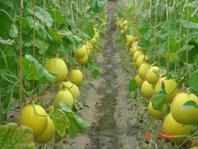
Key Technical Points for High-Yield and High-Efficiency Cultivation of Thin-Skinned Melons in Cold Greenhouses
Thin-skinned melons have traditionally been cultivated by letting the vines trail on the ground, with the vines growing in a tangled and crisscrossing manner that is very difficult to manage, and the yield is also low. When thin-skinned melons are cultivated in cold greenhouses, using the trellising method just like growing cucumbers in large greenhouses, higher yields and economic benefits have been achieved, with an average of 667 sq m producing over 5,000 kg of melons, and a net benefit of...
-
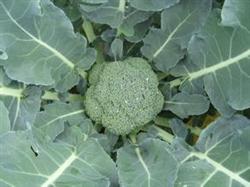
Key Technical Points for High-Efficiency Cultivation of Zucchini and Cauliflower in Greenhouses
For zucchini seedling raising, choose the 'Zaoqing Yidai' variety. Raise seedlings in nutrient pots inside a greenhouse, using 300 grams of seed per mu. Soak the seed and sprout it until the radicle emerges, then sow, 1 seed per pot, cover with 1.5 cm of loose nutrient soil after sowing, and cover with plastic film. Before emergence, raise the temperature as much as possible, maintaining 30-33°C during the day. After seedlings emerge evenly, lower the temperature appropriately, during the day...
条件筛选