How to cultivate Youmunai (Prunus salicina × Prunus persica) with high quality and efficiency? Key supporting technologies for Ningde City
Key supporting technologies for high-quality and efficient cultivation of Youmunai in Ningde City
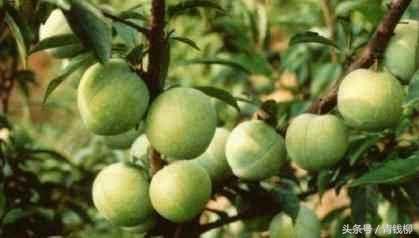
You (munai) is a famous and premium fruit of Fujian Province with a long cultivation history, mainly distributed in Gutian, Fu'an and surrounding counties and cities in the eastern Fujian region. The fruit resembles a peach in shape and a plum in flesh, with a single fruit weight of 80-120 g and a maximum single fruit weight of up to 350 g; the skin is yellow-green, and the flesh is yellow, thick, tender, crisp and juicy; the taste is refreshingly sweet, and the quality is excellent. The stone is small and semi-clinging, and the top of the stone often separates from the flesh to form a stone cavity, which is one of the main characteristics of the fruit. It is rich in nutrients and has health benefits such as clearing heat, promoting diuresis, moistening the lungs, aiding digestion, and stimulating appetite and strengthening the spleen. It has become an outstanding fruit among the fine fruits of Fujian and is highly favored by consumers at home and abroad.
The Ningde Institute of Agricultural Sciences received funding from the Science and Technology Program Project of the Fujian Provincial Department of Science and Technology from 2006 to 2008 to carry out selection of superior You (munai) plants and research on cultivation techniques. In 2008, 4 superior You plants were selected, and a set of high-yield cultivation techniques was summarized and passed provincial-level appraisal. The cultivation area gradually expanded and production continuously increased. Because producers valued yield but neglected quality management, product competitiveness declined, and increased production did not bring increased income, which seriously dampened fruit growers' enthusiasm for growing the fruit. In order to enhance the market competitiveness of the product and achieve healthy, stable and sustainable development of the You (munai) industry, the author conducted visits, investigations and analyses in 2013 on the construction of standard orchards and cultivation technology management for You (munai) in this region, and summarized a set of key supporting technologies for high-quality and efficient cultivation of You (munai) suitable for the eastern Fujian region. These overcame unfavorable factors such as early tree decline, unstable yield and declining quality in You (munai), solved technical difficulties in You production, and greatly improved the planting benefits of You. The key technologies are introduced as follows.
1 Orchard site selection
You (munai) is a light-loving deciduous fruit tree, suitable for areas with an average annual temperature below 19°C, an average January temperature below 9°C, an average March temperature above 12°C, and a temperature above 15°C during full bloom. For orchard establishment, it is best to choose flat land on both banks of streams with a good ecological environment or gentle slopes with a gradient of less than 25°C, with higher terrain, facing the sun and sheltered from the wind on southeast or south slopes; deep soil layers, fertile soil, loose and breathable texture, and high organic matter content; low groundwater level, good drainage and irrigation conditions; and plots with sufficient sunlight, convenient transportation, no environmental pollution and no severe wind damage. It is required that the planting plot has not grown You, peach, plum, pear or other tree species for at least 5 years; otherwise, it will seriously affect the growth and development, yield and quality of You (munai) and shorten the economic life of the tree.
2 Planting techniques
2.1 Seedling selection
For You (munai) seedlings, grafted seedlings with wild peach as rootstock should be selected, preferably first-grade seedlings with pure variety, well-developed root systems, complete graft union surfaces, no quarantine pests or diseases (crown gall) and vigorous growth.
2.2 Planting time
You (munai) seedlings can be planted after leaf fall and before bud break, but autumn planting is superior to spring planting. Autumn planting is generally in October to November, when the soil temperature is relatively high, and after planting the wounds can heal quickly and growth can resume. Spring planting, however, because aboveground activity occurs earlier than belowground activity, has slow root wound recovery, thus affecting tree growth in that year. However, for autumn planting, attention should be paid to timely watering to maintain moisture, or mulching the tree basin, to avoid seedling death caused by drought.
2.3 Planting density
For You (munai) on flat land, the planting row spacing is 4 m×4 m or 4 m×5 m, and in mountainous areas it is 3 m×3 m or 4 m×3 m.
2.4 Planting pattern
On flat land, rectangular, square or triangular arrangements can be used; in mountainous areas, contour planting is mainly used.
2.5 Planting method
One to three months before planting, dig the planting holes or trenches (hole depth or trench depth 0.8 m, width 0.8-1.0 m). When digging, be careful to keep topsoil and subsoil separately stacked. After the planting holes (trenches) are dug, place straw, weeds, green manure or rice straw in the bottom layer in two layers with a thin layer of soil every 10 cm; in the middle layer, use decomposed poultry and livestock manure or commercial organic fertilizer at 50-100 kg per plant plus calcium magnesium phosphate fertilizer at 2-3 kg, mix and backfill in two layers, one layer of fertilizer and one layer of soil; after backfilling, in the upper layer of the planting hole use decomposed manure or commercial organic fertilizer 2.5-5.0 kg + calcium magnesium phosphate fertilizer 0.25-0.50 kg : topsoil mixed evenly at 1:10 to build a planting mound 25-30 cm above the bed surface. Properly shorten the injured or moldy roots of the seedlings to be planted, soak them in 50% carbendazim wettable powder 500 times solution for 10-30 min, then dig a small hole in the center of the planting mound, place the seedling vertically in the hole, ensuring the seedling is upright, the roots are spread out, the soil is firmly piled, and sufficient water is applied. In sunny and dry weather, replenish water in time to keep the soil moist. It is best to mulch the tree basin for autumn-planted seedlings, reducing water evaporation and weed growth, which is beneficial to tree growth.
3 Soil, fertilizer and water management
3.1 Soil management
3.1.1 Applying more organic fertilizer to improve soil. In September to October each year, on both sides of the planting trench or around the planting hole of You (munai), dig alternately year by year long or arc-shaped soil improvement trenches with a width of 20-30 cm, depth of 40-50 cm, and length varying from 100-200 cm. For soil improvement materials, place straw, rice straw, weeds, green manure, etc. in the bottom layer of the trench to a thickness of 10-15 cm, sprinkle a small amount of urea or lime to promote decomposition, and then cover with soil 5-10 cm. In the middle layer, place decomposed poultry and livestock manure or commercial organic fertilizer 25-50 kg, calcium magnesium phosphate fertilizer 1-2 kg, then add an appropriate amount of burned soil or peat soil, mix evenly, and apply in 2 layers, which helps improve the formation of soil aggregate structure around the roots, increase organic matter content and permeability.
3.1.2 Deep plowing in winter to mature the soil. It is best to deep plow the soil once every winter in the You orchard to promote maturation. Around the trunk, shallow plowing of 5-10 cm is suitable, while the outer area should be deep plowed 20-25 cm. During deep plowing, some weeds or fallen branches and leaves in the orchard can be turned under, and underground pests can be turned out, thereby reducing damage from underground pests, cleaning the orchard, reducing overwintering pest and disease sources, promoting soil maturation and improving permeability.
3.1.3 Intercropping green manure or growing grass to fertilize the soil. In the You orchard, some green manure crops can be intercropped, such as alfalfa, white clover, round-leaf cassia, Ageratum conyzoides, Indian cowpea, Chinese milk vetch and other green manures, and measures such as orchard grass cover can also be implemented. Grass cover can be mowed and mulched in stages according to different grass types. When the growth height of green manure or weeds hinders orchard management, generally when the height exceeds 40 cm, mowing is carried out, especially entering the dry summer season when mowing and mulching can effectively lower soil temperature, reduce ground evaporation, increase soil organic matter, promote microbial activity, increase available potassium content in the soil, and at the same time conserve soil and water, reduce labor intensity, save costs, and achieve the purpose of fertilizing the soil.
3.2 Fertilization management
3.2.1 Fertilization for young trees. For young trees planted in the current year, start fertilizing when new shoots grow to 5-10 cm. Because newly planted trees have insufficient absorbing roots and weak absorption capacity, it is required to apply thin fertilizer frequently. From March to July, fertilize twice a month. In early spring, 0.3%-0.5% ammonium bicarbonate or ammonium sulfate plus 0.5%-1.0% superphosphate plus about 0.1% Zhengen fertilizer liquid can be used, or 0.2%-0.5% diammonium phosphate plus 0.1%-0.2% potassium sulfate aqueous solution can be used alternately for irrigation, preferably combined with organic fertilizer liquid, and the concentration can be increased gradually. In August to September, if the tree grows relatively quickly and is required to bear fruit the next year, then appropriately control nitrogen and increase phosphorus and potassium, fertilizing once a month, applying 45% potassium sulfate compound fertilizer 50-100 g per plant, and at the same time irrigate to preserve moisture. During the growing season, foliar supplementation can also be combined with pesticide spraying using 0.3%-0.5% urea, 0.2%-0.3% monopotassium phosphate and 0.2% ten-element trace fertilizer, which helps promote flower bud differentiation. If the tree is still small and does not need to bear fruit the next year, then still mainly use nitrogen fertilizer, which helps promote vegetative growth.
3.2.2 Fertilization for fruiting trees. After one year of careful management, You can bloom and bear fruit the next year, but it must be controlled mainly by expanding the canopy, leaving few or no fruits. Fertilization at this stage should be mainly basal fertilizer. In autumn each year, combined with hole expansion and soil improvement, apply organic fertilizer 1,500-2,000 kg per mu, calcium magnesium phosphate fertilizer 100 kg, and 15-20 kg compound fertilizer, with the fertilization amount reaching 60%-70% of the whole year's fertilization amount. Topdressing can be applied 4 times a year. In the first half of the year, more nitrogen fertilizer should be applied to help the canopy expand rapidly. For 2-3 year old trees, apply bud fertilizer from late February to early March at 50-100 g diammonium phosphate per plant; in early to mid-May apply urea 50 g plus 45% potassium sulfate compound fertilizer 0.1-0.2 kg per plant to promote second flush shoot growth; in the second half of the year control nitrogen and increase phosphorus and potassium to help promote flower bud differentiation. In early July apply 45% potassium sulfate compound fertilizer 0.1-0.2 kg plus 5-10 kg biogas slurry or organic liquid fertilizer per plant; in early September apply 45% potassium sulfate compound fertilizer 0.15-0.25 kg per plant. At the same time, combined with pesticide spraying, supplement foliarly with 0.3%-0.5% urea, 0.2%-0.3% monopotassium phosphate and 0.1%-0.3% ten-element boron fertilizer, etc. For full-production trees, after fruit harvest, combined with post-harvest fertilizer from late August to September, carry out hole expansion and soil improvement and apply organic fertilizer 1,500-2,000 kg per mu, calcium magnesium phosphate fertilizer 100 kg plus urea 15-25 kg, and 45% potassium sulfate compound fertilizer 25-50 kg, with the fertilization amount accounting for 60%-70% of the whole year. Topdressing is applied 2-3 times a year, namely the first post-flower fertilizer (fruit swelling fertilizer) within 10 d after flower drop during the rapid young fruit growth period, applying diammonium phosphate 0.5-1.0 kg plus 45% potassium sulfate compound fertilizer 0.5-1.0 kg per plant; the second topdressing during the second fruit swelling from late June to early July, applying 50% potassium sulfate 0.25-0.50 kg plus 45% potassium sulfate compound fertilizer 0.25-0.50 kg plus biogas slurry or organic fertilizer liquid 10-20 kg per plant. At the same time, combined with pesticide spraying, supplement foliarly with 0.3%-0.5% urea, 0.2%-0.3% monopotassium phosphate and 0.2%-0.3% medium and trace element fertilizer, etc.; the third is the post-harvest fertilizer after fruit harvest, generally from late August to early September, mainly nitrogen fertilizer, and can also be applied in combination with basal fertilizer.
3.3 Water management
You (munai) prefers dryness and fears waterlogging, requiring the orchard to be able to drain and irrigate, with convenient drainage and irrigation. For example, during winter orchard cleaning, ensure the drainage ditches are unobstructed. In the first half of the year, especially during the flowering period and the rainy season from April to May, clean the drainage ditches in time so that water dries after rain stops. In late June, entering the high-temperature summer drought season, irrigate in time to cool down and preserve moisture. During the fruit ripening and harvesting period, water should be appropriately controlled to prevent fruit cracking and improve quality. After fruit harvest and fertilization, irrigate once lightly to promote tree recovery and growth. After September, control water and maintain appropriate soil drought, which helps flower bud differentiation.
4 Tree management
4.1 Training of young trees
You (munai) has relatively strong growth vigor, new shoots grow relatively upright, and the ability to produce new shoots is strong. Shaping management during the growing season of the planting year is very important. If shaping management is in place, the basic plant framework can be basically formed in the planting year, and the tree can enter the fruiting period earlier. Shaping is mainly based on the 3-main-branch natural open-center form. For planted seedlings, keep the trunk height at 50-60 cm. When spring shoots begin to emerge, remove all new buds below 30 cm on the trunk. When new shoots above 30 cm on the trunk have grown about 10 cm long, select and keep 3 new shoots in different directions with relatively strong and uniform growth as main branches for training, requiring the spacing between main branches to be more than 10 cm, and the opening angles of the main branches to be 75 degrees, 60 degrees and 45 degrees respectively. If the requirements are not met, they can be achieved by artificial pulling and propping. Remove other new shoots in time. On the main branches, equip 2-3 lateral branches, and the first lateral branches equipped on the 3 main branches should be in the same direction. When the 3 main branches are about 40 cm long, promptly pinch the tips at 30 cm to promote the emergence of one secondary shoot flush. On the first secondary shoots, select and keep the apical new shoot as the main branch extension shoot, and on the obliquely growing secondary shoots on both sides, select and keep one whose direction is consistent with the secondary shoots on the other main branches as the first lateral branch for training. Pinch or twist the other first secondary shoots, and remove upright shoots and shoots competing with the main shoot. When the apical extension shoot grows to 50 cm, pinch again at 40 cm to promote the emergence of a second secondary shoot flush. When the second secondary shoots have emerged more than 10 cm, select and keep the apical new shoot as the main branch extension shoot for training, but attention should be paid to adjusting the opening angle and direction, which can be adjusted by selecting the position of the pruning cut bud and by pulling and propping. The training of the second lateral branch is the same as the first lateral branch, only in the opposite direction. The other second secondary shoots should also be pinched, twisted, or dense and upright shoots removed in time. When the first and second lateral branches grow to 40 cm, pinch at 30 cm to promote new shoots and train fruiting branches or fruiting branch groups. When the main branch extension shoot grows more than 40 cm, continue pinching at 40 cm to promote new shoot growth and train them as fruiting branches. After one year of timely summer pruning and care, the plant has three main branches, each equipped with a first lateral branch and a second lateral branch, and the first lateral branches and main branch extension shoots have a certain number of fruiting branches or fruiting branch groups. The basic plant framework is basically formed. Winter pruning only requires appropriate light pruning and long release for vigorous vegetative branches, short cutting weak branches, removing upright branches, dense branches and competing branches, retaining developing branches and fruiting branches as much as possible, and maintaining the open-center structure.
4.2 Pruning of initially fruiting trees
In the second year, pruning during the initial fruiting stage should focus mainly on expanding the canopy, continuing to configure the third lateral branch, and focusing on training fruiting branches and fruiting branch groups. During the growing season, methods such as bud removal, pinching, branch pulling, twisting, short cutting and thinning are mainly adopted to control the growth of upright vigorous shoots, remove water sprouts, adjust branch distribution and growth angles. In May to June, focus on short cutting strongly growing apical shoots and upright shoots to promote branching and train them as fruiting branches or fruiting branch groups, promoting the rapid formation of a high-yielding canopy. After July, strong vigorous shoots and upright shoots should not be short cut, but should be pinched or lightly pruned. Winter pruning mainly removes upright branches and competing branches or uses branch pulling and pressing to increase branching angles, and thins diseased and insect-damaged branches, thin and weak branches, and dense branches. Select branches with suitable growth and angle as extension branches, and appropriately short cut or head-change backbone extension branches to promote new shoot growth and train fruiting branches or fruiting branch groups.
4.3 Pruning of full-production trees
For full-production trees, pruning during the growing season should be strengthened accordingly. Extension shoots of various types should be appropriately short cut before mid-June to promote branching and properly train fruiting branches or fruiting branch groups. Thin upright branches, water sprouts, overlapping branches in the inner canopy, and competing branches on extension shoots. Retract drooping tips of backbone branches to obliquely growing branches to restore tree vigor, while maintaining canopy ventilation and light penetration. During winter pruning, backbone extension branches are short cut at 30-40 cm, weak fruiting branch groups are renewed by short cutting at 10-15 cm to train fruiting branches, focusing on alternating training of fruiting branch groups. Thin water sprouts, excessively dense branches, crossing branches, overlapping branches in the inner canopy, competing branches on backbone extension branches, and excessively dense flower-bunch-like fruiting branches and thin weak short fruiting branches on fruiting base branches, promoting canopy ventilation and light penetration. For full-production trees with too many fruiting branches on the periphery and upper-middle part of the canopy, winter pruning should short cut some fruiting branches to the base, leaving only 2-3 buds at the base, to promote vegetative branch growth. Generally, the requirement is "cut 1 out of 3, cut 2 out of 5", maintaining a relative balance between vegetative and reproductive growth, reducing the amount of fruit thinning, improving fruit quality, and helping overcome alternate bearing.
4.4 Renewal pruning of aging trees
For trees older than 15 years with weakened backbone branches, extension shoot growth of less than 30 cm, increased slender branches, massive decline and death of small and medium fruiting branch groups, varying degrees of bareness in the canopy, and tree height over 3 m, carry out retraction and renewal pruning, adopting heavy pruning and retraction to renew backbone branches and restore tree vigor. Retraction pruning of backbone branches should be carried out over several years, and the training of renewal branches should maintain the subordinate relationship between main and lateral branches. For weakened backbone branches, appropriately positioned large branches can be used as replacements, heavy retraction and renewal of branch groups should be increased, more reserve branches should be retained, and thin and weak branches should be thinned.
5 Flower and fruit management
5.1 Flower and fruit preservation
Although You (munai) is a self-fruitful variety, cross-pollination can increase the fruit set rate.
(1) Place bee hives in the orchard to increase the cross-pollination rate and improve the fruit set rate.
(2) Strengthen tree management, improve tree stress resistance, improve flower organ quality, facilitate pollination and fertilization, and increase the fruit set rate.
(3) If low-temperature and rainy weather occurs during the flowering period, spray 0.2% urea + 0.2% monopotassium phosphate or 0.1% Zhixin high boron before flowering; spray 20 mg/kg gibberellin + 0.1% Zhixin high boron mixed solution during full bloom; spray 0.2% urea + 0.2% monopotassium phosphate or 0.1% Zhixin high calcium during the young fruit stage.
(4) Main branch girdling: You has relatively strong growth vigor. For vigorously growing trees, carry out main branch girdling 1-2 weeks before flowering (about early March), with a girdling width of 0.3-0.5 cm, which can effectively increase the fruit set rate.
5.2 Fruit thinning and fruit preservation
5.2.1 Fruit thinning. Fruit thinning is for better fruit preservation. Fruit thinning is generally carried out after the second physiological fruit drop during the young fruit stage (about early May). First thin deformed fruits, diseased and insect-damaged fruits, small fruits, excessively dense fruits and fruits on the outer canopy. Leave 1 fruit on flower-bunch-like fruiting branches and short fruiting branches, with a fruit spacing of 10 cm; leave 1 fruit every 15-20 cm on medium and long fruiting branches. The leaf-to-fruit ratio is preferably 35:1. Generally, the yield of full-production trees is controlled at 1,500-2,000 kg per mu.
5.2.2 Fruit preservation. This is mainly achieved by timely pest and disease control combined with 1-2 foliar supplementations of 0.2%-0.3% urea, 0.2% monopotassium phosphate, 0.2%-0.3% Zhixin high calcium, etc. Foliar fertilizer supplementation is generally carried out during the young fruit stage and the fruit color-turning stage.
5.2.3 Fruit management and harvesting. Through fruit thinning and yield control of You trees, alternate bearing in You production has been overcome, while product quality has been effectively improved. When fruits enter the ripening and harvesting period, attention should be paid to water control and waterproofing to ensure no water accumulation in the orchard. In high-temperature and drought conditions, appropriate irrigation should be carried out in the morning and evening to preserve moisture. Harvesting should be done gently and handled gently, trying to preserve the fruit bloom, and removing damaged fruits. Then carry out grading and packaging.
6 Pest and disease control
6.1 Main pests and diseases of You (munai) and their control. The main pests and diseases of You (munai) include red spot disease, shot hole disease, anthracnose, brown rust, white mold disease, gummosis, aphids, oriental fruit moth, one-spot leafhopper, leaf beetles, white peach scale, etc. Control should adopt comprehensive measures with prevention as the main approach. First, strictly implement the plant quarantine system to prevent the occurrence and spread of oriental fruit moth and root nodule disease; second, strengthen agricultural control measures, most importantly strengthening cultivation management, enhancing tree vigor, improving tree resistance, and at the same time creating a good orchard ecological environment; third, do timely control work at key periods, prune diseased branches and leaves in winter, clean the orchard, and maintain ventilation and light penetration in the orchard.
6.2 Key periods and pesticide application techniques
First, after winter pruning, spray 30% sodium abietate aqueous emulsion 20-30 times solution, and spray once at bud swelling stage with 5 degrees Baumé lime sulfur + 0.3% sodium pentachlorophenate to kill overwintering pest and disease sources; second, before flowering, spray once with a broad-spectrum protectant such as 80% mancozeb wettable powder 600 times solution + 10% imidacloprid wettable powder 2,000 times solution to prevent various fungal and bacterial diseases and aphids; third, after flower drop during the young fruit stage, spray once with 75% chlorothalonil wettable powder 1,000 times solution + 72% agricultural streptomycin 2,000 times solution + 20% fenvalerate emulsifiable concentrate 3,000 times solution or 2.5% deltamethrin emulsifiable concentrate 2,000 times solution to prevent bacterial and fungal diseases and leaf-eating and fruit-boring pests; fourth, during the fruit pit-hardening stage, spray once with 70% thiophanate-methyl wettable powder 1,000 times solution + 50% fenitrothion 1,000 times solution for control. Once specific pests or diseases occur, such as bacterial shot hole disease, therapeutic agents can be used: 72% agricultural streptomycin 3,000 times solution, 3% zhongshengmycin wettable powder 1,000 times solution or zinc sulfate lime solution (zinc sulfate 0.25 part, lime 1 part, water 60 parts); for anthracnose and brown rot, protective and therapeutic agents such as 80% carbendazim-thiram 800 times solution, 25% prochloraz emulsifiable concentrate 2,000 times solution, 25% bromothalonil wettable powder 1,000 times solution can be used; for red spot disease, 50% iprodione 1,000 times solution, 20% triadimefon emulsifiable concentrate 1,500 times solution can be used; for brown rust, 25% triadimefon 1,500 times solution, 25% triadimefon wettable powder 1,000 times solution can be used; for white mold disease, 75% chlorothalonil wettable powder 800 times solution, 70% thiophanate-methyl wettable powder 1,000 times solution can be used; for gummosis, 10 degrees Baumé lime sulfur, 4% kasugamycin 5-8 times solution, carbendazim : zhongshengmycin : yellow mud = 1:1:50 mixed mud for smearing can be used; for aphids, oriental fruit moth, etc., 1.8% abamectin emulsifiable concentrate 3,000 times solution, 10% imidacloprid wettable powder 2,000 times solution, pyrethroid 1,000-3,000 times solution can be used; for scale insects, 40.7% chlorpyrifos emulsifiable concentrate, 30% sodium abietate aqueous emulsion 500-800 times solution, 20% Guofengling compound wettable powder 1,000 times solution can be selected; for one-spot leafhopper, 10% imidacloprid wettable powder 2,000 times solution, 25% buprofezin wettable powder 600 times solution can be used. Pesticides should be used in rotation to ensure effective and safe application.