-
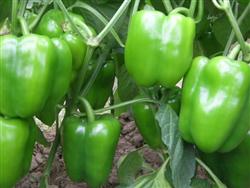
How to Increase the Fruit-Setting Rate of Greenhouse Bell Peppers
How can you increase the fruit-setting rate when growing bell peppers in a greenhouse? Please give guidance. During the flowering and fruiting stage, greenhouse bell peppers often encounter cloudy, snowy, and low-temperature weather, which causes severe flower and fruit drop in the greenhouse and affects yield and income. Here are several methods to increase the fruit-setting rate of greenhouse bell peppers: 1. Improve light conditions and raise the temperature. When encountering cloudy...
-
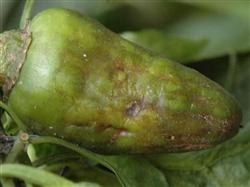
What diseases need to be prevented and controlled when growing sweet peppers?
What diseases need to be prevented and controlled when growing sweet peppers? Please give an introduction. When growing sweet peppers, the following diseases need to be prevented and controlled: Phytophthora blight. In the early stage of the disease, fumigate each mu with 110 g to 180 g of 45% chlorothalonil smoke agent, once every 7 days, 3 to 4 times depending on the severity of the disease, or dust each mu with 1 kg of 5% chlorothalonil dust, once every 7 days,...
-
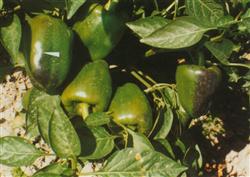
What are the common types of physiological diseases in sweet peppers?
What are the common physiological diseases of sweet peppers? Please give an introduction. The common physiological diseases of sweet peppers are: 1. Sunscald. 1. Symptoms. The cause of this disease is direct strong sunlight, and symptoms appear only on the sun-facing side of the fruit. In the early stage, the affected part fades in color, becomes slightly wrinkled, and appears grayish-white or slightly yellow. The flesh of the affected part loses water and becomes thin,...
-
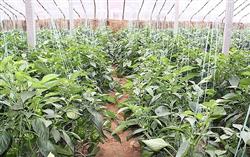
How to Fertilize Bell Peppers to Increase Yield? Practical Tips Shared
How can bell peppers be fertilized to increase yield? Please explain the fertilization methods. Bell peppers have a long growing period, an underdeveloped root system, few roots, and shallow soil penetration, and they are neither drought-tolerant nor waterlogging-tolerant. Their fertilizer requirement is greater than that of tomatoes and eggplants, and they have a strong tolerance for fertilizer. The fertilizer requirement characteristics of bell peppers are the highest potassium uptake, followed by nitrogen, and the lowest phosphorus. In vegetables, bell peppers...
-
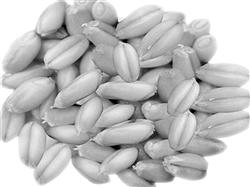
What are the methods for disease and pest control in wheat seeds?
How are disease and pest control carried out on wheat seeds? Please give guidance. For disease and pest control in wheat seeds, you can refer to the following methods: 1. Seed dressing with Shimai Dan: Shimai Dan is a seed coating agent produced by Syngenta Crop Protection AG of Switzerland, with active ingredients 2.4% difenoconazole and 2.4% fludioxonil, registered for the control of wheat loose smut. For every 10 ml of the agent, mix with 10 kg of seed. After diluting the liquid with water, thoroughly stir the slurry and seed at a ratio of 1:50-100 until the slurry is evenly distributed on the seed surface. Let it dry and then sow. This agent has systemic translocation properties; after dressing, the agent can be absorbed by wheat seeds and seedlings, has a long lasting effect, provides good disease control and seedling protection, and can promote robust wheat growth.
-
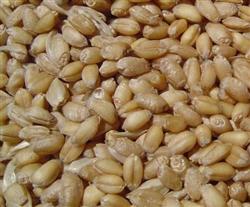
What are the benefits of disease prevention for wheat seeds?
What are the benefits of disease prevention for wheat seeds? Please explain. During the wheat sowing period, wheat pests and diseases are a key factor restricting high wheat yields. They are divided into seed-borne and soil-borne diseases, mainly including: sheath blight, root rot, smut, etc. These pests and diseases occur at the seedling stage and have a long incubation period. If a compound outbreak occurs, the control effect is relatively poor, with yield reductions of 10-30% in mild cases and total crop failure in severe cases.
-
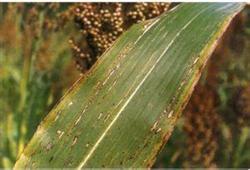
What are the symptoms of bacterial stripe disease of sorghum?
What does bacterial stripe disease of sorghum look like? Please explain. The symptoms of bacterial stripe disease of sorghum mainly affect sorghum leaves and leaf sheaths. Lesions form light red to light purplish-red stripe-like patterns along the leaf veins, about 1-3mm wide. In a few varieties they are yellowish-brown; the lesions are shiny and not water-soaked, which distinguishes them from bacterial red stripe disease. When lesions are numerous...
-
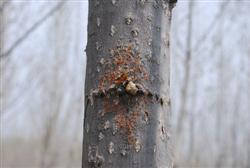
What to Do When Poplar Trees Get Canker Disease? A Detailed Guide to Prevention and Control Methods
Poplar is the general term for deciduous trees of the genus Populus in the willow family (Salicaceae). The genus contains more than 100 species, mainly distributed in the temperate and cold zones of Europe, Asia, and North America, as well as the Mediterranean coastal countries and the Middle East. China has more than 50 species. The wood is used for civil construction materials, furniture production, matchsticks, sawn timber, papermaking, and is also used for...
-
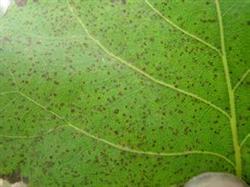
How to identify and control poplar brown spot disease?
Poplar brown spot disease is a common leaf disease, mainly affecting Chinese white poplar (Populus tomentosa), Simon poplar (Populus simonii), and Manchurian catalpa willow (Salix matsudana). In the early stage of the disease, small yellowish-brown spots appear on the surface, gradually expanding, with the edges being lighter in color and neat, and in the later stage the center of the lesion turns brown, with black dots growing on it. After the black dots rupture, they release conidia, which are blown by wind...
-
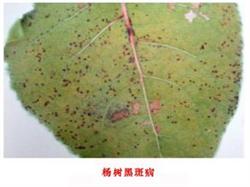
Detailed Explanation of Prevention and Control Methods and Occurrence Patterns of Poplar Black Spot Disease
Poplar black spot disease, also known as poplar brown spot disease, generally occurs on young leaves, tender shoots and fruit clusters, spreading from top to bottom, mainly damaging leaves. In the early stage of the disease, needle-like sunken shiny small spots first appear on the underside of leaves, then the lesions expand to about 1 mm, black, slightly raised, and brown spots also appear on the upper side of the leaves, 5-6 days...
条件筛选