How to Fertilize Bell Peppers to Increase Yield? Practical Tips Shared
How can bell peppers be fertilized to increase yield? Please explain the fertilization methods. Bell peppers have a long growing period, an underdeveloped root system, few roots, and shallow soil penetration, and they are neither drought-tolerant nor waterlogging-tolerant. Their fertilizer requirement is greater than that of tomatoes and eggplants, and they have a strong tolerance for fertilizer. The fertilizer requirement characteristics of bell peppers are the highest potassium uptake, followed by nitrogen, and the lowest phosphorus. In vegetables, bell peppers...
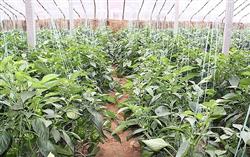
How can bell peppers be fertilized to increase yield? Please explain the fertilization methods
Bell peppers have a long growing period, an underdeveloped root system, few roots, and shallow soil penetration, and they are neither drought-tolerant nor waterlogging-tolerant. Their fertilizer requirement is greater than that of tomatoes and eggplants, and they have a strong tolerance for fertilizer. The fertilizer requirement characteristics of bell peppers are the highest potassium uptake, followed by nitrogen, and the lowest phosphorus. Among vegetables, bell peppers belong to the high-nitrogen, medium-high-potassium type and require a relatively large total amount of fertilizer. Therefore, in production, attention should be paid to the sufficient supply of nitrogen, phosphorus, and potassium to help enlarge leaf area and improve the photosynthetic capacity of leaves. This can coordinate vegetative growth with reproductive growth, so that neither "little old seedlings" caused by stalled vegetative growth nor "overgrown vines" caused by excessive stem and leaf growth will form. When the main goal is harvesting tender fruit, raising the potassium nutrition level so that the nitrogen-to-potassium ratio equals 1 or is slightly greater than 1 is more appropriate, and it is of great significance for improving fruit quality, including commercial quality and nutritional quality.
In addition, calcium nutrition in bell peppers should not be ignored. Once calcium is deficient, the fruit is prone to blossom-end rot, which greatly reduces fruit quality. Fertilization tips:
(1) For seedling fertilizer, choose garden soil with high organic matter content and good granular structure. For every 10 sq m of seedbed, apply 150-200 kg of decomposed organic fertilizer (treated with Jinbaobei fermentation agent) and 2-3 kg of superphosphate, and mix evenly with the bed soil. If the seedlings grow slowly, have narrow leaves, thin stems, and yellow leaves, 15-20 days before transplanting, apply 1.0 kg of ammonium sulfate or nitrogen-phosphorus-potassium compound fertilizer as a topdressing with irrigation water, or carry out 2-3 foliar sprays of an aqueous solution containing 0.5% urea and 0.5% potassium dihydrogen phosphate.
(2) For base fertilizer, bell peppers originated in tropical regions and long grew in a warm, humid climate and fertile, loose soil environment. They are characterized by an underdeveloped taproot, shallow root distribution, aerobic tendency, and a large fertilizer requirement. Therefore, the amount of base fertilizer applied is very important for high-yield cultivation of bell peppers. The amount of high-quality organic fertilizer applied per mu should reach 5000-7000 kg. Base fertilizer can use pigpen manure, human excrement and urine, chicken manure, and farmyard manure, etc. However, no matter what fertilizer is used, it must be fully decomposed, preferably treated with Jinbaobei fermentation agent, and attention should also be paid to the combined application of phosphorus and potassium. Mix 35-50 kg of superphosphate per mu into organic fertilizer for composting, and 35-30 kg of potassium sulfate can also be added. The application method of base fertilizer is: before land preparation, broadcast 60% of the base fertilizer, and at transplanting, open furrows according to row spacing and apply the remaining 40%. Combining broadcasting with furrow application can avoid seedling burn caused by concentrated fertilizer and is beneficial to the development of young seedlings.
(3) For topdressing, generally 3 topdressings are needed. The first topdressing is carried out after seedling recovery. Open furrows near the plants, apply high-quality organic fertilizer into the furrows, then cover with soil. At this time, appropriately control watering to promote root development through seedling hardening; the second topdressing is carried out during the full fruit-bearing period. Before harvesting the first layer of fruit (gate pepper), when the second layer of fruit (paired pepper) and the third layer of fruit (four-door cluster) continue to expand and the fourth layer of fruit is finishing flowering and setting fruit, this is the peak period of fertilizer demand. At this time, nitrogen fertilizer and an appropriate amount of potassium fertilizer should be applied: 10-13 kg of urea or 23-28 kg of ammonium sulfate, and 12-15 kg of potassium sulfate; the third topdressing should be carried out in the middle and late stages of harvesting, applying human excrement and urine (or livestock and poultry manure water) once every 8-10 days, or an appropriate amount of chemical nitrogen fertilizer. The amount should depend on the plant growth at the time, and attention should be paid to combining it with irrigation.
(4) Application of biological fertilizer. Biological bacterial fertilizer not only contains a large number of active nitrogen-fixing, phosphate-solubilizing, and potassium-solubilizing bacteria, but also contains organic matter, humic acid, and trace elements, etc. During any fertilizer-requiring period of bell peppers, it can be applied together with other fertilizers. It can not only save the amount of fertilizer used, but also solve problems such as soil compaction and increase soil microbial content.
Click to get more bell pepper cultivation techniques
Click to get more vegetable cultivation techniques