-
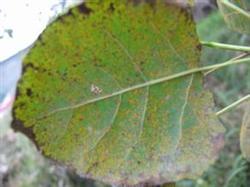
Identification and Control Methods of Poplar Black Spot Disease Explained in Detail
Poplar black spot disease, also known as poplar brown spot disease, is caused by a pathogen that can infect many species of poplar. Seedlings, young trees and mature trees can all be affected. When the disease is severe, it affects the normal growth of the trees and causes economic losses. Symptoms: it generally occurs on young leaves, shoot tips and fruit clusters, spreading from top to bottom, mainly damaging leaves. When the disease starts...
-
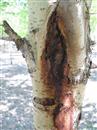
A Detailed Guide to Identifying and Managing Poplar Canker Disease
The typical symptoms of poplar canker disease fall into two types: the canker type and the dieback type. In the early stage of the canker type, brown circular or oval, water-soaked or blister-like lesions appear on the bark of the affected trunk; pressing them by hand causes liquid to ooze out, and after the blisters rupture, a liquid with a distiller's grains odor flows out. The diseased area then shrinks and collapses into a canker lesion, and the cortex at the lesion turns brown...
-
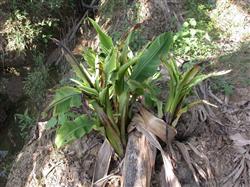
What are the control methods for banana bunchy top disease?
What control methods are there for banana bunchy top disease? Please describe the methods. Banana bunchy top disease can be controlled by referring to the following methods: 1. Establish disease-free nurseries and cultivate disease-free seedlings. The nursery should be set up in a place with no banana plantations within a 2000-3000 m radius, to prevent aphids from entering and transmitting the disease; insect-proof nets can be added over the seedling shed. ...
-
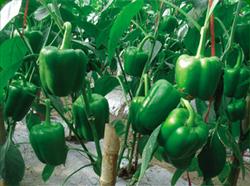
How to fertilize sweet peppers to increase yield? These fertilization methods you need to master
How should sweet peppers be fertilized to increase yield? Please give an introduction. Sweet peppers have a long growth period, an underdeveloped root system, few roots, and shallow soil penetration; they are neither drought-tolerant nor waterlogging-tolerant. Their fertilizer demand is greater than that of tomatoes and eggplants, and they have a strong tolerance for fertilizer. The fertilizer demand characteristics of sweet peppers are: the highest potassium uptake, followed by nitrogen, and the lowest phosphorus. Among vegetables, sweet peppers...
-
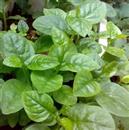
Detailed Explanation of Disease Prevention and Control Techniques for Ceylon Spinach
The main diseases of Ceylon spinach (Malabar spinach) include brown spot disease (also known as fish-eye disease), red spot disease, snake-eye disease, and sun scald, among others. They can cause damage from the seedling stage through to the end of harvest, mainly affecting the leaves. Infected leaves initially show small, sunken, purplish-red, water-soaked round spots, which gradually expand. In severe cases, the spots can number more than a hundred, merge with one another into large lesions, and cause premature leaf aging.
-
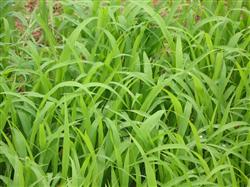
Main Pests and Diseases in Sorghum Cultivation and Their Control Methods
Which pests and diseases should be mainly controlled when growing sorghum? Please provide guidance. The following pests and diseases should be controlled when growing sorghum: 1. Sorghum smut. Sorghum smut is a common disease on sorghum in Liaoning. It includes head smut, loose smut and covered smut. Symptom identification: head smut shows obvious symptoms after heading. Diseased plants are generally shorter. Before heading, the lower part of the diseased head swells, the husk leaves are tight, and there is a white club-shaped mass inside. After heading, a large amount of black powder is scattered.
-
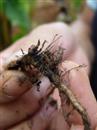
Detailed Guide to Identifying Symptoms of Banana Root Nematode Disease and Control Methods
What is banana root nematode disease and how is it controlled? Please provide an introduction. The introduction to banana root nematode disease and control methods is as follows: (1) Symptoms. Root nematodes infect the roots of banana. Affected large roots appear short and swollen, with cracking, and galls sometimes form on small roots. Sometimes they are destroyed before developing into large roots; when swollen, cutting the tissue open reveals brown dotted substances. Because of nematode damage, the roots become infected by pathogenic bacteria, causing root rot and leaving few effective roots. Above ground, the main symptoms are stunted plants, yellow leaves or clustered leaves, loose bunches, loss of green at leaf margins, many dead leaves, and wavy, crinkled leaves. In plants that have emerged from the bud, old leaves look scorched, withering from the leaf margin to the midrib. In severe cases, the fruit bunch cannot bend down normally, and the fruit is thin, small, shriveled and hard; sometimes the symptoms resemble bunchy top disease, except that the petiole has no "green veins".
-
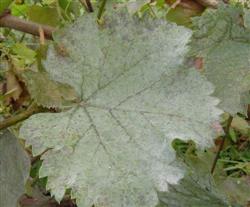
Which diseases should be the focus of prevention and control for grapes in summer?
Which diseases should be prevented and controlled when growing grapes in summer? Please provide an introduction. The following introduces three diseases that should be intensively prevented and controlled in grapevines in summer: Downy mildew: This disease mainly occurs on grape leaves and new shoots. When it develops, yellow or brown spots appear on the leaves, and in damp conditions there is also a layer of grayish-white mold on the leaves. It generally begins to develop from mid-to-late July...
-
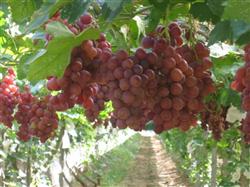
Red Globe grape summer disease control methods
How to control diseases in Red Globe grape cultivation in summer? Please provide an introduction to the control methods. Grape downy mildew, white rot, anthracnose and many other diseases have their peak incidence period in summer. The occurrence of downy mildew can cause grape leaf drop, withered branches, rotten fruit and even death. Therefore, in the rainy summer season, management of the Red Globe grape orchard should be strengthened, and...
-
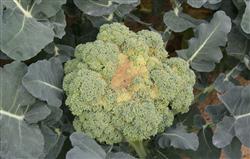
Cauliflower Cultivation Methods and Pest and Disease Control Techniques
How to grow cauliflower and control pests and diseases? Please note that cauliflower should be transplanted on a cloudy day or on a sunny afternoon, and watered thoroughly after transplanting. Do not transplant too deeply; the soil of the nutrient cup should be level with or slightly above the soil surface, and apply enough water to settle the roots. If there has been a long dry spell and the soil is dry, it is best to fill the furrows with water before transplanting and moisten the bed surface...
条件筛选