What are the common types of physiological diseases in sweet peppers?
What are the common physiological diseases of sweet peppers? Please give an introduction. The common physiological diseases of sweet peppers are: 1. Sunscald. 1. Symptoms. The cause of this disease is direct strong sunlight, and symptoms appear only on the sun-facing side of the fruit. In the early stage, the affected part fades in color, becomes slightly wrinkled, and appears grayish-white or slightly yellow. The flesh of the affected part loses water and becomes thin,...
What are the common physiological diseases of sweet peppers? Please give an introduction.
The common physiological diseases of sweet peppers are:
1. Sunscald
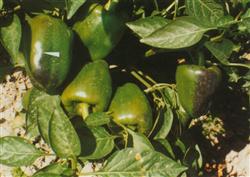
1. Symptoms. The cause of this disease is direct strong sunlight, and symptoms appear only on the sun-facing side of the fruit. In the early stage, the affected part fades in color, becomes slightly wrinkled, and appears grayish-white or slightly yellow. The flesh of the affected part loses water and becomes thin, nearly leathery, semi-transparent, and the tissue dies and hardens and tightens, becoming prone to cracking. In the later stage, the affected part is infected by pathogenic or saprophytic fungi, growing black, gray, pink or variegated mold layers, and the diseased fruit rots easily.
2. Cause. Sunscald is mainly caused by sunlight scorching the epidermal cells of the fruit, leading to a disturbance in water metabolism. It can be caused by soil water deficiency, excessively dry and hot weather, sudden clear skies after rain, heavy clay soil, and waterlogging in low-lying areas. In fields where viral disease occurs severely, or where planting is excessively sparse, sunscald is especially serious. Calcium plays an important role in the water metabolism of sweet peppers; large losses of calcium from the soil through leaching, excessive nitrogen application, and physiological factors such as impaired calcium uptake are also somewhat related to the occurrence of sunscald.
3. Control methods
(1) Reasonable close planting and intercropping. Close planting in double rows on wide ridges allows plants to shade each other and avoid direct strong sunlight.
(2) Reasonable irrigation. After the peak fruiting stage, irrigate frequently with small amounts of water, watering in the morning and avoiding watering in the afternoon. Especially in clayey soil, prevent excessive watering from causing anoxic drought.
(3) Foliar fertilization. After fruit set, spray 0.1% calcium nitrate solution, applying once about every 10 days, for 2 to 3 consecutive applications.
(4) Use shade nets. Black shade nets can be used to reduce strong light.
2. Blossom-end rot fruit
Sweet peppers grown in open fields and greenhouses often develop blossom-end rot fruit during growth and development. Blossom-end rot fruit in sweet peppers, like blossom-end rot fruit in tomatoes, is caused by calcium deficiency. Conditions such as high temperature, dryness, excessive fertilizer, and excessive potassium all inhibit calcium uptake, producing blossom-end rot fruit.
The plant can absorb sufficient calcium, but if vegetative growth is excessive, all the calcium is allocated to leaf buds, with only a small amount allocated to the fruit; under such conditions, blossom-end rot also occurs.
Control methods: The soil should be suitable for root development, allowing deep rooting and good calcium uptake. Apply more organic fertilizer to keep calcium in an easily absorbable state.
3. Stone fruit
In greenhouse-grown sweet peppers, short-styled flowers undergoing parthenocarpy produce stone fruit. Fruits with few seeds receive less allocation of assimilated nutrients and form stone fruit. Continuous formation of stone fruit on the plant weakens plant vigor.
Normal flowers with long-styled flowers cannot open their anthers or complete fertilization when the temperature is too low, producing stone fruit, so the nighttime temperature must be kept above 15°C.
To reduce the occurrence of stone fruit, there must be well-developed flower buds for good fertilization, and field management should be strengthened so the plant can carry out vigorous assimilation; greenhouse cultivation in winter and spring should pay attention to heat preservation.
4. Leaf drop, flower drop and fruit drop
1. Symptoms. Leaf drop, flower drop and fruit drop in sweet peppers are also called "three-drop disease," and are an important problem in protected and open-field production. In the early stage, some buds drop, some flowers drop, some buds or flowers drop after the junction between the fruit stalk and the flower bud turns rusty, and some fruit stalks turn yellow and then drop one by one; in some cases leaves drop in the middle and late stages of production, causing serious losses to production.
2. Cause. The variety selected is unsuitable. In off-season cultivation, the temperature during the growth period of sweet peppers cannot be satisfied; when the soil temperature is below 18°C, the physiological functions of the root system decline, and at 8°C the root system stops growing, making leaf drop and flower drop likely; when the air temperature is below 15°C, flowering can still occur, but the anthers cannot release pollen, easily leading to flower drop. During the growth period, prolonged overcast weather, insufficient light or relative humidity below 70%, excess nutrients or an imbalance between vegetative growth and reproductive growth, excessive vegetative growth, and insufficient or excessive water can all lead to flower drop, bud drop or fruit drop. Insufficient soil fertility and inadequate management mean that after transplanting the seedlings cannot recover early and grow quickly, and when the high-temperature season arrives the branches and leaves cannot close the rows, causing the soil temperature to rise, which easily leads to poor fruit set or flower and bud drop. Pests and diseases. Applying undecomposed organic fertilizer, especially poorly fermented chicken manure, can cause root burn or root drowning, so that water and nutrients cannot be supplied normally, also causing the "three drops."
3. Control methods
(1) Select varieties suited to local conditions that are tolerant of low temperature and weak light, or early-maturing varieties.
(2) Scientifically determine the sowing date suitable for the local area to meet the sweet pepper's optimum growth temperature of 20°C to 30°C and optimum soil temperature of 25°C. Consider both whether the greenhouse temperature meets the requirements and whether the soil temperature can reach above 18°C, and whether the growing season can pass through the harm of high temperatures. Especially when soil temperature is more prominent, prevent excessive vegetative growth or stunted non-growth.
(3) Pay attention to controlling diseases and pests such as bacterial scab, anthracnose, viral disease, tobacco budworm and yellow tea mite.
(4) For cultivation with plastic film mulching, the film can be broken open when the high-temperature season arrives to prevent the soil temperature from becoming too high; where conditions permit, shade nets can be used for covering.
(5) According to plant growth, apply fertilizer well to promote vine growth, fertilizer to boost fruit, and fertilizer to restore vine growth, adopt formula fertilization techniques to prevent fertilizer deficiency in the late growth stage, and apply liquid fertilizer or plant growth regulators as foliar topdressing to supplement nutrients.
Click to get more sweet pepper cultivation techniques
Click to get more vegetable cultivation techniques