-
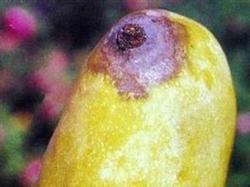
What is mango stem-end rot? Getting to know this mango disease
What is mango stem-end rot? How to prevent and control this fungal disease. It damages fruit during storage, causing the fruit to rot; when it attacks branches it is called gummosis. Harvesting fruit after rain or in damp conditions, and leaving no fruit stalk, favour the occurrence of this disease. Control methods: (1) Clean the orchard in winter, and routinely apply extra lime and potassium fertilizer; during the flowering and fruit...
-
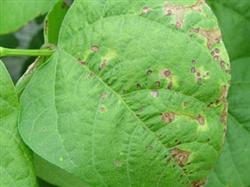
Clever use of fertilizers can effectively reduce crop diseases
Research and practice have proven that using chemical or organic fertilizers to control crop pests and diseases is not only economical, safe and effective, but also saves pesticides, while at the same time having a fertilizing effect and the characteristics of not harming natural enemies and not polluting the environment. It can be said to achieve multiple benefits at once and is well worth promoting in production. Nitrogen fertilizer: 1. Ammonium bicarbonate...
-
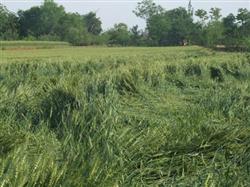
Key Technical Points for Spring Pest and Disease Control in High-Quality Wheat
1. Spraying paclobutrazol: At the wheat jointing stage, spray 30 kg of 200 ppm paclobutrazol solution per mu. This can dwarf the plants, enhance lodging resistance, and also control wheat powdery mildew and improve the plant's absorption and utilization rate of nitrogen. 2. Applying uniconazole: Uniconazole is a new type of high-efficiency plant growth regulator, and its biological activity...
-

Dudleya Growing Guide: Even the Giant of the Succulent World Can Be Grown with Ease
Dudleya is one of the easier succulents to grow. Dudleya likes to grow in a warm, dry environment with plenty of light, and it enters dormancy in summer. Let's talk about how to grow Dudleya below~ Dudleya Dudleya growing guide potting soil...
-
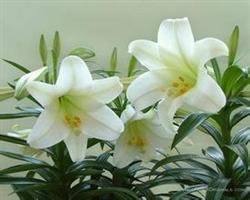
Cut Lily Disease Prevention and Control Methods and Key Technical Points
I. Lily blight 1. Symptoms: Stems, leaves, flowers and scales can all be affected, mainly the tender leaves of the flowers. When leaves are affected, small water-soaked spots appear, which gradually expand and turn grayish-green. When the stem is affected, the water-soaked discolored area spreads upward and downward and rots, further developing into bending and drooping of the stem. In severe cases, the flowers...
-
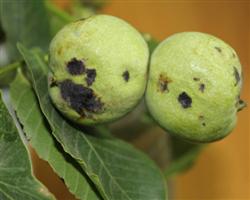
What are some practical tips for controlling walnut pests and diseases?
What are the key secrets to controlling walnut pests and diseases? Please advise. The following introduces several key tips for controlling walnut pests and diseases for reference: Variety selection is the root cause. Nowadays, walnut cultivation is being developed in many places, all rushing in like a swarm, some planting seedling trees, some planting grafted seedlings. The problems brought by rushing ahead are many. For example, it leads to mixed walnut varieties, and serious cross-infection of pathogens.
-
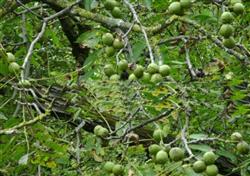
Pecan Pest and Disease Control Methods and Key Technical Points
How do you control pests and diseases in pecans? Please provide guidance. The methods for controlling pecan pests and diseases can refer to the following: Pecan seedlings have many pests and diseases. Common pests include aphids, scarab beetle larvae, and cutworm larvae, while the main disease is root rot. In controlling pests and diseases, grasp the principle of "prevention is more important than cure, with prevention as the priority"...
-
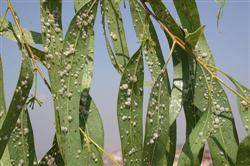
Eucalyptus Pest and Disease Control Methods and Key Practical Techniques
The main pests and diseases of eucalyptus include: bacterial wilt, leaf blight (commonly known as defoliation disease), eucalyptus seedling stem rot, eucalyptus leaf roller, termites, and scarab beetles, etc. (1) Bacterial wilt: When the bacterial wilt pathogen infects young trees in the forest, the above-ground symptoms can be divided into two types. The first is the acute type, in which the leaves of the diseased plant rapidly lose water and wilt, hanging on the branches without falling off, showing the typical "green wilt" symptom. For this type of diseased plant, the time from onset to the death of the whole plant is relatively short, generally only 2-3 weeks. The second is the chronic type, in which the diseased plant shows stunted growth, dwarfism, and the lower leaves first turn purplish-red, then gradually deepen and spread upward, and finally the leaves dry up and fall off. Some stems and side branches develop irregular dark brown necrotic spots, and in severe cases the entire plant dies. For this type, the time from onset to the death of the whole plant is relatively long, generally 3-6 months. Eucalyptus bacterial wilt is prone to epidemic outbreaks under high temperature and high humidity. Root collar injury, surface runoff, and root-to-root contact between plants are the main pathways for pathogen invasion and spread. Control measures: select disease-resistant strains; carry out quarantine of seedlings before leaving the nursery, and try to avoid bringing diseased seedlings to the plantation; also try to avoid establishing eucalyptus plantations on forest land that is likely to carry Pseudomonas solanacearum (soil where peanuts, tobacco, potatoes, tomatoes, mulberries, kapok, beefwood, and canna have been planted); do not apply undecomposed organic fertilizer; strengthen tending and management to improve tree disease resistance. After a plant becomes diseased, there is still no proven effective control method; once discovered, the only option is to immediately pull it out roots and all, spread lime on the soil in the planting hole for disinfection, and destroy the diseased plant.
-
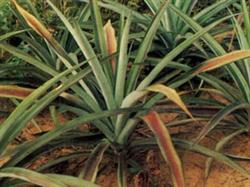
What is pineapple mealybug wilt disease, and how should it be prevented and controlled?
What is pineapple mealybug wilt disease? How should it be prevented and controlled? Please provide guidance. Pineapple mealybug wilt disease is also known as pineapple root rot. For prevention and control methods, you can refer to the following: 1. Symptoms. Above ground, in the early stage of the disease, the basal leaves turn yellow and red, shrivel, and lose their gloss, and the leaf margins curl inward; later the leaf tips dry up, the leaves wilt, and the plant stops...
-

Which plants are suitable for the bedroom and can also release oxygen at night?
There are certain tricks to keeping potted plants in the bedroom. Do not place too many pots, and even more importantly, do not place plants that absorb oxygen and release carbon dioxide at night. The vast majority of plants absorb carbon dioxide during the day and release...
条件筛选