How to identify and control poplar brown spot disease?
Poplar brown spot disease is a common leaf disease, mainly affecting Chinese white poplar (Populus tomentosa), Simon poplar (Populus simonii), and Manchurian catalpa willow (Salix matsudana). In the early stage of the disease, small yellowish-brown spots appear on the surface, gradually expanding, with the edges being lighter in color and neat, and in the later stage the center of the lesion turns brown, with black dots growing on it. After the black dots rupture, they release conidia, which are blown by wind...
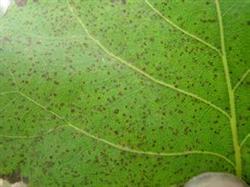
Poplar brown spot disease is a common leaf disease, mainly affecting Chinese white poplar (Populus tomentosa), Simon poplar (Populus simonii), and Manchurian catalpa willow (Salix matsudana). In the early stage of the disease, small yellowish-brown spots appear on the surface, gradually expanding, with the edges being lighter in color and neat, and in the later stage the center of the lesion turns brown, with black dots growing on it. After the black dots rupture, they release conidia, which are blown by wind onto other leaves for re-infection. The disease is most severe in July and August, when most of the lesions join together into patches, and in September it often causes the leaves to scorch and fall off. When planting is too dense and both temperature and humidity are high, the disease becomes even more severe.
Control methods: 1. In summer and autumn, sweep up and collect fallen leaves, and compost them at high temperature or burn them to eliminate the pathogen. 2. From June to September, spray 6 to 7 times with 160 to 200 times diluted lime water, or 500 times diluted 65% zineb wettable powder. 3. Do not plant too densely, and pay attention to pruning so that the grove is well ventilated and lets light through, reducing the conditions for disease development.