Yam Pest and Disease Control Methods and Key Technical Points
I. Anthracnose. Yams are prone to anthracnose during hot, rainy seasons, and after onset it causes stem blight and leaf drop. In the early stage, black spots appear on the leaves; in the later stage, the leaf color turns black, and the lesions become water-soaked; in severe cases it affects plant growth and causes reduced yield. Control: In the early stage of the disease, spray once every 7 days with 50% Tuzet 600x solution, or 7...
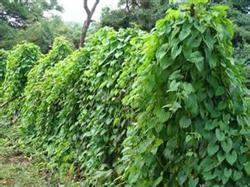
I. Anthracnose. Yams are prone to anthracnose during hot, rainy seasons, and after onset it causes stem blight and leaf drop. In the early stage, black spots appear on the leaves; in the later stage, the leaf color turns black, and the lesions become water-soaked; in severe cases it affects plant growth and causes reduced yield. Control: In the early stage of the disease, spray once every 7 days with 50% Tuzet 600x solution, or 70% thiophanate-methyl 1000x solution, for 2 to 3 consecutive sprays; promptly remove diseased leaves from the field and drain excess water.
II. Brown spot. It mainly damages leaves and is severe in the rainy season. In the early stage of the disease, yellow or yellowish-white lesions appear on the leaves; in the later stage, the leaf color turns light brown; in severe cases the leaves wither and die. Control: In the early stage of the disease, spray once every 7 days with 50% Tuzet 600x solution, or drench with 70% thiophanate-methyl 1000x. It can also be controlled with 2.5% deltamethrin 2000x solution.
III. Mosaic virus. The veins mostly show green bands; when the leaves are fully expanded, chlorotic spots and ring patterns appear, and necrotic spots develop on the leaf surface in the mid-to-late growth stage. Control: Select healthy tuberous roots for seed. Control the virus-transmitting vector aphids with 10% imidacloprid wettable powder 1000x solution, or 25% pirimicarb EC 3000x solution, and 10% aphid-whitefly comprehensive killer 1000x, applied alternately as sprays.
IV. Nematode disease. It mostly occurs in the high-temperature season of early autumn; irregular brown lesions appear on the underground tuberous roots, and oval lesions appear on the aboveground stems and vines. Control: Select healthy tuberous roots for seed. If infection is still suspected, hot-water seed treatment can be carried out, that is, soak in warm water at 52-54°C for 10 minutes, stirring up and down twice to ensure even heating and achieve the purpose of killing the pests. It can also be soaked for 48 hours with 40% isofenphos-methyl 500-800x solution, then air-dried after soaking, and then sun-dried before sowing.
V. Black cutworm. During the growing period, the tubers are bitten and eaten, so the tubers cannot grow normally, seriously affecting the yield and quality of yams. Control: Before transplanting yams, broadcast 40% phoxim granules into the field, or drench with 90% trichlorfon crystal 1000-1500x solution; it can also be controlled with 2.5% deltamethrin 2000x solution.
VI. White grubs. During the growing period, the tubers are bitten and eaten, so the tubers cannot grow normally, seriously affecting the yield and quality of yams. Control: In the evening, place 60-80 paulownia leaves per 667 sq m, with the upper side of the paulownia leaves facing down, and hand-collect and kill them the next morning. Alternatively, per 667 sq m, use 50-100 g of 90% trichlorfon crystal, dissolve it in 1.5-2 kg of water, and mix it into 1.5-3 kg of roasted fragrant cottonseed cake to make poisoned bait. In the evening, scatter the poisoned bait between the rows to trap and kill the larvae. It is also possible to broadcast 40% phoxim granules into the field before transplanting yams, or drench with 90% trichlorfon crystal 1000-1500x solution.