Identification and Control Methods of Soybean Cyst Nematode Disease
Soybean cyst nematode disease, also called "huolongyangzi" disease, is caused by nematodes parasitizing the roots of soybean. Diseased plants have poorly developed root systems, with a marked reduction in lateral roots, slow growth, stunted plants, yellowing stems and leaves, small pods with shriveled seeds, or no seed set, and even death of the entire plant. When diseased plants are pulled up and examined, many needle...
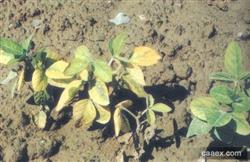
Soybean cyst nematode disease, also called "huolongyangzi" disease, is caused by nematodes parasitizing the roots of soybean. Diseased plants have poorly developed root systems, with a marked reduction in lateral roots, slow growth, stunted plants, yellowing stems and leaves, small pods with shriveled seeds, or no seed set, and even death of the entire plant. When diseased plants are pulled up and examined, many needle-head-sized, cream-yellow dots (the female nematodes, or cysts, of the pathogen) can be seen on the fine roots. Soybean cyst nematodes overwinter in the soil as eggs inside cysts, and the cysts can survive in the soil for many years. In dry years, the disease is severe on slightly saline-alkaline land.
Control methods: (1) Agricultural control. Use resistant varieties, such as Kangxian No. 1 and No. 2, practice a 3-year crop rotation, and increase the application of organic fertilizer. (2) Chemical control. Use 3% carbofuran granules or 5% aldicarb granules, 4-5 kg per 667 sq m, applied into the sowing furrow, then sow.