Control Methods for Major Diseases and Pests of Melons
Melon, also known as oriental melon, is one of the high-grade fruits that people love. It belongs to the Cucurbitaceae family, Cucumis genus, melon species, and is an annual herbaceous plant. I. Variety Types and Selection of Improved Varieties Melons are generally divided into two types: thin-skinned melons and thick-skinned melons. Thin-skinned melons, also known as Chinese melons, have thin skin, crisp flesh, and small fruits with a single fruit...
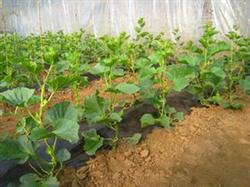 With the adjustment of the planting industry structure and the rapid development of high-efficiency agriculture, the area planted with watermelons and melons in small tunnels, medium tunnels, large tunnels, and greenhouses has increased year by year. Due to continuous years of repeated cropping, disease and pest sources have accumulated year by year, causing the variety of diseases and pests to increase year by year and the degree of damage to worsen year by year. To control disease and pest damage and ensure high yield, high quality, and high efficiency in watermelon and melon cultivation, the principle of "agricultural measures as the main approach, chemical control as the auxiliary" must be adhered to. The main disease and pest control techniques are introduced as follows:
I. Phytophthora blight: This disease is a major disease of watermelons and melons from the seedling stage to the vine-running stage. When leaves are infected, dark green water-soaked irregular lesions initially appear, later expanding into a soft rot; when dry, the lesions turn brown and tend to rupture. When the stem base is infected, spindle-shaped dark green water-soaked sunken lesions initially appear, later girdling the stem base, constricting and rotting, and finally causing death.
Control method: Disinfect seeds before sowing by soaking them in 55°C warm water for 15 minutes; sterilize nutrient soil by mixing 2 liang of 50% carbendazim into each cubic meter of nutrient soil; apply chemicals at the early stage of disease onset by spraying with 64% Sandofan at 500 times, 72.2% Previcur at 800 times, or 58% Ridomil (metalaxyl-mancozeb) at 500 times, and spray again after 7-10 days.
II. Gummy stem blight: This disease mainly occurs on leaves and stems. When leaves are infected, nearly round lesions initially appear, or light brown "V"-shaped lesions extend inward from the leaf margin; later the lesions break apart, and many small black dots, namely pycnidia, form on them. When stems are infected, elliptical to spindle-shaped lesions initially appear, later drying, shrinking, and splitting longitudinally, with yellow gummy substances exuding; in severe cases, leaves dry up and stems rot.
Control method?: Avoid watering on cloudy days, and try to ensure consecutive sunny days after watering. If continuous rainy days occur after watering, pay attention to short periods of moisture removal at noon; at the early stage of disease onset, spray with 75% chlorothalonil at 600 times, or 70% thiophanate-methyl at 800 times + 80% Dacotech (or Yuesheng) at 800 times; after harvest, promptly remove diseased residues to reduce inoculum sources.
III. Anthracnose: The disease can occur throughout the entire growth period. When leaves are infected, round to spindle-shaped or irregular water-soaked spots initially appear, sometimes with concentric rings; when dry, the lesions tend to break and perforate; when humid, pink sticky substances form on the leaf surface. When petioles or stems are infected, water-soaked light yellow round spots initially appear, slightly sunken, then turn black; in severe cases, they girdle the stem and cause death. When fruits are infected, water-soaked sunken brown lesions initially appear, and the sunken areas often crack; when humidity is high, pink sticky substances form in the center of the lesions; in severe cases, the lesions merge and cause rot.
Control method: Select disease-resistant seeds; disinfect seeds with warm water; at the early stage of disease onset, spray with 70% thiophanate-methyl at 800 times, 75% chlorothalonil at 600 times, or 80% anthracnose thiram at 800 times, and spray again after 7-10 days.
IV. Bacterial angular leaf spot: This disease is a mid-to-late stage disease of cucurbits and mainly occurs on leaves. In greenhouse watermelon fields, the diseased plant rate is generally about 25%, with a maximum of 70%, and the diseased leaf rate is about 10%. After leaves are infected, tiny transparent pinpoint-sized spots initially appear; after enlargement, light yellow lesions with yellow halos form, and the center turns brown or grayish white, perforating and rupturing; when humidity is high, milky white bacterial ooze is produced on the diseased parts.
Control method: Select disease-free seeds; disinfect seeds with warm water; at the early stage of disease onset, spray with 13% copper ammonia complex aqueous solution at 300 times, 50% DT (copper succinate) wettable powder at 500 times, 77% Kocide powder at 400 times, or 72% agricultural streptomycin wettable powder at 400 times, and spray again after 7-10 days.
V. Powdery mildew: This disease mainly damages leaves. At the early stage of disease onset, white nearly round star-shaped small powdery spots appear on the upper surface of leaves, then expand around to form continuous white powder with indistinct edges; in severe cases, they cover the entire leaf, later turning grayish black, and the diseased leaves turn yellow and wither.
Control method?? Implement alternate watering in large and small furrows, ventilate promptly on sunny days, pay attention to moisture removal on cloudy days, and promptly pinch tips and remove old leaves to avoid field shading; at the early stage of disease onset, use 40% DuPont "Fuxing" emulsifiable concentrate 4 grams per mu (1 bag), or 0116 biological pesticide at 150 times diluted with water for spraying.
VI. Viral disease: There are mainly two types, mosaic type and crinkle type. Specifically, light and dark mosaic disease spots appear on the top leaves of plants, and the leaves become smaller, curled, shrunken, and deformed. Early infection prevents fruit set, while late infection results in small, deformed fruits.
Control method?? Make every effort to reduce temperature and appropriately increase humidity inside the greenhouse; promptly pull out diseased plants to reduce virus sources; control aphids to prevent disease, starting from the seedling stage, spray with 10% imidacloprid at 1500 times, or 5% cypermethrin at 2000 times; at the early stage of disease onset, spray with 30% Virus A at 500 times or 1.5% Zhibingling at 1000 times.
VII. Root-knot nematode disease: At the early stage of disease onset, rice-grain-sized small nodules form on the main root and lateral roots; in severe cases, the root system becomes swollen, affecting water and nutrient absorption.
Control method: Select disease-free fertile soil for seedling raising; throw away diseased seedlings and do not transplant them; before transplanting, treat the soil by evenly spreading 3% Xianchongjuesha at 5 kg per mu into the planting furrow and then planting seedlings. (4) In summer, close the greenhouse at high temperature for more than 30 days; after vine pulling, thoroughly remove diseased residues.
VIII. Melon aphid: Adult aphids and nymphs like to suck sap on the growing points, tender leaves, leaf undersides, and tender stems of melon seedlings, causing leaves to curl and stop growing. When damage is severe at the adult plant stage, pollination cannot occur, and leaves may even fall off. At the same time, they secrete honeydew, affecting photosynthesis and respiration, and they are also the main vector for spreading viral diseases.
Control method: Use yellow boards to trap aphids or silver-gray reflective plastic film to repel aphids; spray with 10% imidacloprid at 1500 times, 5% acetamiprid at 800 times, or 5% cypermethrin at 2000 times; spray the greenhouse roof with 80% dichlorvos at 1000 times, or use 80% dichlorvos 300-400 milliliters per mu mixed with water and fine sand for fumigation.
IX. Red spider mite: Nymphs and adults suck sap on the undersides of leaves, causing leaves to lose green and turn yellow and white, affecting the formation of photosynthetic products; in severe cases, leaves dry up, pollination cannot occur, and even the entire plant dies.
Control method: Carry out winter plowing after autumn crop harvest; after summer crop harvest, thoroughly remove field weeds and stem and leaf litter to eliminate pest sources from the previous crop. Before transplanting autumn watermelons, irrigate the entire field to increase air humidity; at the early stage of occurrence, spray with 20% pyridaben at 1500 times or 1.8% abamectin at 3000 times.
X. Melon thrips: Adults and nymphs rasp and suck sap from tender leaves, tender tips, flowers, and young fruits of cucurbits. Damaged tender leaves and tender tips become hard and smaller, plant growth slows, internodes shorten, and young melons affected become hardened, hairy and black, expand slowly, and have rough skin, and may even drop. The key point is that this seriously affects yield and quality.
Control method: At the early stage of occurrence and the early stage of fruit set, spray with pyrethroid pesticides at 2000 times.
XI. Tea mite: Adult mites and young mites gather on the tender parts of crops to pierce and suck, causing damage. The undersides of affected leaves appear grayish brown or yellowish brown, with an oily luster or oil-soaked appearance, and leaf margins curl downward. Affected tender stems and tender branches become twisted and deformed, leaves become narrow, stiff, and upright, and finally the tips become bare; in severe cases, the tops of plants dry up.
Control method: Remove field weeds and dead branches and fallen leaves; pay attention to frequent ventilation to reduce the temperature inside the greenhouse; spray with 73% propargite at 2000 times, 20% pyridaben, or 1.8% abamectin at 3000 times.