What are the control methods for the three major soybean diseases?
Soybean root rot: This disease can occur and cause damage throughout the entire growth period of soybean, with yield reductions ranging from 25% to 75% or more. The protein content of infected seeds is significantly reduced. The main symptoms are dark brown lesions appearing at the base of the stem and spreading upward to varying degrees to the lower lateral branches, causing the pith of the diseased stem to turn brown, the base of the petiole to constrict...
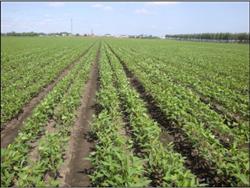
Soybean root rot: This disease can occur and cause damage throughout the entire growth period of soybean, with yield reductions ranging from 25% to 75% or more. The protein content of infected seeds is significantly reduced. The main symptoms are dark brown lesions appearing at the base of the stem and spreading upward to varying degrees to the lower lateral branches, causing the pith of the diseased stem to turn brown, the base of the petiole to constrict, and the leaves to droop but not fall off. For chemical control, mainly use 58% ridomil-mancozeb or 72% cymoxanil-fosetyl-aluminum wettable powder, both applied as seed treatment at 0.3% to 0.4% of seed weight.
Soybean sclerotinia rot: Soybean sclerotinia rot mainly infects the stems, with symptoms beginning in late July. In the early stage of infection, brown lesions appear on the stems, and later white cottony mycelium and white granules develop on the lesions, which then turn into black granules (sclerotia). When the diseased stem is cut lengthwise, black cylindrical sclerotia resembling mouse droppings can be seen. After the diseased plant dies, it turns grayish-white. For chemical control, spray with 50% procymidone wettable powder at 1000 times dilution, or 40% sclerotia-killing agent at 1000 times dilution, or 50% thiophanate-methyl at 500 times dilution.
Soybean frogeye leaf spot: Also known as leaf spot disease, it generally begins to appear on leaves in early to mid-June and reaches its peak in mid-July. Pods become infected starting from the tender pod stage, with the peak infection period during the seed-filling stage. In years with high temperature and frequent rain in July and August, the disease is severe. It mainly damages leaves. In severe cases, almost all leaves are covered with lesions, causing premature leaf drop, resulting in yield reductions of 20% to 30% and reduced quality. Chemical control: In addition to treating seeds with 70% dexon wettable powder or 50% thiram wettable powder at 0.3% of seed weight at sowing time, during the flowering and podding stage of soybean, apply 40% carbendazim suspension concentrate at 1.5 kg per hectare, mixed with 450 kg of water for spraying.