-
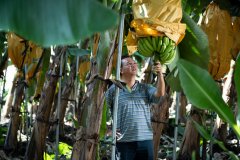
Fighting Banana Yellow Leaf Disease: Taiwan, China Pioneers Tissue-Cultured Plantlets with Tai Chiao No. 1, Banana Farmers Figure Out the Logic from the Soil
Banana's incurable disease, yellow leaf disease, has taken root in Taiwan, China for more than 50 years. Taiwan, China's leader in banana research, the Taiwan Banana Research Institute, has repeatedly set world precedents, developing tissue-cultured banana plantlets and multiple disease-resistant banana varieties and earning international fame, while professional banana farmers have developed a set of soil-improvement,
-
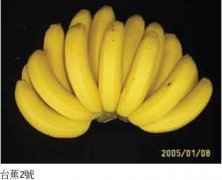
Introduction to the Growth Habits and Yellow Leaf Disease Resistance of the Taiwan Banana Variety Tai Chiao No. 2
The banana cultivars currently grown in this province are mainly the North Banana and Hsien Jen Banana of the Cavendish group, both of which are medium to tall types, making management and harvesting difficult. They also frequently suffer losses from wind damage. The Barbados Dwarf Banana is a short, sturdy plant that offers advantages such as reducing wind damage losses, lowering labor requirements, and improving banana plantation management efficiency.
-
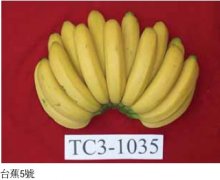
Differences Between the Banana Variety Tai Jiao No. 5 and Bei Jiao and a Comparison of Their Disease Resistance
"Tai Jiao No. 5" is commonly known as "Yushan" and belongs to the same line as "Bei Jiao"; it is a descendant in the great-grandchild generation of "Bei Jiao", selected from Tai Jiao No. 3, the 3rd generation of "Bei Jiao". In appearance, the grandparent and grandchild are extremely similar: newly planted plants are about 250-280 cm tall, with a pseudostem circumference of 69-72 cm, varying with the season, and each bunch of fruit weighs about 20-35 kg. Winter bananas (harvested from mid-January to mid-March) are lighter, while summer bananas (mid-June to late September) and some autumn bananas (after early October to mid-January) are heavier.
-
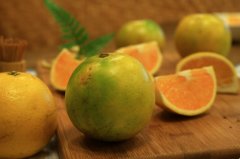
Organic Cultivation Features and Pest and Disease Control of Hongjiang Orange at Mengtian Ecological Farm
Do you think I am a yellow liuding (navel orange)? Cut me open and you will find that I have red and yellow alternating flesh! I am "Hongjiang Orange," grown from a cross of liucheng (sweet orange) and hongju (red tangerine). Because I look like a yellow liuding on the outside but my flesh is a vivid red-orange, my name is "Hongjiang Orange."
-
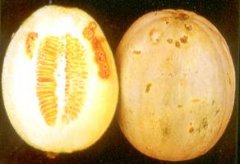
What harm do bacterial fruit blotch of melons and watermelons cause? Prevention and control of bacterial fruit blotch of watermelon
In Taiwan, China, between 1992 and 1993, in the coastal areas of Yunlin County and the Shanhua area of Tainan County, sporadic findings were made of large watermelons showing irregular water-soaked, slightly cracked lesions on the fruit surface, occurring mainly during the rainy season. The lesions spread over the rind and did not harm the flesh in the early stage. In May 1997, in Yilan, Taiwan, China
-
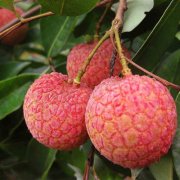
Impact of Common Diseases on Lychee Trees and Their Control Methods
Do you grow lychee? If you do, then you must pay attention to lychee pests and diseases. Let's first take a look at the common diseases of lychee! 1. Downy blight Caused by Peronophythora litchi, it can damage flowers, leaves, young stems and
-
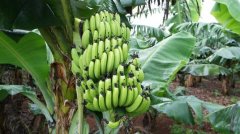
Symptoms and control of three common banana diseases: small black spot disease, fine streak disease and bunchy top-like stunting disease
An introduction to the symptoms and control methods of common banana diseases: small black spot disease, fine streak disease and stunting disease. Let's take a look! Small black spot disease Pathogen: the optimum temperature for mycelial growth is 25°C, the optimum temperature range for spore formation is 13-29°C, and the optimum temperature range for spore germination is 13-33°C.
-
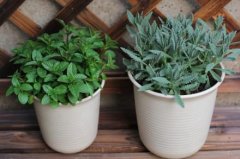
Symptoms and control methods of stem blight, Phytophthora blight and southern blight in herb plants
Since herb plants were introduced from abroad by horticultural growers, they have been used not only as seasoning for meals, but also brewed into herbal drinks, or made into herbal bath products. Various forms of use have blended into the daily lives of the general public and are gradually becoming popular. In addition to
-
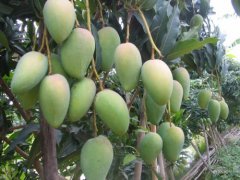
Mango production up 17%, Agriculture and Food Agency confident it can keep prices stable
This year, the climate during the flowering and fruiting stages of mango cultivation was suitable for mango growth. The Agriculture and Food Agency estimates that mango production will increase by 17% compared with last year. According to statistics from the Agricultural Products Market Trading Information Station, arrivals at the Taipei auction market this week increased by nearly 30% compared with the same period last year, and prices also fell by about
-
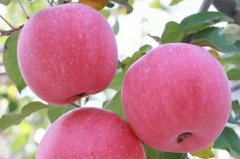
How much is a jin of apples? An analysis of the reasons behind this year's apple price increase
China is one of the countries that produces the most apples in the world. Apples are one of the most common fruits in daily life, and their nutritional value is also relatively high, making them well liked by consumers. As for price, it has always been around six or seven yuan per jin. But this year, apple prices have been
条件筛选