-

Is it good for a Phalaenopsis orchid to grow small plantlets, and how should you handle it?
When it comes to a Phalaenopsis orchid growing small plantlets, this is definitely a good thing! It was originally just one pot of orchid, and quietly sprouting small shoots shows that the mother plant is being raised strong and has the energy to branch out and spread leaves. This is a little achievement for any orchid grower. First, let's talk about the good aspects. If a Phalaenopsis orchid can grow small plantlets, it means the mother plant has a good foundation, sufficient nutrients,
-

How do you use the flower spike of a Phalaenopsis orchid to grow plantlets after it finishes blooming?
Want to make a Phalaenopsis orchid that has already bloomed flower again? As long as you master the correct care method, you can not only improve the chances of reblooming, but also possibly get the surprise of "mother and child on the same plant." Flower spike: after the flowers fade, it is only worth propagating if the spike is still emerald green; if it has turned yellow and shriveled, just cut it off. The best pruning position is at the 2nd-3rd node counting up from the spent flower
-

The simplest way to propagate phalaenopsis orchids into small plantlets is by cutting and rooting
As is well known, phalaenopsis orchids have won the favor of flower lovers with their elegant blooms, which keeps their market prices high. For flower lovers who love growing phalaenopsis orchids, if they want to keep costs down, they need to learn to propagate this precious plant. Therefore, quite a few flower lovers wonder: can phalaenopsis orchid stems be propagated by cuttings?
-
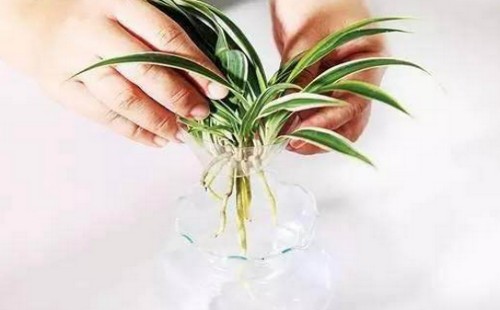
Can the small plantlets cut from a spider plant be grown in water?
Spider plants (Chlorophytum comosum) are deeply loved by many plant enthusiasts because they can be hung in front of windows or under eaves, adding a nice decorative touch to the environment. Of course, although it is called a hanging plant, it does not have to be hung - it can also simply be placed in a suitable spot. If placed indoors, it not only provides ornamental value but also purifies indoor air.
-
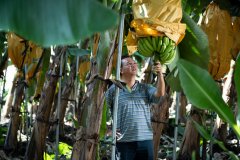
Fighting Banana Yellow Leaf Disease: Taiwan, China Pioneers Tissue-Cultured Plantlets with Tai Chiao No. 1, Banana Farmers Figure Out the Logic from the Soil
Banana's incurable disease, yellow leaf disease, has taken root in Taiwan, China for more than 50 years. Taiwan, China's leader in banana research, the Taiwan Banana Research Institute, has repeatedly set world precedents, developing tissue-cultured banana plantlets and multiple disease-resistant banana varieties and earning international fame, while professional banana farmers have developed a set of soil-improvement,
-

Detailed Explanation of the Technology for Rapid Propagation of Virus-Free Potato Test-Tube Plantlets
Potato is the fifth-largest crop in Heilongjiang Province, ranking only after rice, wheat, corn, and soybean. It is a crop that can be used for multiple purposes such as food, vegetables, and industrial raw materials. Potato is still an emerging industry in Heilongjiang Province, with a history of only about twenty years. The formation and development of this industry was born alongside the research and development of virus-free potato technology. Through the smooth implementation of the "institute-county joint development" poverty alleviation and development project, and under the guidance of experts and professors from the Provincial Academy of Agricultural Sciences, Huanchuan County established virus-free
-
Experimental Study on Factory-Scale Rapid Propagation Technology of Potato Test-Tube Plantlets
For many years, farmers' own propagation, self-breeding and seed retention have caused potato yields to decline year by year during production, quality to deteriorate, and commercial appearance to worsen. Scientists have proven through research that virus infection and its accumulation in tubers are the main causes of potato "degeneration." To solve the problem of severe degeneration and reduced yield of the main potato cultivars in our city, our institute made virus-free potato production a key experimental project and conducted experimental research on the problems existing in virus-free production, thereby utilizing resources and reducing production costs.
-
Detailed Explanation of Efficient Production Technology for Phalaenopsis Test-Tube Plantlets
Phalaenopsis is an orchid with high ornamental value, known as the "Queen of Orchids." Its plant form is very peculiar, being a monopodial epiphytic orchid, with roots that prefer to be exposed above the potting medium or extend out of the bottom of the pot, absorbing water and nutrients from the air. The flower stalk emerges from the leaf axil, curving in an arc, possessing great curvilinear beauty. The stalk has nodes, and flowers bloom on the upper nodes, opening one after another in succession. Flower colors vary endlessly, including crimson, pure white, light purple, goose yellow, and azure blue, among others; some varieties have bicolor or tricolor flowers with stripes or variegation,
-
Detailed Explanation of Key Techniques for the Cultivation and Management of Phalaenopsis Test-Tube Plantlets
I. Acclimatization and Removal from Flask for Planting of Test-Tube Plantlets 1. Acclimatization To increase the survival rate of Phalaenopsis test-tube plantlets, the plantlets must first be strong. Before removing the plantlets from the flask, they must first undergo acclimatization. When the plantlets have three leaves, place them in diffused sunlight and expose them evenly for about 20 days, so that the test-tube plantlets grow more robustly and can adapt more quickly to external environmental conditions after being removed from the flask. 2. Removal from Flask Great care must be taken when removing the plantlets from the flask. First pour a small amount of water into the culture flask, then gently shake the flask. After the solid culture medium is loosened, use long tweezers to take out the orchid plantlets, minimizing damage to the orchid
-
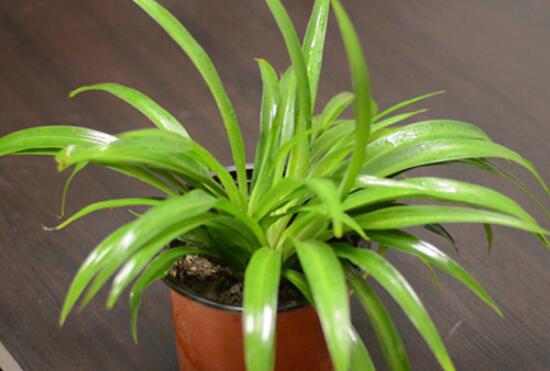
How to Make a Spider Plant (Green-Leaf Chlorophytum) Quickly Produce Plantlets? Master Water, Fertilizer, Light and Temperature Management
For those who have seen the green-leaf spider plant (Chlorophytum comosum), it should leave a deep impression: its leaves are fresh emerald green and orchid-like in shape, making it a beautiful foliage plant. However, getting the green-leaf spider plant to look good, especially to quickly produce plantlets, is not an easy task~ So how can the green-leaf spider plant quickly grow plantlets? On this
条件筛选