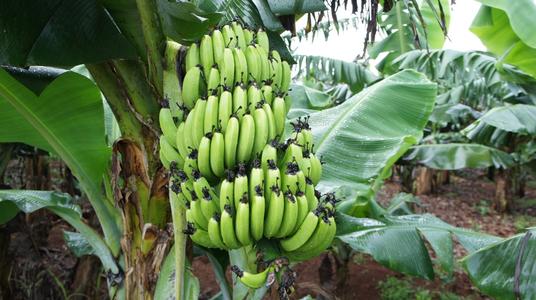
Symptoms and control of three common banana diseases: small black spot disease, fine streak disease and bunchy top-like stunting disease
An introduction to the symptoms and control methods of common banana diseases: small black spot disease, fine streak disease and stunting disease. Let's take a look! Small black spot disease Pathogen: the optimum temperature for mycelial growth is 25°C, the optimum temperature range for spore formation is 13-29°C, and the optimum temperature range for spore germination is 13-33°C.
Common banana diseases An introduction to the symptoms and control methods of small black spot disease, fine streak disease and stunting disease. Let's take a look!
Small black spot disease
Small black spot disease
Pathogen: the optimum temperature for mycelial growth is 25°C, the optimum temperature range for spore formation is 13-29°C, and the optimum temperature range for spore germination is 13-33°C.
Symptoms: it mainly damages leaves and fruit. On leaves, fruit or the fruit stalk, tiny brown-black or black spots about 1 mm in diameter appear, similar to the lesions of black spot disease (black sigatoka), but the lesions of this disease do not protrude.
Disease ecology and timing: it occurs mostly in the dry season. Whether leaves are old or young, lesions appear 4 days after inoculation, but young leaves have a greater number of lesions.
Control methods: zineb plus maneb and chlorothalonil give relatively good control, followed by benomyl, while imazalil is less effective.
Fine streak disease
Symptoms: in the early stage of the disease, small brown spots appear on the underside of the leaves, as fine as pinheads. Most of the small spots tend to cluster together to form blotches or are distributed in a band along the leaf margin of the left half of the leaf. In the later stage, the lesions run parallel to the leaflet veins as fine stripes, black, about 1-4 mm long and about 0.3 mm wide. In banana plants before heading, the lesions of this disease generally appear on the old leaves below the 6th leaf, and severely infected old leaves rapidly turn yellow and dry up.
Pathogen ecology: the incubation period of this disease is about one month in summer and about two months in winter. Except for Musa acuminata, which belongs to the AA group, and the wild bananas in the mountainous areas of this province, which are resistant to the disease, all other banana varieties can be infected. The spread of this disease may be closely related to insects.
Control methods: zineb plus maneb, imazalil and chlorothalonil all have control effects.
Stunting disease
Symptoms: affected banana plants are dwarfed, the pseudostem is thinner, the leaves are narrow and upright, the petioles are shortened, and the leaves cluster at the top of the pseudostem in a broom-like shape. New leaves are pale green, with the margins partly white-green; the leaf color on both sides along the midrib is darker, while old leaves are dark green, with tissue that is brittle and easily broken. The petioles, veins and midrib have dark green interrupted lines. Affected banana plants often fail to head; if they do head, the fruit stalk and fingers are extremely small.
Pathogen ecology: the vector insect is the banana aphid. After staying on a diseased plant and feeding for 2 hours, the banana aphid can acquire the ability to transmit stunting disease; and after a virus-carrying aphid feeds on a healthy banana plant for 2 hours, it can transmit stunting disease. The incubation period of this disease is about 30-70 days. In the heavy rain season, the activity of banana aphids is restricted, and the spread of this disease is slower.
Simple rapid diagnostic technique: cut a small piece of tissue from the leaf veins, leaf sheath, pseudostem or corm of a banana sucker, seedling or mature plant, make a freehand section, and observe it directly with a reflected-light fluorescence microscope. Then, in the sieve tube cells of the diseased plant tissue, it is very easy to see a very obvious, special, strong yellow fluorescence reaction, indicating the presence of the virus of this disease in the tissue.
Period of occurrence: all year round.
Control methods:
1. Banana seedlings must be collected from disease-free banana plantations.
2. Eradication of diseased plants:
1. Inject the pseudostem with a 50-fold dilution of 41% glyphosate solution herbicide. Inject 1 hole 50 cm above the ground, then inject 1 hole every 100 cm thereafter, with each hole taking about 3 seconds (100 cc of solution); each injection hole is made from a different direction to prevent the solution from flowing out. When glyphosate is injected into the mother plant, it can translocate to the suckers and kill them.
2. Spray or pour kerosene on diseased plants, which can kill the banana aphids on the diseased plants and promote the rotting of the diseased plants.
Large diseased banana plants (over 2 m): apply 300 cc of kerosene per plant.
Medium diseased banana plants (1-2 m): apply 200 cc of kerosene per plant.
Small diseased banana plants (under 1 m): apply 50-100 cc of kerosene per plant.
3. After kerosene treatment, the diseased plants begin to rot after 5-7 days. Dig them out together with the corm, chop them up and dry them in the sun, and take care not to let the suckers of the diseased plants sprout again.
3. Eradicate other hosts of the banana aphid near the banana plantation, such as shell ginger and ginger lily.
4. If this disease worsens, combine with insecticide spraying; agents for controlling aphids include an 800-fold dilution of 40.6% carbofuran water suspension powder and a 1500-fold dilution of 40% fenvalerate.