Sugar mandarin (Citrus reticulata 'Shatangju') - Control Methods for Stem-Boring Insects and Key Points of Cultivation Techniques
How to control stem borers in sugar mandarins? Please advise on control methods. The stem borers of sugar mandarins are mainly the larvae of longhorn beetles or jewel beetles. The control methods are as follows: 1. Pricking or hooking out the larvae. From August to September, based on the frass of the larvae in the tunnels, determine the larval instar and whether there are insects and their life stages inside the tunnel, then use a thin, sharp wire from the fresh...
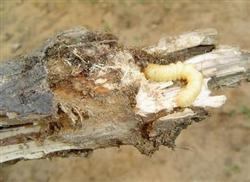 How to control stem borers in sugar mandarins? Please advise on control methods.
The stem borers of sugar mandarins are mainly the larvae of longhorn beetles or jewel beetles. The control methods are as follows:
1. Pricking or hooking out the larvae. From August to September, based on the frass of the larvae in the tunnels, determine the larval instar and whether there are insects and their life stages inside the tunnel, then insert a thin, sharp wire from the fresh frass hole to the top of the tunnel, repeating several times to prick the larvae to death. Alternatively, use a small iron pick to hollow out the frass in the tunnel, then use a wire of about gauge 18-24 twisted into a ring shape with a small hook at the front end, probe it in ring by ring according to the depth of the tunnel, spread it out, and twist and push slowly to hook and kill them.
2. Poisoning the larvae. For young larvae, a 20-30 times dilution of dichlorvos, trichlorfon, dimehypo or chlordimeform applied to the egg-laying niches has a very good effect; for larvae that have bored into the xylem, first hollow out the frass, then use a rotten cloth strip or cotton dipped in a 5-10 times dilution of dichlorvos or omethoate emulsion and stuff it tightly into the borer hole; if the borer tunnels are not interconnected and there is a single borer hole, use a large syringe to inject the above-mentioned liquid medicine into the hole, then seal the hole with mud; you can also use a syringe to inject gasoline into the insect hole or crush camphor balls and stuff them into the hole opening, using 1 pill per hole, then seal the opening with yellow mud slurry. The above methods all have good effects on killing longhorn beetle larvae. The poisoning method should be carried out before September-October.
3. Catching and killing adult longhorn beetles. From early August to mid-September, adult longhorn beetles prefer to be active on stuffy evenings with southerly winds or hot noons, at the borer holes of old trees or the branch forks of young trees, and can be caught and killed in time.
4. Strengthen winter orchard cleaning. During winter orchard cleaning and pruning, check various holes on the trunk, plug the holes with clay, and at the same time repair coarse cracks and split bark to keep the trunk smooth, and timely thin out densely planted trees and old and weak trees with high insect population density, and whitewash the trunk and main branches before severe cold arrives.
In addition, from mid-May to early June of the following year, during the peak period of longhorn beetle egg-laying and larval hatching, scrape away the surface soil around the tree base, add 50ml of omethoate and mix it evenly with the soil, then backfill around the tree base, and then whitewash the trunk. This can effectively prevent adult egg-laying. Afterwards, use a small iron hammer to promptly strike the longhorn beetle egg pills or newly hatched larvae on the trunk, which also gives a good control effect.
Click to get more sugar mandarin cultivation techniques
Click to get more fruit cultivation techniques