Identification and control methods of Angelica sclerotinia disease
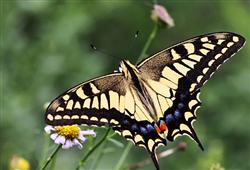
What is the Angelica yellow swallowtail butterfly? Please introduce the Angelica yellow swallowtail butterfly, also known as the fennel swallowtail, belonging to the order Lepidoptera, family Papilionidae. 1. Damage situation: the larvae cause damage, feeding on leaves at night, causing notches, and in severe cases eating the leaves completely, leaving only the petioles and veins, and also feeding on flowers and fruits. This insect has a large appetite, seriously affecting the growth of Angelica, ...
 What is Angelica sclerotinia disease? How to control it? Please give an introduction
The pathogen of Angelica sclerotinia disease is a fungus of the genus Sclerotinia in the subphylum Ascomycotina. The sclerotia grow on the plant surface or on aerial hyphae in internal cavities of plant organs, resembling mouse droppings, irregular, and composed of hyphae.
1. Damage symptoms: mainly damages roots and leaves. In the early stage of the disease, the leaves turn yellow, and in the later stage the plant wilts, and the root tissue rots to form cavities, which contain multiple black mouse-dropping-shaped sclerotia.
2. Disease occurrence pattern: the pathogen overwinters as sclerotia in seeds, diseased seedlings, diseased residues or soil, and forms ascocarps from December to February-March of the following year, producing ascospores, which spread by wind and rain, expanding the damage. This fungus is a low-temperature disease, and low temperature with high humidity, many weeds, and extensive management favor the onset of the disease.
3. Control measures
① Collectively remove and burn diseased plants and sclerotia in the soil to eliminate the source of the pathogen.
② Practice paddy-upland rotation to eliminate sclerotia in the soil.
③ Establish disease-free seedling bases, select disease-free seedlings for transplanting, and soak them in 0.05% amobam for 10 minutes before transplanting to disinfect the seedlings.
④ Promptly pull out diseased plants in the early stage, dig out the soil of the diseased holes, and disinfect with quicklime to prevent the spread of the disease.
⑤ In the early stage of the disease, spray 600-fold 65% zineb or Bordeaux mixture (1:1:300) or drench with 300-fold dimethachlon.
Click to get more Angelica planting techniques
Click to get more medicinal herb planting techniques