Common Pests and Diseases of Shatang Mandarin in August: Prevention and Control, and Cultivation Techniques
What pests and diseases affect Shatang mandarin in August? Here is an introduction and guidance on prevention and control methods. August is the period from summer shoot growth to autumn shoot sprouting for Shatang mandarin, so pests and diseases occur more frequently. The main pests are: rust mites, red wax scale, citrus leafminer, citrus flatheaded borer, and longhorn beetles; the main diseases are: citrus canker and foot rot; for detailed prevention and control methods, see...
 What pests and diseases affect Shatang mandarin in August? Here is an introduction and guidance on prevention and control methods
August is the period from summer shoot growth to autumn shoot sprouting for Shatang mandarin, so pests and diseases occur more frequently. The main pests are: rust mites, red wax scale, citrus leafminer, citrus flatheaded borer, and longhorn beetles; the main diseases are: citrus canker and foot rot; for detailed prevention and control methods, refer to the following.
Prevention and control methods for Shatang mandarin pests in August:
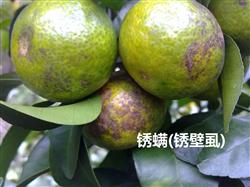
Rust mites (citrus bud mite): July-August is the key period for control. Generally, in early to mid-July, a full spraying should be carried out once, and in early August, another control application should be made. In mid-to-late August, it depends on the pest situation. Effective agents are 24% Wanling aqueous solution at 800 times dilution or 20% Haofeng emulsifiable concentrate at 1000 times dilution. Irrigation during drought can reduce the damage.
Red wax scale: A second control application can be carried out 15-20 days after the peak of nymph hatching in early July. Use 10% Suxiaoling emulsifiable concentrate at 250 times dilution, or 480 g/L Daonuo emulsifiable concentrate (chlorpyrifos) at 800 times dilution, or 40% Supusha emulsifiable concentrate at 1000 times dilution. If the optimal control period is missed, the concentration can be appropriately increased, which has a good control effect on older nymphs and female adult scales.
Citrus leafminer: It is most severe during the summer and autumn shoot sprouting periods from July to September. The control period generally starts when shoots are 5-6 cm long, with one spraying, and thereafter once every 7 days. Available agents: 24% Wanling aqueous solution at 800 times dilution, or 2.5% Wanliwawang at 1000 times dilution plus 4.5% Lufu emulsifiable concentrate at 1000 times dilution, sprayed 2-3 times consecutively.
Citrus flatheaded borer: Continue controlling adults that emerge late from their tunnels. Use 30% Nongerwang emulsifiable concentrate, or 40% dimethoate, or 80% dichlorvos at 5-10 times dilution, and apply it to the bark at the damaged areas to kill the larvae.
Longhorn beetles: Manually hook out and kill overwintering larvae and pupae, and capture adults at noon on sunny days. Prevent longhorn beetles from emerging to lay eggs. Scrape and kill eggs and larvae at the base of the trunk. Alternatively, use 30% Nongerwang emulsifiable concentrate, or 80% dichlorvos, or 40% dimethoate at 5 times dilution, inserted into the tunnels to poison the larvae.
Prevention and control methods for Shatang mandarin diseases:
Citrus canker: When diseased plants are found, burn them promptly. To control citrus canker, you must protect the new shoots. Therefore, from the beginning of new shoot sprouting until the new shoots mature, spray more than three times consecutively (combined with citrus leafminer control). Spray the first time when the new shoots grow to the length of a grain of rice, and thereafter once a week. This can achieve twice the result with half the effort. For fruit-bearing trees, the priority is to protect the fruit. Spray 0.01% Tianfengsu emulsifiable concentrate at 2500 times dilution once each at 10 days, 32 days, and 55 days after petal fall. Drugs for preventing citrus canker include: 6000 units/mL agricultural streptomycin plus 1% alcohol, 77% Keshade wettable powder at 300 times dilution, etc. Drugs for treatment include: Kejuntie at 700 times dilution, with a control rate of 90%.
Foot rot: When diseased plants are found, dig away the soil around the root crown of the diseased plant, use a sharp knife sterilized with alcohol to scrape off the rotten cortex and the discolored xylem, then lightly scrape a layer of healthy tissue, wash with alcohol, and apply 1:1:100 Bordeaux mixture, or copper sulfate at 30-50 times dilution, or 64% Tianliang WP at 200 times dilution, or 25% Ridomil wettable powder at 400 times dilution. After applying the medicine, replace the original old soil with loose sandy loam to promote new root growth. During the flowering stage, young fruit stage, and fruit expansion stage, add 0.01% Tianfengsu at 2500-3000 times dilution while spraying insecticides and fungicides. This can preserve flowers and fruit, reduce fruit drop, cracked fruit, and deformed fruit, and improve fruit quality.
Click to get more Shatang mandarin cultivation techniques
Click to get more fruit cultivation techniques