Growing Techniques for Controlling the Fruit-piercing Moth in Shatangju Mandarins
How do you control the fruit-piercing moth in Shatangju mandarins? What are the damage patterns of the fruit-piercing moth in Shatangju mandarins? Please provide an introduction. Adult fruit-piercing moths can be found in Shatangju mandarin fields from March to November, but they are more numerous in autumn. Eggs occur more frequently in the wild in early June, August, and early September, but because the egg hatching rate is low and larval mortality is high, the number of larvae occurring is not great...
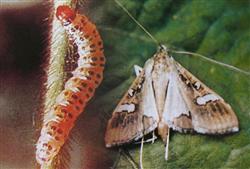 How do you control the fruit-piercing moth in Shatangju mandarins? What are the damage patterns of the fruit-piercing moth in Shatangju mandarins? Please provide an introduction.
Adult fruit-piercing moths can be found in Shatangju mandarin fields from March to November, but they are more numerous in autumn. Eggs occur more frequently in the wild in early June, August, and early September, but because the egg hatching rate is low and larval mortality is high, the number of larvae occurring is not great. In Guangdong, adults damage Shatangju mandarins from mid-August to December. Damage to early-maturing Wenzhou mandarins begins in mid-August, with the heaviest damage from late August to early September; mid-maturing sweet orange varieties are damaged starting in mid-September, with the heaviest damage from late September to late October. Adults mostly lay eggs on the underside of leaves, often several eggs together. Young larvae have a silk-spinning habit; when resting, they often cling with 3 pairs of abdominal prolegs, with the whole body forming a "U" shape or a "?" shape.
The larval host plants discovered so far include Cocculus orbiculatus, Akebia quinata, Tetrapanax papyrifer, and Mahonia fortunei. Adults have a slight death-feigning habit, hiding during the day and flying into orchards after dark to damage fruit, preferring to attack healthy fruit. After Shatangju mandarin fruit is damaged, it first shows small pinprick-like holes with gluey liquid flowing out, then expands into suberized, water-soaked oval brown spots, and finally the whole fruit rots, giving off a distiller's grains odor.
Control methods for the fruit-piercing moth in Shatangju mandarins:
(1) Plan orchards rationally. When developing Shatangju mandarins in mountainous and semi-mountainous areas, plant them in large contiguous blocks, and try to avoid mixed planting of varieties with different ripening periods or multiple types of fruit trees.
(2) Eradicate larval host plants. In May-June, use the herbicide Zhenjiaji No. 1 painted on stems (Cocculus orbiculatus) or spray Zhenjiaji No. 2 to thoroughly eradicate Cocculus orbiculatus and Cocculus trilobus within the Shatangju mandarin orchard and within a 1-kilometer radius around it.
(3) Light trapping. Black light lamps, high-pressure mercury lamps, or frequency-vibration insect-killing lamps can be installed. Hang them around the tree canopy in the evening; or wrap naphthalene balls in plastic film, prick several small holes in it, and hang 4-5 balls per tree.
(4) Repellence. Use 5-10 sheets of absorbent paper per tree, drip 1 milliliter of citronella oil on each sheet, and hang them around the tree canopy in the evening; or wrap naphthalene balls in plastic film, prick several small holes in it, and hang 4-5 balls per tree.
(5) Fruit bagging. For early-maturing thin-skinned varieties, bag the fruit with paper bags from mid-August to early September; before bagging, control of citrus rust mites should be carried out well.
(6) Biological control. Around July, mass-rear Trichogramma wasps and release them around the Shatangju mandarin orchard to parasitize the eggs of the fruit-piercing moth.
(7) Chemical control. When damage begins, spray 5.7% Baythroid emulsifiable concentrate or 2.5% Kung Fu emulsifiable concentrate at 2000-3000 times dilution. In addition, using bananas or citrus fruit soaked in insecticide (trichlorfon at 20 times dilution) as bait to kill them, or manually capturing and killing adults at night, also has a certain effect.
Click to get more Shatangju mandarin growing techniques
Click to get more fruit growing techniques