-
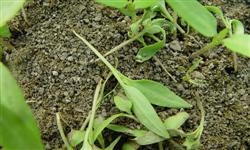
Prevention and control methods for pepper seedling death caused by high summer temperatures
How to prevent and control pepper seedling death in high summer temperatures? Please explain the methods. In summer, the hot and rainy climate conditions easily trigger the occurrence of various pepper diseases. When heavy rain is followed by sudden clearing and a sharp rise in temperature, disease epidemics are easily caused, and plants can die within 3 to 5 days, known as "dead plants." This disease is a devastating disease of peppers...
-
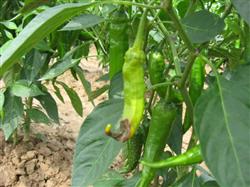
Detailed Explanation of Methods for Preventing and Controlling Blossom-End Rot in Summer Peppers
How to prevent and control blossom-end rot in summer peppers? Please introduce the methods. The symptoms of blossom-end rot in peppers are very similar to those of bacterial soft rot in peppers. Blossom-end rot in peppers mainly damages the fruit, initially appearing as dark green or dark gray water-soaked lesions, which then expand into lesions that can reach 2-3 cm in diameter. As the fruit develops, the diseased area becomes grayish brown or white...
-
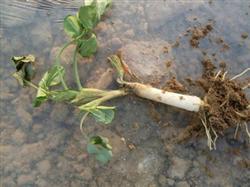
How to prevent and control peanut stem rot? A comprehensive analysis of practical methods
How to prevent and control peanut stem rot? Please explain. Peanut stem rot, commonly known as "rotten neck disease", generally occurs in the middle and late stages. After infection, the plant quickly withers and dies; in the late stage, infected plants' pods often rot or the kernels fail to fill, causing serious losses. The incidence rate in ordinary fields is 20%-30%, and in severe cases reaches 60%-70%, or even results in no harvest at all....
-
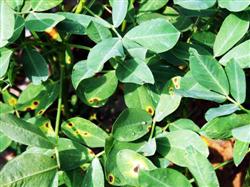
How to prevent premature senescence in peanuts? Master the control methods
How to prevent premature senescence in peanuts? Please advise: to prevent premature senescence in peanuts, the following points should be followed: 1. Site selection. Choose fields with relatively high fertility, and apply sufficient base fertilizer, plow deeply 25-30 cm early, and sun the ridges. Apply 2000 kg of rotted barnyard manure or 25-35 kg of cake fertilizer, 50 kg of ternary compound fertilizer, 50 kg of phosphate fertilizer, zinc fertilizer... per mu.
-
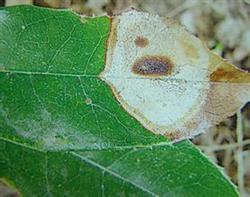
What are the control methods for Osmanthus brown spot disease?
Brief introduction Osmanthus brown spot disease is a very common disease; in severe cases it causes the whole plant to drop its leaves, affecting flowering and ornamental value. It has long been reported in countries such as the UK, the US and Japan. It also occurs frequently in Shanghai, Nanjing, Hangzhou, Jinan, Beijing, Fuzhou, Guilin, Xiamen, Guangzhou, Taiwan, China and other provinces and cities in China. Symptoms The pathogen mainly infects the leaves...
-
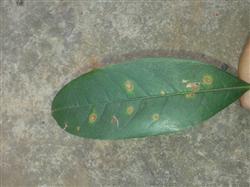
How to prevent and control Osmanthus brown spot disease? These methods you need to know
Osmanthus brown spot disease is a common disease of osmanthus, caused by infection with fungi of the subphylum Deuteromycotina. It occurs in both field-planted and potted osmanthus plants. When it strikes, mild cases affect the ornamental effect, while severe cases cause plant death. Symptoms mostly occur on leaves, mostly spreading from the leaf tip and leaf margin toward the entire leaf. In the early stage, the lesions are light...
-
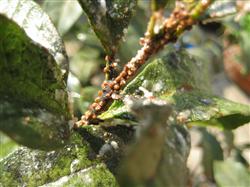
What are the control methods for scale insects on osmanthus?
Adults and nymphs often settle on osmanthus branches, suck sap, causing branches and leaves to wither, and in severe cases the whole plant dies. They often secrete large amounts of honeydew, which leads to sooty mold. Leaves and stems become covered with a black, sticky substance, hindering photosynthesis and affecting ornamental value. The main species are the cottony cushion scale and the white peach scale. Control methods: strictly prohibit the use of seedlings carrying the pest...
-
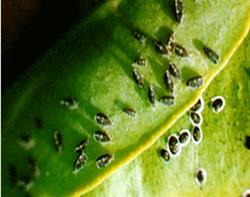
How to Control Whiteflies on Osmanthus Trees? Detailed Practical Methods
Adults and larvae insert their stylets from the underside of leaves to suck the sap of flower plant leaves. This causes leaves to turn yellow and drop. Adults can secrete "honeydew," which nourishes sooty mold pathogens, leading to sooty mold disease, contaminating leaves and branches, disrupting photosynthesis and respiration, causing poor growth of flower plants, yellowing leaves, weakened tree vigor, or death of the whole plant...
-
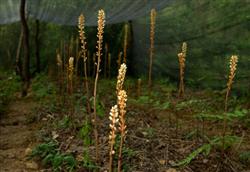
Causes of Gastrodia elata Trait Degradation and Control Methods
Degradation of Gastrodia elata traits often manifests as decreased yield of arrow gastrodia, with individuals becoming smaller and slender; a substantial reduction in the yield of rice gastrodia and white gastrodia, which turn ginger-yellow or light brown, with poor stress resistance, and the original yield and traits cannot be fully expressed. The causes are generally as follows: 1. Multiple generations of asexual reproduction. Generally after 5 to 6 generations of asexual reproduction...
-
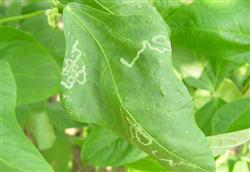
Control methods for leafminer flies in yardlong bean cultivation
How to control leafminer flies when growing yardlong bean? Here are the methods. Liriomyza sativae belongs to the genus Liriomyza, family Agromyzidae, order Diptera. The pest mainly damages plants as larvae, which bore between the upper and lower epidermis of the leaves and feed on the leaf sap and mesophyll, forming nearly round, punctate, sunken yellow spots on the leaves. After the larvae mine and feed on the mesophyll, they form tunnels. The tunnels are curved...
条件筛选