How to Control Whiteflies on Osmanthus Trees? Detailed Practical Methods
Adults and larvae insert their stylets from the underside of leaves to suck the sap of flower plant leaves. This causes leaves to turn yellow and drop. Adults can secrete "honeydew," which nourishes sooty mold pathogens, leading to sooty mold disease, contaminating leaves and branches, disrupting photosynthesis and respiration, causing poor growth of flower plants, yellowing leaves, weakened tree vigor, or death of the whole plant...
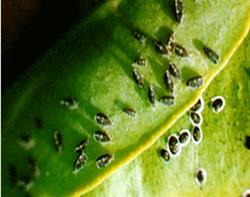
Adults and larvae insert their stylets from the underside of leaves to suck the sap of flower plant leaves. This causes leaves to turn yellow and drop. Adults can secrete "honeydew," which nourishes sooty mold pathogens, leading to sooty mold disease, contaminating leaves and branches, disrupting photosynthesis and respiration, causing poor growth of flower plants, yellowing leaves, weakened tree vigor, or death of the whole plant.
Control methods: Prohibit the use of seedlings carrying pests, and clean up field sanitation. Protect natural enemies such as the black citrus whitefly parasite wasp and ladybugs, Chinese green lacewing, Encarsia formosa, and yellow jumping wasp. During the peak egg hatching period, spray 2.5% deltamethrin emulsifiable concentrate diluted 5,000 times with water, spraying 2-3 times consecutively.
Trapping: Adults have a strong taxis toward yellow. Yellow wooden boards or plastic boards coated with sticky oil can be inserted or hung beside the trees. Shake the flowering branches to make them fly onto the boards and be killed.
Potted flowers moved indoors in winter should be strictly checked on the underside of leaves. Do not bring pests indoors.
Click to get more osmanthus cultivation techniques
Click to get more flower cultivation techniques