What are the control methods for scale insects on osmanthus?
Adults and nymphs often settle on osmanthus branches, suck sap, causing branches and leaves to wither, and in severe cases the whole plant dies. They often secrete large amounts of honeydew, which leads to sooty mold. Leaves and stems become covered with a black, sticky substance, hindering photosynthesis and affecting ornamental value. The main species are the cottony cushion scale and the white peach scale. Control methods: strictly prohibit the use of seedlings carrying the pest...
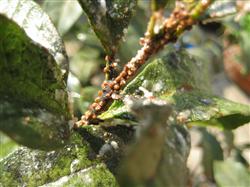
Adults and nymphs often settle on osmanthus branches, suck sap, causing branches and leaves to wither, and in severe cases the whole plant dies. They often secrete large amounts of honeydew, which leads to sooty mold. Leaves and stems become covered with a black, sticky substance, hindering photosynthesis and affecting ornamental value. The main species are the cottony cushion scale and the white peach scale.
Control methods: strictly prohibit the use of seedlings carrying the pest. If individual infested branches or leaves are found, cut them off immediately and burn them together; never discard them carelessly. For potted osmanthus, they can be brushed off with a toothbrush. Protect natural enemies: the Australian ladybird, the large red ladybird, the small red ladybird, the red-ringed ladybird and the six-spotted ladybird. For spraying, use 40% omethoate diluted with water 1 200-1 300 times; or 80% dichlorvos emulsifiable concentrate diluted with water 1 000-1 300 times. Spray once every 7-10 days, for 2-3 consecutive applications.
Click to get more osmanthus growing techniques
Click to get more flower growing techniques