-
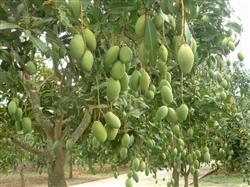
How to prevent and control mango powdery mildew? A detailed guide to practical methods
How to prevent and control powdery mildew when growing mangoes? Please explain the methods. Powdery mildew is an important disease of mango during the flowering period, affecting flower panicles, young fruit and tender leaves. It occurs in producing areas in Guangdong, Hainan, Yunnan, Guangxi and other parts of China. It has also been reported in India, Pakistan, Brazil, South Africa, Australia, Sri Lanka and other countries abroad...
-
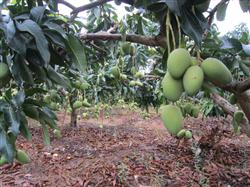
What are the methods for preventing and controlling pests and diseases in mango trees?
What methods are there for preventing and controlling pests and diseases in mango trees? Please provide an introduction to the methods. The following methods can be referenced for preventing and controlling pests and diseases in mango trees: 1. Agricultural control. Select improved varieties that are resistant or tolerant to pests and diseases according to local conditions. A single variety should be planted in the same plot, avoiding mixed planting of varieties with different maturity periods. In...
-
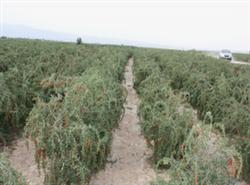
Control Methods and Key Technical Points for Black Fruit Disease of Goji (Lycium barbarum)
Goji root rot is widespread and causes serious damage. Plants killed by the disease account for 3%-5% each year, causing great losses to goji production. According to research by Lu Zhankui and others at the Ningxia Academy of Agriculture and Forestry Sciences, root rot symptoms fall into the following two types: (1) Root decay type. Roots or the root crown show varying degrees of decay and peeling, and the stem...
-
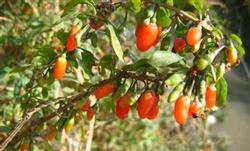
How to prevent and control wolfberry black fruit disease? These methods are very practical
Wolfberry black fruit disease damages the green fruit, flowers and buds of wolfberry, and also damages young shoots and leaves. From the early fruiting stage in early May to the late fruiting stage in mid-October, wolfberry can be infected by this disease. From May to June, when the daily average temperature is above 17°C, the relative humidity is around 60%, and there are 2~3 rainy days per ten-day period, the disease can occur in the field. From July to September, when the daily average temper...
-
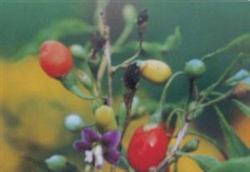
Control Methods and Technical Key Points for Goji Berry Anthracnose
Symptoms Goji berry anthracnose is commonly known as black fruit disease. It mainly damages green fruits, tender branches, leaves, buds, flowers, etc. When green fruits are infected, small black spots or irregular brown patches initially appear on the fruit surface. During continuous rainy weather, the lesions keep expanding, and half or the entire fruit turns black; when dry, the fruit shrivels; when humidity is high, many orange-red gelatinous dots grow on the diseased fruit; tender branches, leaf tips...
-
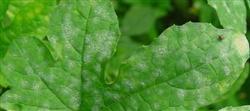
How to Control Powdery Mildew and Viral Disease in Bitter Melon
Powdery mildew, viral disease. How can bitter melon be protected against powdery mildew and viral disease? Please introduce control methods. For controlling powdery mildew and viral disease in bitter melon, you can refer to the following methods: 1. Powdery mildew: The plant is prone to this disease during the flowering and fruiting period. The leaves are first covered with a white powdery substance, which gradually causes the leaves to lose their green color and turn yellow, leading to premature aging of the plant...
-
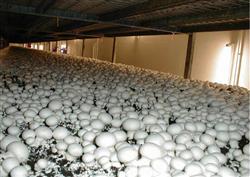
Eight precautions for the prevention and control of pests and diseases in button mushrooms
Strengthening the comprehensive management of button mushroom cultivation and creating an environment conducive to the growth of button mushrooms while unfavorable to the reproduction of pests and diseases is the key to growing organic button mushrooms. 1. Do a good job of environmental sanitation. Spawn production and operating personnel must establish a normal cleaning and sanitation management system, continuously remove contaminants and disinfect them with chemicals,...
-
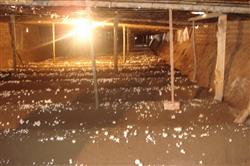
Key Technical Points for Integrated Pest and Disease Control in Button Mushrooms (Agaricus bisporus)
1 Competing fungi, diseases, and insect pests and their control 1.1 Competing fungi and their control methods 1.1.1 Coprinus comatus, commonly known as the wild mushroom, morphological characteristics: the cap is initially bullet-shaped or oval, jade white, grayish white, or yellowish white, mostly with scales on the surface, and the stalk is slender and hollow. When mature, the cap expands, and the gills gradually turn from white to black, finally autolyzing together with the cap into an ink-like liquid.
-
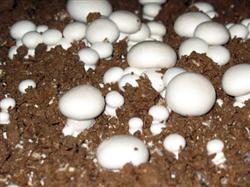
What are the common problems during the mycelial growth stage of button mushrooms? Analysis of causes and control measures
Contaminant fungi and their control methods. The ink cap mushroom, commonly known as the wild mushroom, has these morphological characteristics: the cap is initially bullet-shaped or oval, jade white, grayish white or yellowish white, with most of the surface covered in scales, and a slender, hollow stem. When mature, the cap expands, the gills gradually turn from white to black, and finally autolyze together with the cap into an ink-like liquid. Control method: properly compost the growing substrate...
-
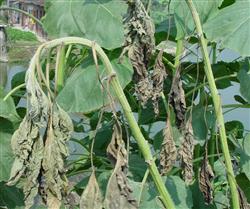
What are the control methods for sunflower sclerotinia rot?
How do you control sclerotinia rot in sunflowers? Please provide guidance on methods. Sclerotinia rot in sunflowers is caused by infection with Sclerotinia sclerotiorum. In addition to damaging sunflowers, it also damages economic crops such as soybean, rapeseed, sesame and tobacco. It can occur at all growth stages of sunflowers, with more cases occurring after flowering. It mainly damages the stems and flower heads, becoming...
条件筛选