Detailed Explanation of Methods for Preventing and Controlling Blossom-End Rot in Summer Peppers
How to prevent and control blossom-end rot in summer peppers? Please introduce the methods. The symptoms of blossom-end rot in peppers are very similar to those of bacterial soft rot in peppers. Blossom-end rot in peppers mainly damages the fruit, initially appearing as dark green or dark gray water-soaked lesions, which then expand into lesions that can reach 2-3 cm in diameter. As the fruit develops, the diseased area becomes grayish brown or white...
How to prevent and control blossom-end rot in summer peppers? Please introduce the methods
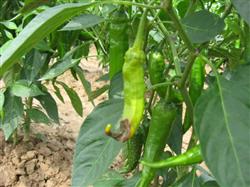
The symptoms of blossom-end rot in peppers are very similar to those of bacterial soft rot in peppers. Blossom-end rot in peppers mainly damages the fruit, initially appearing as dark green or dark gray water-soaked lesions, which then expand into lesions that can reach 2-3 cm in diameter. As the fruit develops, the diseased area becomes grayish brown or white, flat and sunken, and the diseased area can expand to cover half the fruit. Diseased fruits often turn red prematurely and generally do not rot. Sometimes, when humidity is too high, even if they rot, there is no foul odor (see figure). The main symptoms of bacterial soft rot in peppers are light brown lesions, rotting flesh with a distinct foul odor, and sometimes deformed fruits, as if the fruit were a bag filled with muddy water, commonly known as "a bag of water."
According to surveys, summer peppers are prone to blossom-end rot, which is sometimes also related to variety. Generally, varieties with thinner fruit skin, flatter fruit tops, and larger blossom scars are more prone to blossom-end rot. In addition, calcium deficiency in the soil, or excessive application of nitrogen fertilizer and potassium fertilizer, especially when nitrogen and potassium are excessive, affects the root system's absorption of calcium and easily induces blossom-end rot.
Prevention and control methods: ① Select disease-resistant varieties. For summer greenhouse planting, varieties with thicker fruit skin, smooth fruit surface, fewer blossom scars, and more pointed fruit tops should be chosen. ② Pepper cultivation should use soil rich in organic matter, with deep soil layers and strong water- and fertilizer-retention capacity. ③ After entering the fruiting stage, watering should be balanced to prevent alternating dry and wet conditions, and the soil moisture content should not fluctuate too much. ④ During periods of continuous high temperature and strong light, shade measures can be taken at noon. ⑤ During the peak fruiting stage, foliar spray with 1% superphosphate solution or 0.1%-0.2% calcium nitrate solution, spraying once every 5-10 days, for 2-3 consecutive sprays.
Click to get more pepper cultivation techniques
Click to get more vegetable cultivation techniques