What are the control methods for Osmanthus brown spot disease?
Brief introduction Osmanthus brown spot disease is a very common disease; in severe cases it causes the whole plant to drop its leaves, affecting flowering and ornamental value. It has long been reported in countries such as the UK, the US and Japan. It also occurs frequently in Shanghai, Nanjing, Hangzhou, Jinan, Beijing, Fuzhou, Guilin, Xiamen, Guangzhou, Taiwan, China and other provinces and cities in China. Symptoms The pathogen mainly infects the leaves...
Brief Introduction
Osmanthus brown spot disease is a very common disease; in severe cases it causes the whole plant to drop its leaves, affecting flowering and ornamental value. It has long been reported in countries such as the UK, the US and Japan. It also occurs frequently in Shanghai, Nanjing, Hangzhou, Jinan, Beijing, Fuzhou, Guilin, Xiamen, Guangzhou, Taiwan, China and other provinces and cities in China.
Symp toms
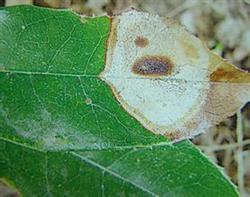
The pathogen mainly infects the leaves. Affected leaves first develop small yellow spots, which gradually turn yellowish brown to grayish brown. The lesions are nearly round or irregular in shape, or appear as angular spots when their expansion is restricted by the leaf veins. The lesions are 2-10 mm in diameter and are surrounded by a yellow halo. In humid weather, black moldy spots form on the diseased tissue; these are the conidiophores and conidia of the pathogen.
Path ogen
Osmanthus brown spot disease is caused by infection by Cercospora osmanthicola, a fungus of the genus Cercospora, family Moniliaceae, order Hyphomycetales, class Hyphomycetes, subdivision Deuteromycotina. The stroma of the pathogen is brown and nearly round, with conidiophores borne in bundles on it; the conidiophores are olive-brown, unbranched and rarely septate; the conidia are inversely club-shaped, nearly colorless to pale olive-brown, straight or slightly curved, measuring 15-58 x 2.8-3.7 microns.
Disease Development Patterns
The Osmanthus brown spot pathogen overwinters as mycelium on diseased plants and fallen diseased leaves, becoming the source of primary infection the following year. In late March each year it produces conidia and begins primary infection. The conidia are spread by airflow and raindrops and can invade directly or through wounds and natural openings; old leaves are more susceptible than young leaves. Brown spot disease occurs from April to October, and the disease subsides after November. High temperature and high humidity favor the disease. Resistance varies among cultivars; generally, Dan Gui is more resistant than Jin Gui and Yin Gui.
Control Methods
1. In combination with pruning, remove diseased leaves, clear away fallen leaves on the ground, and burn or bury them deeply in a centralized manner to reduce the source of primary infection. Continued for two years, this will certainly be effective.
2. Strengthen cultivation management; never allow water to accumulate in the soil, and ensure good ventilation and light. Apply more humus fertilizer and potassium fertilizer to improve the disease resistance of the plants.
3. During the disease period, spray 1:2:100 Bordeaux mixture with double the lime, or 50% benomyl wettable powder at 1000-2000 times dilution, or 20% triforine at 500-800 times dilution, or 50% amobam at 1000 times dilution.
Click to get more osmanthus growing techniques
Click to get more flower growing techniques