How to prevent and control wet bubble disease in button mushrooms
Disease symptoms: Wet bubble disease is also known as brown rot, white rot, wet bubble, blister disease, etc. The disease is caused by a fungus called Mycogone perniciosa. Mycogone perniciosa is a soil fungus. In button mushroom cultivation, Mycogone perniciosa is mainly introduced into the mushroom house with the casing soil, and it mostly occurs in mushroom sheds with high temperature, high humidity and poor ventilation. Temperatures above 17°C are suitable for this disease to occur.
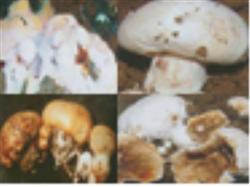
Disease symptoms: Wet bubble disease is also known as brown rot, white rot, wet bubble, blister disease, etc. The disease is caused by a fungus called Mycogone perniciosa. Mycogone perniciosa is a soil fungus. In button mushroom cultivation, Mycogone perniciosa is mainly introduced into the mushroom house with the casing soil, and it mostly occurs in mushroom sheds with high temperature, high humidity and poor ventilation. Temperatures above 17°C are suitable for this disease to occur.
Control measures:
First, mushroom shed management. The mushroom shed should be located in a pollution-free place, and the shed must be strictly disinfected. The compost must be disinfected before being brought into the house or before being taken out of the house after cultivation ends, and the compost should undergo a second fermentation. In addition, before an old mushroom shed with a history of the disease is used again, it should be pasteurized at 60°C for 10 hours, and after keeping the shed closed for 2 days, the shed covering should be reinstalled, and the cultivation and processing facilities can be put into use after disinfection. In affected mushroom sheds, the diseased mushrooms can be removed and the surface of the compost cleared; by covering during the day and opening at night, the shed temperature should be lowered as much as possible, and if it is below 13°C, the harm from the pathogen can be suppressed. Mushroom beds contaminated by miscellaneous fungi should be sterilized and disinfected with 75% alcohol.
Second, strict disinfection of the casing soil. Soil is where Mycogone perniciosa survives. Topsoil must not be used for casing soil; deep soil from below 20 cm should be selected, and after the soil is taken, it should be exposed to the blazing sun for 3-5 days, then sterilized and disinfected with 75% alcohol.
Third, strengthen management. Once this disease occurs, watering should be stopped immediately, and ventilation of the mushroom house should be increased to lower the relative humidity of the air in the mushroom house, lower the temperature to below 15°C, and remove all diseased mushrooms. When the disease is severe, the diseased casing soil must be removed, replaced with new soil, and the diseased mushrooms burned for disinfection.