How to prevent and control leaf mold in cherry tomatoes? Detailed explanation of prevention and control methods
Cherry tomatoes grown in greenhouses are often attacked by leaf mold, and vegetable growers should pay attention to prevention and control. I. Symptoms It mainly damages leaves, and in severe cases also damages stems, flowers and fruits. When leaves are infected, irregular or elliptical light yellow chlorotic spots appear on the leaf surface, and a white mold layer first forms on the diseased part of the leaf underside, later the mold layer becomes grayish brown or...
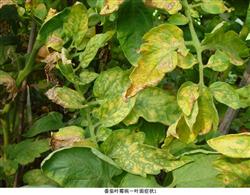
Cherry tomatoes grown in greenhouses are often attacked by leaf mold, and vegetable growers should pay attention to prevention and control.
I. Symptoms
It mainly damages leaves, and in severe cases also damages stems, flowers and fruits. When leaves are infected, irregular or elliptical light yellow chlorotic spots appear on the leaf surface, and a white mold layer first forms on the diseased part of the leaf underside, later the mold layer becomes grayish brown or dark brown and velvety. When conditions are suitable, black mold can also grow on the upper side of the lesions; as the disease spreads, the leaves gradually curl from bottom to top, and the plant becomes yellow-brown and withered. When fruits are infected, black round or irregular patches form near the fruit stalk or on the fruit surface, hardening and sunken, making them inedible. When young stems or fruit stalks are infected, the symptoms are similar to those on leaves.
II. Prevention and control methods
1. Reasonable crop rotation. In areas with severe disease incidence, crop rotation of more than 3 years should be practiced to reduce the initial infection source.
2. Seed soaking. Choose disease-resistant varieties, soak the seeds in 53°C warm water for 30 minutes before sowing, then dry them and sow.
3. Strengthen management and care. Strengthen the temperature and humidity management inside the greenhouse, ventilate in a timely manner, control watering appropriately, and remove moisture promptly after watering, so as to create temperature and humidity conditions unfavorable to the occurrence of the pathogen; plant at an appropriate density, and prune and remove side shoots in a timely manner; use balanced fertilization, avoid excessive nitrogen fertilizer, and improve the disease resistance of the plants.
4. Chemical fumigation. Before planting, fumigate the greenhouse or conservatory with sulfur powder. For every 55 cubic meters of space, use 0.13 kg of sulfur and 0.25 kg of sawdust, mix them and ignite; before planting, seal the greenhouse and fumigate for 24 hours. In the early stage of the disease, use 45% chlorothalonil smoke agent at 250 g per mu of greenhouse each time, and fumigate for one night.
5. Skillful application of dust formulations. In the evening, spray 7% yemeijing dust formulation or 5% jiareinong dust formulation or 6.5% jia meiling ultra-fine dust formulation, 1 kg per mu each time, once every 8-10 days, alternating the chemicals.
6. Spraying chemicals. In the early stage of the disease, spray wuyi mycin aqueous solution at 100-150 times dilution, or 47% jiareinong wettable powder at 700-800 times dilution, or 50% duomeiling wettable powder at 800 times dilution, or 40% yimeiwei wettable powder at 400 times dilution, spraying 50-65 L per mu. Spray once every 7-10 days, for 2-3 consecutive sprays.