Control Methods and Technical Key Points for Early Blight in Cherry Tomatoes
Early blight is a major disease of cherry tomatoes, widely distributed and commonly occurring, mainly in open fields in autumn, and also occurring occasionally in protected cultivation. Generally 30%-50% of plants are diseased, and in severe cases 100% become diseased, with some branches and leaves necrotizing due to the disease, significantly affecting cherry tomato production. This disease mainly damages leaves, and in severe cases also infects...
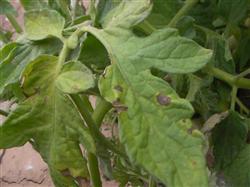
Early blight is a major disease of cherry tomatoes, widely distributed and commonly occurring, mainly in open fields in autumn, and also occurring occasionally in protected cultivation. Generally 30%-50% of plants are diseased, and in severe cases 100% become diseased, with some branches and leaves necrotizing due to the disease, significantly affecting cherry tomato production.
This disease mainly damages leaves, and in severe cases also infects leaf stalks, branches and stems. When leaves are infected, brown necrotic small spots initially form, which later develop into nearly circular brown necrotic spots with concentric rings, with yellow-green edges. Multiple lesions connecting with each other cause leaves to turn yellow and die. When leaf stalks, branches and stems are infected, mostly oval to irregular brown necrotic spots form, obviously sunken, often with concentric rings, with a rough surface, and are prone to breaking at the diseased part. When the air is humid, gray-black mold-like substances are produced on the surface of the lesions, namely the pathogen's conidiophores and conidia.
Control methods:
1. Apply sufficient organic base fertilizer, combined with additional phosphorus and potassium fertilizer. Topdress and water timely during the growth period to avoid premature aging of plants due to nutrient deficiency and enhance host disease resistance.
2. Do a good job of field sanitation, thoroughly remove diseased residual tissues and fallen leaves after harvest, and timely remove diseased leaves during the growth period to reduce sources of inoculum.
3. For chemical control in the early stage of disease onset, choose 50% iprodione wettable powder at 1000 times dilution, or 50% anilazine wettable powder at 500 times dilution, or 2% agricultural antibiotic 120 aqueous solution at 200 times dilution, or 50% captan wettable powder at 400 times dilution, or 80% mancozeb wettable powder at 800 times dilution, or 70% mancozeb wettable powder at 600 times dilution. In combination with control of bacterial diseases, 47% kasugamycin-copper wettable powder at 600-800 times dilution can also be used for spraying. Apply once every 10-15 days, and apply 1-3 times according to disease severity.