Mung bean diseases are frequent during the flowering period, and growers need to control them promptly
At present, mung beans have entered the flowering and pod-setting stage, and diseases and pests have been found in some fields, among which mung bean leaf spot, viral disease, damping-off, and soybean aphids cause relatively serious damage to mung beans. 1. Mung bean leaf spot: mainly damages leaves, with light brown or dark brown lesions appearing on the leaves, and obvious yellow halos at the edges,...
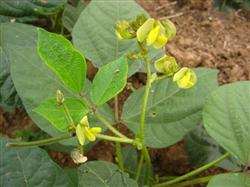
At present, mung beans have entered the flowering and pod-setting stage, and diseases and pests have been found in some fields, among which mung bean leaf spot, viral disease, damping-off, and soybean aphids cause relatively serious damage to mung beans.
1. Mung bean leaf spot: mainly damages leaves, with light brown or dark brown lesions appearing on the leaves, and obvious yellow halos at the edges. In the later stage, several lesions merge into irregular large lesions, 5-10 mm in diameter. In hot and rainy weather, the lesions expand rapidly, and the entire leaf withers and dies in an iron-red color.
2. Mung bean viral disease: after mung beans are infected by the virus in the field, the symptoms are mosaic and wrinkled leaves and stunted plants. Its spread in the field is related to the number of aphids. Timely control of aphids in mung bean fields and strengthened water and fertilizer management can both reduce the incidence of the disease.
3. Control damping-off. It occurs more severely 10-20 days after emergence and can continue through the flowering and pod stage. In the early stage of the disease, red-brown to dark brown lesions appear at the base of the stem of the seedlings, the cortex cracks, and it becomes ulcerated. In severe cases, the lesions gradually expand and encircle the entire stem, causing the stem base to turn brown, become sunken, constricted, and collapse. Choose disease-resistant varieties. Dress seeds with 0.3% of the seed amount of 50% carbendazim wettable powder, or 50% thiram wettable powder. Practice crop rotation. In the early stage of the disease, spray with 600 times dilution of 75% chlorothalonil wettable powder, or 600 times dilution of 50% carbendazim wettable powder.
4. Control fusarium wilt. Also called wilt disease. It often causes plants to wilt and die. On severely affected plants, the leaves gradually turn yellow from the bottom upward, then from yellow to withered, and finally dry up and fall off. Rotate crops for more than 3 years. In the early stage of the disease, the following agents can be sprayed on the stem base of the plants, once every 7-10 days, for 2-3 consecutive sprays: 800-1000 times dilution of 70% thiophanate-methyl wettable powder; 600 times dilution of 70% chlorothalonil; 1500 times dilution of 70% dexon.
5. Aphids: mostly gather on the heart leaves and the backs of young tender leaves of mung beans to cause damage. After being damaged, the bean leaves curl, the plants become stunted, and flowering and pod setting are affected.
Key points of integrated control technology. Integrated control of mung bean diseases and pests should be based on agricultural control, actively promote biological control, and rationally use chemical control at key periods.
1. Strengthen field management, deep plow after autumn, and increase the application of potassium fertilizer
2. Protect and utilize natural enemies, make full use of the natural control capacity of natural enemies, and reduce pesticide use as much as possible.
3. Rationally use chemical control and grasp two key periods. First, dress seeds with chemicals at the sowing stage, which has good control effect on seedling-stage diseases; second, spray chemicals at the flowering and pod stage, starting at the early flowering stage, using 800 times dilution of 50% carbendazim, adding 50 ml of 4.5% beta-cypermethrin or 10-15 g of 3% acetamiprid, diluted with 50-75 kg of water, spraying once every 7-10 days, and controlling continuously 3 times can suppress the damage of various mung bean diseases and pests.