Four Cultivation Methods for Controlling Excessive Vegetative Growth of Waxberry (Chinese Bayberry) Trees
Waxberry trees planted on deep, fertile soil will, if allowed to grow naturally, develop excessive vegetative growth, causing most of the tree's nutrients to be consumed by the growth of branches and leaves, which leads to phenomena such as few or difficult-to-form flower buds, and the tree entering the fruiting stage late or producing low yields. There are four measures for controlling excessive vegetative growth of waxberry trees: 1....
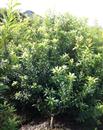
Waxberry trees planted on deep, fertile soil will, if allowed to grow naturally, develop excessive vegetative growth, causing most of the tree's nutrients to be consumed by the growth of branches and leaves, which leads to phenomena such as few or difficult-to-form flower buds, and the tree entering the fruiting stage late or producing low yields. There are four measures for controlling excessive vegetative growth of waxberry trees:
1. Control the amount of nitrogen fertilizer and appropriately increase the amount of phosphorus and potassium fertilizer. When applying fruit-picking fertilizer from late June to early July, apply 10-15 kg of plant ash and 0.5 kg of superphosphate per tree, or 1-1.5 kg of compound fertilizer, and at the same time spray 800-fold diluted Xin Gao Zhi Mo (New High Lipid Film) solution to improve the utilization rate of the effective components of the fertilizer.
2. Root pruning. In late summer and early autumn, dig a trench 30-40 cm deep near the drip line of the canopy to cut the roots, which can inhibit branch growth and promote fruiting. At the same time, spray Hu Shu Jiang Jun (Tree Guardian General) throughout the orchard for sterilization and disinfection to reduce sources of pathogens.
3. Girdling. For large branches, perform spiral girdling in April (from the end of flowering to before the first physiological fruit drop), and apply Cu Hua Wang No. 2 to inhibit excessive growth of the main shoots, concentrate nutrients to supply the fruit, control the canopy and promote flowering, improve fruit expansion quality, and prevent fruit drop.
4. Spray Cu Hua Wang No. 3 on the canopy. From early October to mid-March of the following year, spray Cu Hua Wang No. 3 on the canopy at appropriate times to promote the return flow of nutrients from the terminal shoots of the plant and inhibit excessive growth of the main shoots.