-
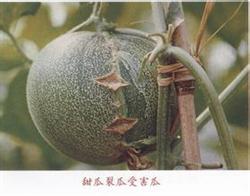
What to Do About Split Melons? A Full Guide to Prevention and Control Methods
1. Scientific fertilization. According to the fertilizer and water requirements of melons during their growth period, supply fertilizer and water in a balanced way, and do not blindly water and fertilize. When fertilizing, not only should sufficient base fertilizer be applied to meet the needs of the melon's early growth, but also timely topdressing should be done in the later stage of melon growth to meet the fertilizer requirements of the melon's later growth. 2. ...
-
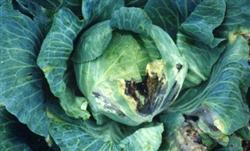
What are the control methods for black rot of cabbage?
Main symptoms: When the disease occurs at the mature plant stage, most lesions spread inward from the leaf margin, forming a "v" shape, and are yellowish-brown dead spots. The leaf tissue around the lesions is pale yellow, with no obvious boundary from the healthy part; sometimes the pathogen can spread inward along the leaf veins, forming a network of yellow veins. Causes of the disease: The primary infection source of this disease is seeds or in the soil...
-

Main Pests of Overwintering Cabbage and Their Control Methods
1. Nutrient Solution Formula The nutrient solution formula for kale in the Beijing area is the same as that for hydroponic lettuce, so it will not be repeated here. 2. Nutrient Solution Concentration Management Kale has a strong ability to absorb nutrients and requires sufficient fertilizer. The nutrient solution concentration management index is 2.5-3.0 ms/cm, and this concentration can be used consistently from planting to harvest. 3...
-
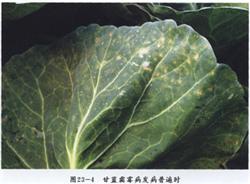
How to prevent and control downy mildew in cabbage? Detailed explanation of control methods
In the early stage of the disease, pesticides such as 75% chlorothalonil wettable powder 600-800 times dilution and 70% mancozeb wettable powder 800 times dilution can be used for preventive protection. In mid-September, the early stage of the disease is the key period for control. You can use 58% metalaxyl·mancozeb wettable powder N700 times dilution, 20% flumorph wettable powder l000 times dilution, 60% flumorph...
-
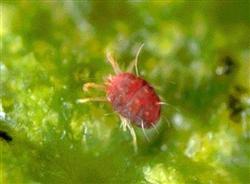
How to Control Red Spider Mite Infestations on Mung Beans
Chemical control is the main approach. Strengthen field inspections; once localized, patchy occurrences are found, spray promptly for control. Use a 1000-fold dilution of 50% malathion emulsifiable concentrate, or a 2000-fold dilution of 50% naled, or a 5000-fold dilution of 25% deltamethrin. Spray once every 7 days, for 2 to 3 consecutive applications.
-
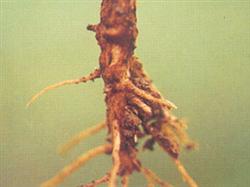
What to Do When Mung Beans Get Root Rot? A Detailed Guide to Prevention and Control Methods
(1) Symptoms In the early stage of the disease, the young leaves turn yellow. If the root system is pulled out for observation, the lower part of the stem and the upper part of the main root can be seen to be dark brown and slightly sunken. When the stem is cut open, the vascular bundles have turned dark brown. When most of the roots have rotted, the plant withers and dies. (2) Disease conditions Low-lying terrain, high soil moisture, low soil temperature, and poor root development make the disease likely to occur. Stormy weather helps the pathogen spread and proliferate.
-
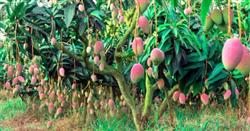
The commonly used pesticide for mango pest and disease control is Supracide.
Physical and chemical properties: appearance is a dark yellow liquid, density 1.04-1.08 kg/L, storage stability period 2 years, cannot be mixed with alkaline pesticides. Toxicity: a highly toxic insecticide, toxic to mammals, birds and bees; the safety regulations for the use of highly toxic pesticides should be observed when applying. Mode of action: Supracide, also called methidathion, is a...
-
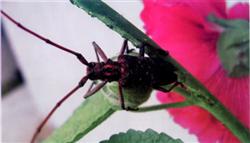
Control Methods and Key Technical Points for the Mango Stem Borer
The mango stem borer belongs to the order Coleoptera, family Cerambycidae, and occurs in mango-producing areas throughout southern China. Its larvae bore into and feed on branches and trunks, weakening the affected plants; in severe cases, the plants can die, and infested branches are easily broken by wind. The pest has 1 generation per year, overwintering mainly as larvae, while a small number of pupae or adults can also overwinter inside the bore holes. The following year...
-
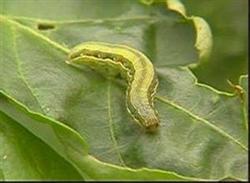
Control Methods and Technical Key Points for the Cabbage Moth
The cabbage moth, also known as the cabbage cutworm and vegetable armyworm, has the Latin scientific name Mamestra brassicae Linnaeus and belongs to the order Lepidoptera, family Noctuidae. The cabbage moth has an extremely diverse diet, with known hosts reaching over 100 species across 45 families. Among vegetables, its main hosts include cabbage, cauliflower, Chinese cabbage, radish, rapeseed, solanaceous and fruiting vegetables, legumes,...
-
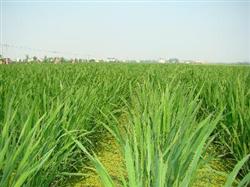
Occurrence Characteristics of Pests and Diseases in High-Mountain Water Bamboo and Integrated Control Techniques
The key points of off-season cultivation techniques for double-cropping water bamboo at low altitudes are introduced as follows: 1. Selection of improved varieties. The Zhejiang Yidianhong water bamboo (a single-cropping type) is selected. 2. Land preparation and seedling raising. Select a field sheltered from wind and facing the sun, with convenient irrigation and drainage and loose, fertile soil, as the seedling bed. In early November, sun-dry the seedlings until they are 60-70% dry, 1...
条件筛选