What to Do About Split Melons? A Full Guide to Prevention and Control Methods
1. Scientific fertilization. According to the fertilizer and water requirements of melons during their growth period, supply fertilizer and water in a balanced way, and do not blindly water and fertilize. When fertilizing, not only should sufficient base fertilizer be applied to meet the needs of the melon's early growth, but also timely topdressing should be done in the later stage of melon growth to meet the fertilizer requirements of the melon's later growth. 2. ...
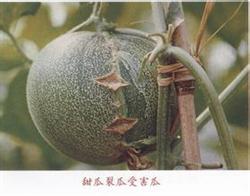
1. Scientific fertilization. According to the fertilizer and water requirements of melons during their growth period, supply fertilizer and water in a balanced way, and do not blindly water and fertilize. When fertilizing, not only should sufficient base fertilizer be applied to meet the needs of the melon's early growth, but also timely topdressing should be done in the later stage of melon growth to meet the fertilizer requirements of the melon's later growth.
2. Reasonable irrigation. On the one hand, water well in time for fruit swelling to promote the expansion of the melon fruit; on the other hand, after watering for fruit swelling, do not water heavily again, especially try not to water in the about 10 days before harvesting, to prevent split melons.
3. Protect the leaves. Pay attention to protecting the leaves near the fruit, and use them to shade the melon fruit from sunlight, avoiding split melons caused by fruit skin aging due to sunlight exposure.
4. Control the temperature. In greenhouse production, insulation measures should be taken to keep the greenhouse's daily average temperature above 15°C; when ventilating, first open a smaller vent, then gradually open the vent wider as the temperature rises; when a cold wave suddenly occurs, promptly cover straw mats and other insulation materials to prevent a sudden drop in temperature.
5. Protect the fruit. When the fruit is exposed to the sun, you can use newspaper bags to shade it and prevent direct sunlight. Shading can also prevent green spots from appearing on the fruit surface and keep the fruit attractive, which is especially important when cultivating in summer.
6. Spray trace elements. After fruit set, combined with watering, spray the leaves with a mixed solution of 0.3% calcium chloride and 0.12%-0.25% boric acid, once every 7 days, for 2-3 consecutive sprays.