What are the control methods for black rot of cabbage?
Main symptoms: When the disease occurs at the mature plant stage, most lesions spread inward from the leaf margin, forming a "v" shape, and are yellowish-brown dead spots. The leaf tissue around the lesions is pale yellow, with no obvious boundary from the healthy part; sometimes the pathogen can spread inward along the leaf veins, forming a network of yellow veins. Causes of the disease: The primary infection source of this disease is seeds or in the soil...
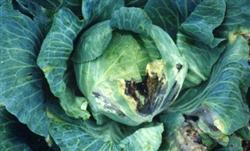
Main symptoms: When the disease occurs at the mature plant stage, most lesions spread inward from the leaf margin, forming a "v" shape, and are yellowish-brown dead spots. The leaf tissue around the lesions is pale yellow, with no obvious boundary from the healthy part; sometimes the pathogen can spread inward along the leaf veins, forming a network of yellow veins.
Causes of the disease: The primary infection source of this disease is seeds or diseased plant residues in the soil. The pathogen can survive for 2-3 years and spreads through irrigation water, farming operations, and wounds caused by pests. The optimum growth temperature for this bacterium is 25°C-30°C, with a minimum of 5°C and a maximum of 39°C. It is resistant to drying; generally, fields with high temperatures, early sowing, extensive management, and untimely pest control have severe disease incidence.
Control methods
(1) Seed disinfection: Soak seeds in warm water at 55°C for 15 minutes, then immediately transfer them into cold water to cool down, take them out and dry them before sowing; they can also be soaked in a 200-fold solution of 50% zineb for 15-20 minutes, then washed and dried before sowing; or soaked in a 1000-fold solution of streptomycin or a 1000-fold solution of chlortetracycline for 2 hours.
(2) Strengthen cultivation management; sowing too early should be avoided; water reasonably, practice seedling hardening at the appropriate time, pay attention to reducing wounds, and clean up the garden promptly after harvest.
(3) Chemical control: At the early stage of the disease, spray streptomycin or agricultural streptomycin at 100-200 mg/L, or chloramphenicol at 50-100 mg/L.