-
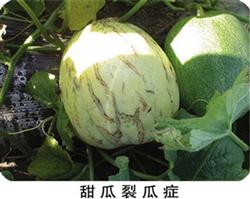
What are the control methods for small fruit and fruit cracking in melons?
As temperatures rise, melons grow rapidly, and the critical period for field management has arrived. Recently, some farmers have reported that small fruit and fruit cracking occur during melon growth. How can this be solved? To prevent small fruit, strengthen fertilizer and water management in the early stage to promote vegetative growth. According to variety characteristics and cultivation...
-
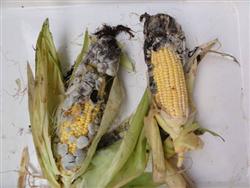
Detailed Explanation of Key Techniques for Corn Smut Prevention and Control
Corn smut, called "grey packet" by farmers. It can occur at all growth stages of corn, damaging the tassel, ear, as well as stems and leaves. Symptom identification: symptoms gradually become obvious around tasseling. Tumors of varying sizes grow on the affected parts; the tumors are initially white or reddish-purple, later turning grey, and after rupturing they release black powder. Affected...
-
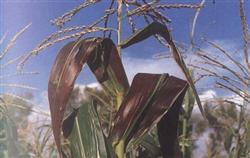
How can corn red leaf disease be controlled effectively?
Symptoms: When improved varieties bred with Huangzaosi encounter low temperatures and rainy, overcast weather during the grain-filling stage, their leaves turn red, which is called red leaf disease. Cause: The occurrence of this disease is related to the fast grain-filling of this variety. When large amounts of synthesized sugars cannot be quickly converted due to metabolic disorders, they become anthocyanins, and the green leaves turn red. Control methods: (1) In areas where it occurs severely, do not...
-
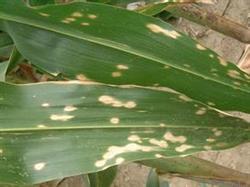
How to prevent and control corn gray leaf spot? A full analysis of the technical key points
Corn gray leaf spot can occur throughout the entire growth period, but the disease is most severe at the tasseling and grain-filling stages. In the early stage of the disease, water-soaked light brown spots appear. These streaks extend parallel to the leaf veins, are often rectangular, and are more obvious when held up to the light. The center of the lesion is gray, and the edge has a brown line. The lesion size is 2-4 x 10-24 (mm), and...
-
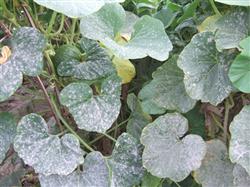
How to apply fungicides for effective control of powdery mildew on melons
1. Choose disease-resistant varieties. Disease resistance varies noticeably among different melon varieties, so choosing disease-resistant varieties is key to controlling the severity of the disease. 2. Clean up the field. After harvest, weeds and crop residues should be removed promptly; during the melon growing season, weed promptly, remove diseased leaves, and take weeds, residues, and diseased leaves...
-
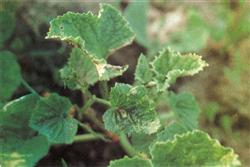
What to Do When Open-Field Melons Get Mosaic Virus Disease? Symptom Identification and Control Methods
Symptoms: In the early stage of the disease, the leaves show mosaic mottling interwoven with yellow-green and dark green, the leaves become smaller, and the leaf surface is wrinkled, uneven, and curled. The main vine is distorted and stunted, the plant is dwarfed, the melons are small, and the fruit surface has mottled patches of alternating light and dark, or slight bump-like protrusions. Causes: The incidence of mosaic virus disease has been relatively high in recent years...
-
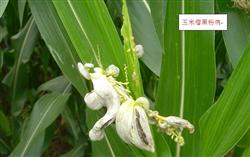
Control of corn smut disease cannot be ignored
The symptoms of this disease can occur on all aboveground parts of the corn throughout the entire growth period, and are especially obvious at the tasseling stage. Tumor-like growths of varying sizes develop on the affected parts. Initially, the tumors are covered with a white membrane, which later turns gray and, after drying and cracking, releases black powdery material, namely the spores of the pathogen. On the leaves, bean-sized tumor-like masses are easily produced, while on the tassel...
-
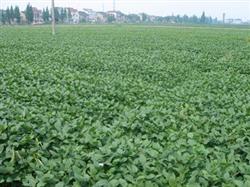
Integrated control methods for three pests of spring soybean
I. Cutworms. The main pest damaging local crops is the yellow cutworm (Agrotis segetum). 1. Damage characteristics: The larvae mostly bite off seedlings at ground level, causing missing plants and broken rows. After the main stem becomes lignified, they feed on the epidermis of the roots near the ground surface, causing root damage that affects the root's ability to absorb water, causing the plant to gradually wilt and die. ...
-
Identification and Control Methods of Soybean Cyst Nematode Disease
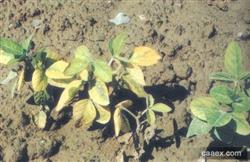
Soybean cyst nematode disease, also called "huolongyangzi" disease, is caused by nematodes parasitizing the roots of soybean. Diseased plants have poorly developed root systems, with a marked reduction in lateral roots, slow growth, stunted plants, yellowing stems and leaves, small pods with shriveled seeds, or no seed set, and even death of the entire plant. When diseased plants are pulled up and examined, many needle...
-
How to prevent and control soybean downy mildew? Detailed explanation of control methods
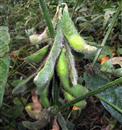
[Distribution and damage] It occurs in all major soybean-producing areas across the country, and is especially common in the cold-temperate Northeast and North China regions. This disease is caused by infection with the fungus Peronospora manshurica (Naum.) Jyd. et Gaum. It generally reduces yield by 6%-15%, with about 10% of seeds damaged. In addition to harming large...
条件筛选