How to prevent and control soybean downy mildew? Detailed explanation of control methods
[Distribution and damage] It occurs in all major soybean-producing areas across the country, and is especially common in the cold-temperate Northeast and North China regions. This disease is caused by infection with the fungus Peronospora manshurica (Naum.) Jyd. et Gaum. It generally reduces yield by 6%-15%, with about 10% of seeds damaged. In addition to harming large...
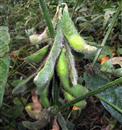
[Distribution and damage] It occurs in all major soybean-producing areas across the country, and is especially common in the cold-temperate Northeast and North China regions. This disease is caused by infection with the fungus Peronospora manshurica (Naum.) Jyd. et Gaum. It generally reduces yield by 6%-15%, with about 10% of seeds damaged. In addition to harming soybeans, it also harms wild soybeans.
[Symptoms] They mainly appear on leaves and seeds. After the first pair of true leaves of the seedling unfolds, chlorotic patches appear along both sides of the leaf veins, and sometimes the entire leaf turns pale yellow. When the weather is humid, a dense grayish-white downy mildew layer, namely the pathogen's sporangiophores and sporangia, grows on the underside of the leaves. At the adult plant stage, round or irregular yellow-green lesions with indistinct edges appear on the leaf surface, and later the lesions turn brown. A grayish-white to grayish-purple downy mildew layer also forms on the lesions on the underside of the leaves. Eventually the leaves dry up and die. There are no obvious symptoms on the surface of the pods. On the surface of the seeds inside the pods, a white layer of mycelium is attached, which contains large numbers of the pathogen's oospores.
[Development pattern] The pathogen's oospores overwinter on seeds or in diseased leaf residues. The following year, the oospores germinate and produce zoospores, which invade the growing point through the embryo bud and spread to the true leaves and buds, forming systemic infection. Subsequently, large numbers of sporangia are produced on the diseased tissue and spread by rain, wind, and airflow. After the sporangia germinate and produce germ tubes, they invade the host through stomata, spread in the intercellular spaces, and then form sporangiophores and sporangia, carrying out multiple secondary infections in this way. After pod formation, the mycelium in the diseased plant invades the pods through the pith of the stem and fruit stalk, causing disease in the seeds and forming mycelium and oospores on the seeds. Lower temperatures, frequent rain, heavy dew, and cloudy days? are conducive to the disease, and the disease is more severe.⟧
[Control methods] 1. Select disease-resistant varieties. 2. Seed treatment: remove diseased seeds, and treat the seeds by dressing them with 50% thiram wettable powder at 0.5% of the seed weight. 3. Chemical control: after flower drop, spray once or twice for control with 72% DuPont Curzate wettable powder at 800 times dilution, or 1:1:200 Bordeaux mixture, or 50% thiram wettable powder at 500-1000 times dilution, or 65% zineb wettable powder at 500 times dilution.