-
Integrated control of peanut pod rot to achieve both higher yield and better quality
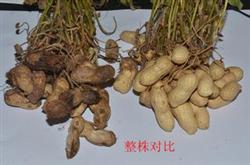
Peanut pod rot, also known as "peanut rotten pod disease," has become fairly common in recent years in the major peanut-producing areas of our province, including Daming, Xinle, Dingzhou, Xingtang and Luanxian, and it becomes even more severe in fields planted continuously to peanuts for many years when the pod-setting stage coincides with a rainy year. According to surveys, affected fields suffer at least a 20% yield loss, ...
-
Opinions on the Occurrence of Sclerotinia Rot in Rapeseed and Its Control Techniques
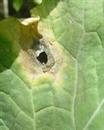
This year's rapeseed growth is characterized by an earlier growth period than last year and a growth vigor close to last year's. The occurrence characteristics of rapeseed sclerotinia rot this year differ from previous years. Based on a comprehensive analysis of multiple factors including field inoculum sources, rapeseed growth vigor, varietal disease resistance and climatic conditions during the susceptible growth period, the natural occurrence level is a moderate-to-severe epidemic. ...
-
What are the control methods for white rust in water spinach?
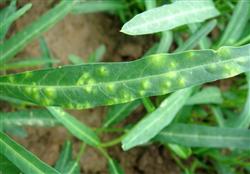
Because of the high temperature and frequent rain after early summer, water spinach is prone to white rust. Once the disease occurs, it not only reduces the yield but also affects the quality. 1. Symptoms At the early stage of the disease, spots first appear on the upper surface of the leaves as pale yellow to yellow spots, which later gradually turn brown. The spots are relatively large. On the underside of the leaves, white raised blister-like pustules form, nearly round or elliptical to irregular, sometimes coalescing into larger pustules. Later, the pustules rupture and release white sporangia. When the leaves are severely damaged, the spots are dense, the diseased leaves become deformed, and the leaves fall off.
-
How to prevent and control white rust in water spinach, all in one article
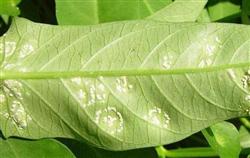
1. Practice a 2- to 3-year crop rotation with other vegetable varieties. 2. Before sowing, mix the seed for sterilization at a ratio of 300 g of 35% metalaxyl per 100 kg of seed; 3. In the early stage of the disease, spray with 50% copper metalaxyl wettable powder at 6000 to 7000 times dilution, or with 72.2% propamocarb aqueous solution at 8000 times dilution, once every 7 to 10 days...
-
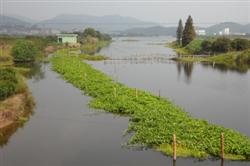
How to prevent pests and diseases in water spinach? Practical control measures shared
1. Preparing seedlings: After the mother stems of the planted water spinach form nodes, when the branches growing from the nodes reach 20 cm in length, cut off the seedlings with fibrous roots to use as planting material. 2. Cultivation method: Prepare braided straw ropes, wooden stakes and floats (the plastic foam ball-shaped floats used for the upper rope of fishing nets will do). When planting, place the seedlings at 15-20 cm...
-
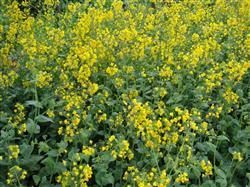
What to Do About Rape Seedling Stunting? A Detailed Guide to Targeted Prevention and Control
After transplanting and seedling recovery, rape (Brassica napus) sometimes shows stunting in the early field growth stage, with symptoms such as reddened or yellowed leaves, curled leaf centers, slow or halted growth, and poor development. To prevent and control rape stunting, targeted measures must be taken based on investigating its causes. Stunting caused by drought or waterlogging - drought not only...
-
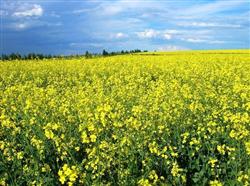
How to prevent and control weeds in rapeseed? Master the occurrence characteristics and control methods
The amount of nitrogen, phosphorus and potassium absorbed by rapeseed is nitrogen greater than potassium, and potassium greater than phosphorus. For every 1000 kg of rapeseed produced, it needs to absorb 2.76 kg of nitrogen, 0.33 kg of phosphorus and 2.06 kg of potassium. The absorption ratio of nitrogen, phosphorus and potassium is 8.38:1:6.24. A deficiency of the trace element boron will produce boron deficiency symptoms. Rapeseed plants...
-
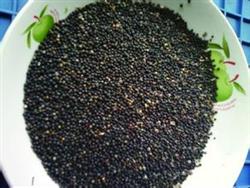
Apply one round of Gramoxone to control weeds before sowing or transplanting rapeseed
20% Gramoxone aqueous solution is a contact, non-selective herbicide. When rice, cotton and other crops are harvested and the stubble is cleared, spraying Gramoxone before no-till direct seeding or transplanting rapeseed can build soil fertility, improve soil structure, increase aeration, and preserve fertilizer and water. Compared with plow-tillage rapeseed cultivation, it saves labor and cost, especially in rural areas where labor has been greatly reduced...
-
How to prevent and control rapeseed viral disease? A detailed practical guide
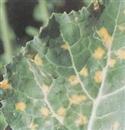
Viral disease is one of the main diseases of rapeseed. Affected plants reduce yield by around 20%, and in severe cases by more than 70%. It is generally more susceptible in years with little rain or in areas where vegetables are often grown nearby. Comprehensive control techniques must be adopted to prevent and control rapeseed viral disease. First, disease-resistant varieties should be selected; second, aphids should be controlled in a timely manner; third...
-
How to prevent and control persimmon tree diseases? These two methods are very practical
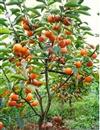
The main pests and diseases that persimmon trees are prone to include: persimmon angular leaf spot, circular leaf spot, anthracnose, black spot, leaf blight, powdery mildew, Eumeta variegata, Japanese mealybug, tea tussock moth, Maladera ovata, red wax scale, Homona magnanima, and small black slug moth, etc. Control methods: (1) Remove diseased fallen leaves and burn them; at the early stage of the disease, spray Bordeaux mixture, zineb, carbendazim or any one of these fungicides several times; when powdery mildew is severe, spray triadimefon. (2) Use light traps to kill adult insects; during the larval or nymph stage, spray dichlorvos, trichlorfon, fenitrothion or any one of these insecticides.
条件筛选