-
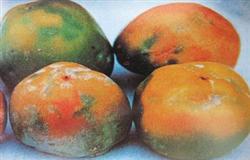
How to prevent and control persimmon witches' broom disease? Key control points every fruit grower must see
Symptoms: Diseased trees bud late in spring and grow slowly; the leaf veins turn black, and the xylem of the branches and trunk turns dark brown; in severe cases it spreads to the phloem tissue, causing clustered branches or upright excessive growth, or branch dieback and scorched shoot tips, with few fruits set, and the fruits soften prematurely and then drop; in severe cases there is no fruit set or the whole tree dies. Control methods: (1) Choose...
-
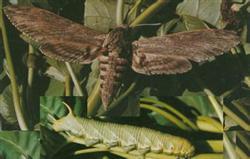
What are the control techniques for the sweet potato hornworm?
The sweet potato hornworm belongs to the order Lepidoptera, family Sphingidae, and mainly harms sweet potato. The larvae feed on the leaves and tender stems of sweet potato, and in severe cases can strip the leaves completely, greatly affecting yield. In Henan Province, it has 3-4 generations per year, overwintering as pupae 10 cm below the soil surface. It emerges in May of the following year. The adults hide during the day and fly out to activity after dusk. The adults are strongly phototactic...
-
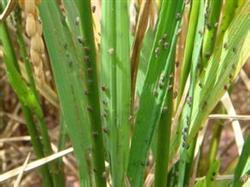
Control Methods for the Brown Planthopper Infestation in Rice
The brown planthopper, also known as the brown rice planthopper, is commonly called ascarid worm, soft-shelled ascarid, yóu worm, and midge. Scientific name Nilaparvata lugens (Stdl), order Homoptera, family Delphacidae. The brown planthopper is one of the major pests of rice in China, causing damage in all major rice-growing regions across the country, north and south, and every year it occurs and causes damage mixed with the white-backed planthopper. The two planthoppers...
-
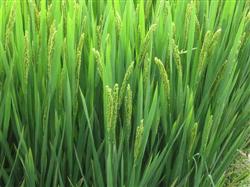
Key Technical Points for Pest and Disease Control in the Middle and Late Stages of Rice
Currently, rice is at the booting stage. In order to seriously carry out pest and disease control in the middle and late stages of rice and ensure increased yield and income this year, Shuangfengqiao Subdistrict recently took strong measures to strengthen pest and disease control in the middle and late stages of rice. Because last winter and this spring were a warm winter year, the overwintering populations of the rice stem borer (Chilo suppressalis), rice leaf roller (Cnaphalocrocis medinalis), and rice planthopper were large...
-
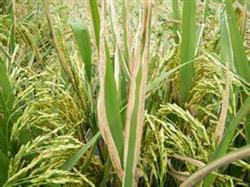
Detailed Explanation of the Causes and Control Techniques of Rice Bacterial Leaf Blight
The pathogen of rice bacterial leaf blight is Xanthomonas oryzae, a bacterium belonging to the genus Xanthomonas. Bacterial leaf blight is one of the major diseases of rice. Once it occurs, it generally reduces yield by 10%, and in severe cases by 50-60%. Therefore, strengthening the control of bacterial leaf blight is very important. 1. Causes of the disease 1.1 Relationship between disease occurrence and climatic conditions...
-
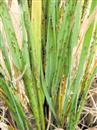
Occurrence Characteristics of Rice Planthoppers and Control Strategies
Baohe Township is located in the southwest of Jing County and belongs to a hilly area. The township has 9144 mu of cultivated land, including 7813 mu of paddy fields, and is a typical mountainous agricultural township. Rice planthoppers are a frequent pest that seriously damages rice in our township and cause losses of varying degrees every year. Especially in the past 2 years, due to the influence of a series of factors such as climate, rice production...
-
How to control rice false smut? Detailed explanation of its occurrence characteristics and control techniques
I. Occurrence characteristics. Rice false smut occurs only on the panicle, generally from the flowering stage to the milk-ripe stage of rice. In infected grains, the pathogen grows inside the glumes, forming false smut about 1 cm in diameter that replaces the grain. The optimum temperature for the germination and development of the rice false smut pathogen is 25-30°C; above 34°C or below 12...
-
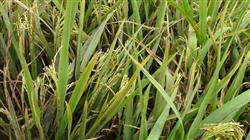
Occurrence of Rice Blast and Rice Planthopper and Their Control Methods
I. OccurrenceRice blast: Rice leaf blast has now appeared in Helan, Qingtongxia and other places. The first appearance date was June 13, about 10 days earlier than last year. Especially after the rainfall on July 7 and 12, the field humidity was relatively high, which was very favorable for the development of leaf blast. A recent general survey in Qingtongxia showed an average diseased field rate of 16.7%, a diseased plant rate of 2.2%, and a diseased leaf rate of 0.68%. In Helan, it occurred sporadically in some drill-seeded fields. Ear-neck blast will appear at the end of July and the beginning of August. The meteorological forecast shows that in August the temperature across the region will be relatively high and precipitation in the irrigation area will be relatively low, which is unfavorable for the occurrence and development of ear-neck blast. It is expected that ear-neck blast will generally occur at a mild-to-moderate level, with moderate to severe occurrence in fields where large areas of susceptible varieties are planted in some localities. Even so, all rice-growing counties still must not take it lightly and should strengthen monitoring. For fields with disease centers, farmers should immediately be organized to spray pesticides to block the disease centers and control the spread of fungal spores. In mid- and late July, general control should be carried out in fields where leaf blast has already occurred and in fields with high density and vigorous growth, to control the development of leaf blast and prevent the occurrence of ear blast. In early and mid-August, fields where ear-neck blast has already occurred should be sprayed promptly to control the spread of the disease. Rice planthopper: A survey in Wuzhong on July 10 found a 42% insect-hole rate; in 50 sweep-net passes, there were 32 adult brown-backed planthoppers, 10 white-backed planthoppers, 37 long-winged forms, and 5 short-winged forms. There were 60 white-backed planthopper nymphs and 151 brown-backed planthopper nymphs. A survey in Qingtongxia on July 10 found 24 insects per 100 hills.
-
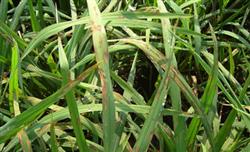
Detailed Explanation of the Grading Standards and Control Methods for Rice Blast
Grading standards Leaf blast: Grade 1 occurs sporadically, and disease can only be seen upon careful investigation. Grade 2 has slightly more incidence, with diseased leaves concentrated in the lower part. Grade 3 has widespread incidence, with diseased leaves concentrated in the middle and lower parts. Grade 4 has relatively severe incidence, with diseased leaves concentrated in the middle and upper parts, and a small number of patches appearing. Grade 5 has severe incidence, with obvious patches...
-
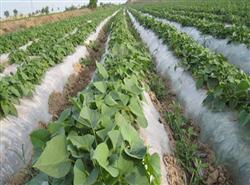
Properly controlling excessive vine growth in sweet potatoes can promote high yields
Sweet potato is a crop with high and stable yields. It has the characteristics of wide adaptability, strong stress resistance, drought and barren tolerance, and relatively few pests and diseases. When planted in places with good water and fertilizer conditions, it can generally yield 2000--3000 kg per mu. However, due to differences in natural conditions and cultivation levels, the yield per unit area is also extremely uneven. In order to fully...
条件筛选