Detailed Explanation of the Grading Standards and Control Methods for Rice Blast
Grading standards Leaf blast: Grade 1 occurs sporadically, and disease can only be seen upon careful investigation. Grade 2 has slightly more incidence, with diseased leaves concentrated in the lower part. Grade 3 has widespread incidence, with diseased leaves concentrated in the middle and lower parts. Grade 4 has relatively severe incidence, with diseased leaves concentrated in the middle and upper parts, and a small number of patches appearing. Grade 5 has severe incidence, with obvious patches...
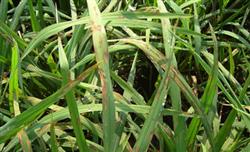
Grading standards
Leaf blast: Grade 1 occurs sporadically, and disease can only be seen upon careful investigation.
Grade 2 has slightly more incidence, with diseased leaves concentrated in the lower part.
Grade 3 has widespread incidence, with diseased leaves concentrated in the middle and lower parts.
Grade 4 has relatively severe incidence, with diseased leaves concentrated in the middle and upper parts, and a small number of patches appearing.
Grade 5 has severe incidence, with obvious patches.
Panicle blast: Grade 1 has sporadic white heads, with a whole-field loss rate below 5% (excluding 5%).
Grade 2 has a whole-field loss rate of 5-10% (excluding 10%).
Grade 3 has a whole-field loss rate of 10-25% (excluding 25%).
Grade 4 has a whole-field loss rate of 25-50% (excluding 50%).
Grade 5 has a whole-field loss rate above 50%.
Control methods: based on agricultural measures, combined with chemical control.
(1) Select disease-resistant varieties suitable for the local area according to local conditions.
(2) Keep seed from disease-free fields, dispose of diseased rice straw, and eliminate the source of inoculum.
(3) According to the fertilizer requirements of rice, adopt formula fertilization techniques, achieve alternating wet and dry conditions in the later stage, promote the maturation of rice leaves, and enhance disease resistance.
(4) Seed treatment: soak seeds in warm water at 56°C for 5 minutes. Soak seeds for 2 days in a 1000-fold dilution of 10% 401 antibacterial agent or a 2000-fold dilution of 80% 402 antibacterial agent, or a 1000-fold dilution of 70% thiophanate-methyl (methyl thiophanate) wettable powder. Soak seeds in 2% formalin for 20-30 minutes, then cover with plastic film and fumigate the seeds for 3 hours.
(5) Chemical control. Grasp the key period and apply pesticides at the right time. Focus on leaf blast and vigorously control panicle blast. In the early stage of disease onset, spray a 1000-fold dilution of 20% tricyclazole (ketotriazole) wettable powder, or a 1000-fold dilution of 40% isoprothiolane (Fuji-One) emulsifiable concentrate, or a 1000-fold dilution of 50% carbendazim or 50% methyl thiophanate wettable powder for uniform spray control.