What are the control techniques for the sweet potato hornworm?
The sweet potato hornworm belongs to the order Lepidoptera, family Sphingidae, and mainly harms sweet potato. The larvae feed on the leaves and tender stems of sweet potato, and in severe cases can strip the leaves completely, greatly affecting yield. In Henan Province, it has 3-4 generations per year, overwintering as pupae 10 cm below the soil surface. It emerges in May of the following year. The adults hide during the day and fly out to activity after dusk. The adults are strongly phototactic...
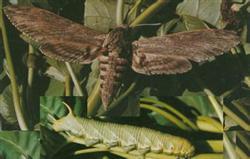
The sweet potato hornworm belongs to the order Lepidoptera, family Sphingidae, and mainly harms sweet potato. The larvae feed on the leaves and tender stems of sweet potato, and in severe cases can strip the leaves completely, greatly affecting yield. In Henan Province, it has 3-4 generations per year, overwintering as pupae 10 cm below the soil surface. It emerges in May of the following year. The adults hide during the day and fly out to activity after dusk. The adults are strongly phototactic and can migrate to distant places to reproduce and cause damage. Newly hatched larvae have the habit of feeding on the egg shell, and the older the larval instar, the greater the food consumption. Summers with little rain and high temperatures are favorable for the occurrence and damage of the sweet potato hornworm.
Control methods
1. Agricultural measures. Plow and harrow sweet potato fields more in winter and spring to destroy their overwintering environment, kill the pupae, and reduce the source of the pest; in the early stage, combine with field management to catch and kill the larvae; taking advantage of the adults' habit of feeding on nectar, use sugar syrup poisoned bait to trap and kill them during the peak emergence period of adults, or go to places with abundant nectar sources to catch and kill them, so as to reduce the number of eggs in the field.
2. Chemical control. Apply 1.5-2 kg per mu of 2.5% trichlorfon powder or 1.5% 1605 powder by dusting; or spray with 90% crystalline trichlorfon, or 80% dichlorvos emulsifiable concentrate at 2000 times dilution; or spray with 20% Bt emulsifiable concentrate at 500 times dilution.