Occurrence Characteristics of Rice Planthoppers and Control Strategies
Baohe Township is located in the southwest of Jing County and belongs to a hilly area. The township has 9144 mu of cultivated land, including 7813 mu of paddy fields, and is a typical mountainous agricultural township. Rice planthoppers are a frequent pest that seriously damages rice in our township and cause losses of varying degrees every year. Especially in the past 2 years, due to the influence of a series of factors such as climate, rice production...
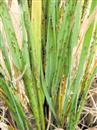
Baohe Township is located in the southwest of Jing County and belongs to a hilly area. The township has 9144 mu of cultivated land, including 7813 mu of paddy fields, and is a typical mountainous agricultural township. Rice planthoppers are a frequent pest that seriously damages rice in our township and cause losses of varying degrees every year. Especially in the past 2 years, due to the influence of a series of factors such as climate, rice yield has been seriously damaged, and farmers have reported strong concerns. Our station organized technical personnel to conduct field observations and investigations, took rice planthoppers as the main target for rice pest control, and adopted a series of control strategies, achieving good social and economic benefits.
1. Damage symptoms. In the early stage of damage, many irregular brown spots appear on the stems. When the damage is severe, the whole plant withers and gradually expands into patches; if rice is damaged at the booting stage, it cannot head; if damaged after heading, the plumpness of the grain is affected, the 1000-grain weight decreases, and the rate of shriveled grains is high.
2. Occurrence period. Rice planthoppers can occur from the early rice seedling field to early October. Early rice generally has 2 nymph peaks. The 1st appears from late May to early June; the 2nd appears from late June to early July; the 1st nymph peak of middle rice appears from mid-to-late June to early July, and the 2nd appears from mid-to-late July to early-to-mid August; the 1st nymph peak of late rice appears from mid-to-late August to late September, and the 2nd appears from mid-to-late September to early October. Generally, after double-cropping late rice is transplanted, it is exactly from late July to early August, when the number of rice planthoppers increases abnormally and large-area control is needed.
During the peak period of the main damaging generation, white-backed planthoppers are dominant. The number of white-backed planthoppers accounts for more than 70% of the total number of planthoppers. In the early stage of late rice, white-backed planthoppers are dominant, after which the proportion of brown planthoppers rises, reaching as high as 70% of the total number of planthoppers.
3. Causes of occurrence
(1) Increased immigrating insect numbers. Under light trapping for early rice, adults were first seen on June 9, 10 days earlier than the previous year. As of July 13, a single light trap had attracted a cumulative total of 6782 insects, an increase of 70.1% compared with the average of the same period in the past 3 years. Among these, 5 relatively obvious peaks appeared under light trapping on June 23, June 26, June 29, July 5, and July 8, attracting 225, 560, 856, 950, and 2100 insects respectively. Field insect numbers: on June 21, single-season rice had 180 insects/100 hills; on June 26, single-season rice had 457 insects/100 hills; on July 2, single-season rice had 470 insects/100 hills; on July 6, single-season rice had 1327 insects/100 hills; on July 10, single-season rice had 1640 insects/100 hills. Low-instar nymphs were dominant, but long-winged adults were relatively numerous (136 insects/100 hills, 3.4 times that of the same period in 2002). A small number of short-winged adults were found in the field. In 2002, 2001, and 2000, the field nymph peaks were 4934 insects/100 hills, 1174 insects/100 hills, and 4574 insects/100 hills respectively. A field egg survey on July 13 found 8060 eggs/100 hills in single-season rice, an increase of 39.8% compared with the average of the past 3 years.
(2) Influence of climatic factors. In mid-to-late August of 2002 and 2003, the average temperature was 2-3°C lower than normal, while in mid-to-late September the temperature was higher than in previous years. At this time, rice was exactly at the peak tillering stage to booting stage, with abundant food conditions, and together with the hot and humid climate, this was very conducive to the occurrence and damage of this insect.
(3) Influence of control factors. When farmers controlled other pests such as the striped stem borer, they also inhibited the increase of rice planthoppers to a certain extent; on the other hand, because farmers are relatively independent and scattered, differences in the types and frequency of pesticide use also affect rice planthoppers.
4. Control strategies. (1) Select and plant insect-resistant and tolerant high-yield varieties. Selecting and planting hybrid rice combinations such as Weiyou 191, II You 6078, and Guofeng No. 1 plays a role in controlling rice planthopper damage with twice the result for half the effort. (2) Rational fertilization. Pay attention to the rational application of nitrogen, phosphorus, and potassium, apply more basal fertilizer, apply topdressing early, control excessive vegetative growth and lodging of seedlings, improve the insect resistance of rice, and create a paddy field environment unfavorable to the occurrence of rice planthoppers. (3) Eliminate overwintering insect sources. The eggs of this insect overwinter in the stems of gramineous weeds beside fields, ditches, and ponds. In winter, combine manure accumulation with clearing weeds beside fields and ponds to eliminate overwintering insect sources. (4) Use natural enemies. Reduce the use of pesticides in the early stage of rice fields and try not to use chemical pesticides that are lethal to natural enemies. (5) Scientific pesticide application. When applying pesticides, the water volume should be sufficient to ensure that the lower part of the rice plants is reached by the pesticide solution, and a shallow water layer of about 6 cm should be maintained in the field to improve the control effect. Generally, low-toxicity and low-residue pesticides such as puchiling or Zhuang'ai are used.
5. Results achieved. (1) The damage of planthoppers was controlled, and the protection benefit was significant. In 2003, through control, our township recovered 389 tons of rice loss. (2) The number of pesticide applications was reduced, the ecological environment was improved, and the social benefit was significant.