Diagnosis and Control Methods of Rice Seedling Rot: A Detailed Guide
Rice seedling rot is a general term for seed rot, bud rot and seedling death in rice caused by pathogen infection or non-pathogenic factors. It can be divided into two categories: infectious and non-infectious (physiological). Non-infectious seedling rot is mainly caused by adverse environmental conditions; infectious seedling rot refers to that caused by adverse environmental conditions inducing infection by Pythium, Achlya, Fusarium and other pathogens...
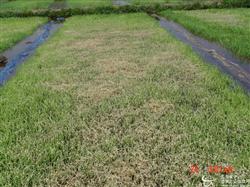
Rice seedling rot is a general term for seed rot, bud rot and seedling death in rice caused by pathogen infection or non-pathogenic factors. It can be divided into two categories: infectious and non-infectious (physiological). Non-infectious seedling rot is mainly caused by adverse environmental conditions; infectious seedling rot refers to that caused by adverse environmental conditions inducing infection by Pythium, Achlya, Fusarium and other pathogens.
1 Symptom diagnosis
1.1 Seed rot
Mainly refers to the phenomenon in which the embryo of the rice grain turns black, becomes foul-smelling, or even decays after sowing.
1.2 Bud rot
Refers to the phenomenon in which buds and roots die from germination and sprouting to the greening stage, and is divided into physiological bud rot and infectious bud rot.
1.2.1 Physiological bud rot
Silted grains: when sown too deep, the coleoptile cannot elongate and rots; exposed grains: seeds exposed on the soil surface, whose roots cannot penetrate the soil and thus wilt and dry up; lifted feet: the seminal roots do not enter the soil but lift up and dry out; fallen buds: only buds grow without roots and float on the water surface; fishhook roots: roots and buds grow poorly, curl up yellow-brown and appear hook-shaped; black roots: roots and buds are poisoned, showing "chicken-claw-shaped" seminal roots and secondary roots that turn black and rot.
1.2.2 Infectious bud rot
Achlya-type bud rot: disease occurs easily under conditions of low temperature and high humidity. At the initial stage, white gelatinous material appears outside the rupture of the glume at the base of roots and buds, then woolly mycelium grows, later turning soil-brown or greenish-brown, causing the young buds to turn yellow-brown and die.
Damping-off-type bud rot: initially occurs sporadically, then dies in clusters and patches. At first, water-soaked light brown spots appear at the base of roots and buds, followed by the growth of woolly white mycelium, and some also produce white or light pink mold-like material; the base of the young bud constricts, breaks easily when pulled, and the young roots turn brown and rot.
1.3 Seedling death
Refers to the death of seedlings after the first leaf unfolds, mostly occurring at the 2-3 leaf stage. It is divided into two types: green wilt type and yellow wilt type.
Green wilt type: the heart leaf wilts into a tube shape, the lower leaves then wilt and curl, and the seedlings turn dirty green and finally die. The roots of diseased seedlings are dark in color with sparse root hairs.
Yellow wilt type: starting from the lower leaves, the leaf tips gradually turn yellow toward the leaf base, then spread from the lower to the upper leaves, and finally the stem base softens and turns brown, and the seedlings die yellow-brown.
2 Control methods
The key to controlling rice seedling rot is to focus on seedling-raising techniques, improve environmental conditions, and enhance disease resistance, supplemented by chemical control when necessary.
2.1 Raising seedlings
Adopt the dry-raised seedling sparse-planting technique or film-covered seedling raising. The seedling field should be selected as a flat field plot that is sheltered from the wind and facing the sun, with medium fertility, convenient irrigation and drainage, and relatively high terrain. The seedling beds should be dry-plowed and dry-prepared, and the application of decomposed compost or organic fertilizer is advocated to improve the soil microbial structure.
2.1.1 Seed selection
Select clean seeds with good maturity and high purity, and sun the seeds before soaking.
2.1.2 Seed soaking
Soak the seeds thoroughly, until the embryo swells and protrudes, the husk becomes semi-transparent, and the embryo is faintly visible through the husk. For sprouting, achieve white-tip emergence at high temperature (36-38°C), root promotion at moderate temperature (28-32°C), bud growth by watering, and seedling hardening at low temperature.
2.1.3 Sowing at the appropriate time
Determine the sowing date, sowing rate and seedling age according to the characteristics of the variety. Begin sowing when the daily average temperature steadily passes 12°C. Sow evenly and try to ensure 3-5 sunny days after sowing, which is favorable for rice germination. After sowing, scatter finely crushed nutrient soil to retain warmth and moisture, which helps the seeds take root and the buds stand.
2.1.4 Strengthen water and fertilizer management
At the bud stage, focus on rooting and standing of seedlings, keep the bed surface moist, and do not introduce water too early; in case of frost, irrigate briefly to protect the buds. After the first leaf unfolds, shallow irrigation may be applied appropriately, and at the 2-3 leaf stage, irrigation is used to reduce temperature differences. When a cold wave arrives, irrigation can be used to protect the seedlings, and normal management can be resumed after the cold air passes.
For seedlings raised under film, generally uncover the film for ventilation at 8:00-9:00 a.m., and water shallowly before ventilation to prevent drastic changes in temperature and humidity. For seedling fields where seedling death is found, irrigate once daily with "running horse water" to dilute toxic substances.
Fertilization should follow the principle of stable base fertilizer and topdressing that starts with a small amount and later increases. After full seedling emergence, apply rooting fertilizer, which can be sprayed with clear manure water, biogas slurry, or diammonium phosphate diluted in water; after the second leaf unfolds, apply seedling-strengthening fertilizer early.
2.2 Chemical control
2.2.1 Damping-off
(1) Control with transplanting spirit mixture: transplanting spirit mixture has the dual functions of a plant growth regulator and a fungicide, with effects of promoting roots, stimulating seedling growth, preventing senescence and sterilizing, and can effectively control damping-off. The application method is to use 1-2 mL of transplanting spirit mixture per 1 sq m of rice seedling bed, add 3 kg of water and spray. For seedling tray seedling fields, use 0.2-0.5 mL of transplanting spirit mixture per tray (60×30 cm), add 0.5 kg of water for control. It can also be dissolved in water together with the base fertilizer, evenly sprayed on the bed soil, and then the seeds are sown and covered with soil and film; (2) Control with 15% damping-off spirit: for seedling raising, use 0.9 g of damping-off spirit per tray, diluted with 1 kg of water and sprayed. At the 1 leaf 1 heart stage, spraying a 500-fold solution of damping-off spirit can effectively control damping-off.
2.2.2 Control of seedling rot caused by Achlya and others
After finding the central diseased plants, use a 800-1000-fold solution of 25% metalaxyl wettable powder or a 700-fold solution of 65% dexon wettable powder. For seedling rot caused by mixed infection of Rhizoctonia and Achlya, the first choice is 40% Miekusan soluble powder (40% Jiadi powder). Method of use: one 100 g bag of Miekusan can control 40 sq m or 240 seedling trays, and it can also be sprayed at the 1 leaf 1 heart stage of rice seedlings. In addition, spraying a 500-800-fold solution of 30% damping-off spirit wettable powder or a 500-1000-fold solution of Guangmieling aqueous solution can also be used for control, and a thin water layer should be maintained when spraying. Placing 100-200 g of more than 90% copper sulfate in a gauze bag at the water inlet and letting it flow into the seedling field with the water can also control this type of seedling rot. When Achlya disease is severe, the seedling field should be exchanged with clean water 2-3 times before applying chemicals.
2.3 Adopt double-film mulching cultivation technology
Double-film mulching technology can effectively solve the problems of rice seedling rot and low yield caused by low temperature, and can enable rice to make full use of resources such as temperature, light and water to create high yields.